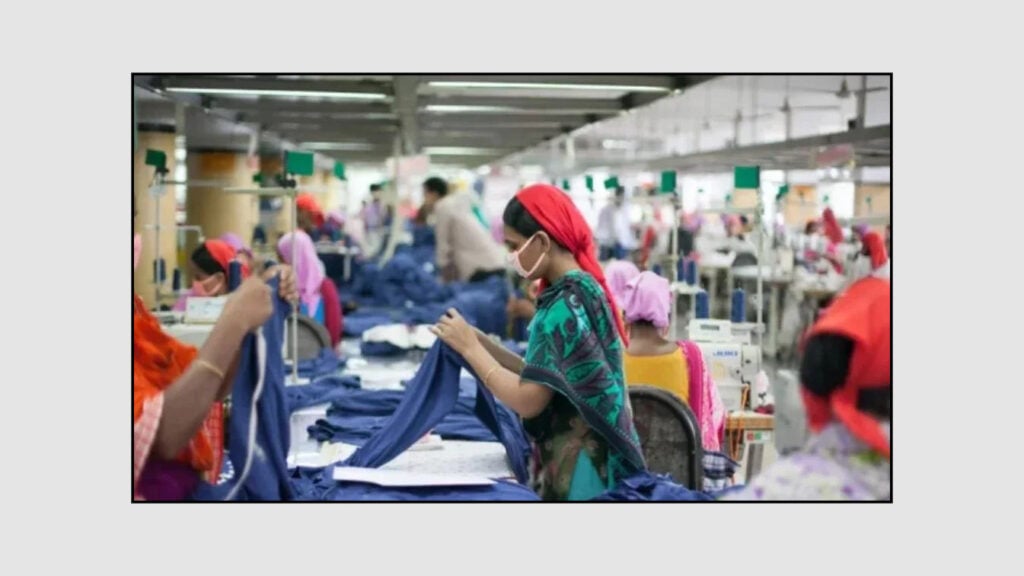
Bangladesh’s garment exports to the European Union (EU) declined significantly during the first seven months of 2026, with both export value and volume falling compared with the same period a year earlier. The decline comes as the wider European clothing market also contracted, but the sharper fall in Bangladesh’s exports has raised concerns about the country’s competitive position against major suppliers such as China and Vietnam.
Updated Eurostat data show that the EU’s total clothing imports fell by 5.10 per cent in value between January and July 2026 compared with the corresponding period of 2025. Import volumes declined by 3.23 per cent, while the average import price of clothing fell by 1.93 per cent per kilogram.
The figures indicate that European buyers reduced the amount of clothing they purchased while also paying lower average prices. This created a challenging trading environment for apparel-exporting countries, including Bangladesh.
Bangladesh, however, experienced a considerably steeper decline than the overall contraction in the EU market. During the seven-month period, the value of Bangladesh’s garment exports to the EU fell by 13.65 per cent. Export volume declined by 5.66 per cent.
The fall in both value and volume resulted in Bangladesh losing market share in the European clothing market. The average price of garments exported from Bangladesh also declined by 8.47 per cent per kilogram during the period.
Bangladesh is already known for its strong position in supplying competitively priced ready-made garments to international markets. The latest figures show that among the leading clothing suppliers to Europe, Bangladesh was offering garments at the lowest average price. The decline in unit prices is particularly significant because the country’s export earnings depend heavily on its large-scale ready-made garment industry.
The situation looks different for some of Bangladesh’s major competitors. Despite the overall decline in European clothing imports, China and Vietnam recorded growth in export value during the period under review.
China’s garment exports to the EU increased by 1.89 per cent in value, while Vietnam’s rose by 3.92 per cent. Their performance stands in contrast to the broader contraction in the European market and suggests that competition among suppliers has intensified as buyers become more cautious about both volume and price.
Vietnam also recorded a substantial increase in the average price of its garments. Its average export price rose by 11.76 per cent per kilogram during the January-July period. Cambodia, another important apparel supplier, increased its average garment price by 7.86 per cent.
For Bangladesh, the combination of falling export volume and lower unit prices presents a particular challenge. A decline in volume directly affects shipments, while lower prices can put additional pressure on export earnings even when factories continue to secure orders. The latest data therefore point to pressure on both the quantity and value of Bangladesh’s garment exports to one of its most important overseas markets.
The developments also highlight the changing competitive landscape within Europe. While the overall market has weakened, individual supplier countries have performed differently. China and Vietnam have managed to increase their export values, while Vietnam has also achieved a notable rise in average prices.
Commenting on the situation, Bangladesh Apparel Voice chief executive officer Mahbubuddin Rubel said clothing imports into Europe had declined overall this year, affecting Bangladesh’s exports as well. He said exports had increased to some extent over the past two months.
Rubel, however, identified the performance of China and Vietnam as a concern. Despite the downturn in the European market, both major competitors managed to increase their exports, he said.
The European Union remains a major destination for Bangladesh’s ready-made garment industry, making developments in the market closely significant for exporters and manufacturers. The latest figures suggest that Bangladesh is facing not only weaker demand in Europe but also stronger competition from other major apparel-producing countries.