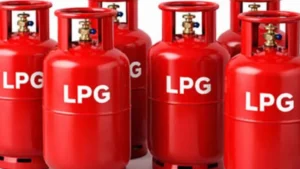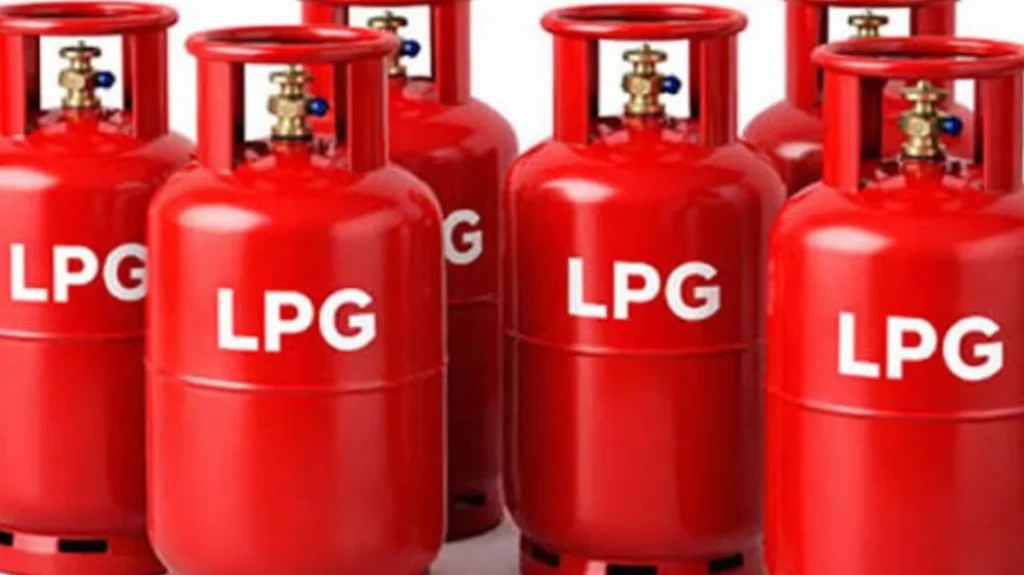
Consumers in Bangladesh are facing the highest prices for Liquefied Petroleum Gas (LPG) across South Asia, the cost of a standard 12-kilogramme cylinder surging far ahead of neighbouring nations. Following a sharp upward revision announced by the Bangladesh Energy Regulatory Commission (BERC) on Monday, 2 November, the retail price for a 12kg cylinder rose by 223 taka, taking the total cost for households to 2,060 taka.
By contrast, consumers in Pakistan, Sri Lanka, Nepal, and India pay significantly less for an equivalent volume of gas, highlighting a growing stark economic disparity across the region.
LPG cylinder capacities vary slightly across South Asian markets based on local industrial standards. Households in India and Nepal predominantly rely on 14.2kg cylinders. Pakistan typically distributes gas in 11.8kg containers, Sri Lanka favours a 12.5kg capacity, and Bangladesh uses the standard 12kg unit. When adjusted for equivalent volume comparisons, Bangladesh remains comfortably the most expensive market for domestic fuel.
In Pakistan, an equivalent 12kg volume of LPG costs approximately 1,583 Bangladeshi taka based on the latest figures from the country’s Oil and Gas Regulatory Authority (OGRA), where an 11.8kg cylinder is priced at 3,470 Pakistani rupees. In Sri Lanka, state-owned Litro Gas lists a 12.5kg cylinder at 4,365 Sri Lankan rupees, translating to roughly 1,567 taka for a 12kg equivalent. Consumers in Nepal pay 2,060 Nepalese rupees for a 14.2kg cylinder via the Nepal Oil Corporation, bringing the 12kg equivalent cost down to around 1,426 taka.
India offers the lowest prices amongst the surveyed nations. According to Indian Oil Corporation data, a 14.2kg cylinder costs 942 Indian rupees in New Delhi and 968 rupees in Kolkata. At current exchange rates, the price in Kolkata equates to roughly 0.718 US dollars per kilogramme of LPG, bringing the cost of a 12kg equivalent to approximately 1,072 taka. India also provides targeted relief for low-income households, offering a direct subsidy of 300 rupees per cylinder up to four times a year following biometric registration. Even without factoring in this subsidy, retail prices in Eastern India remain roughly half of those charged in Bangladesh.
The following table presents a cross-border comparison of LPG retail prices and 12kg volume-adjusted rates across South Asia:
| Country | Native Standard Cylinder Size | Local Retail Price (Local Currency) | Equivalent Price for 12kg LPG (Bangladeshi Taka) | Primary Regulatory / Supply Body |
| Bangladesh | 12.0 kg | BDT 2,060 | BDT 2,060 | Bangladesh Energy Regulatory Commission (BERC) |
| Pakistan | 11.8 kg | PKR 3,470 | BDT 1,583 | Oil and Gas Regulatory Authority (OGRA) |
| Sri Lanka | 12.5 kg | LKR 4,365 | BDT 1,567 | Litro Gas Lanka Limited |
| Nepal | 14.2 kg | NPR 2,060 | BDT 1,426 | Nepal Oil Corporation (NOC) |
| India (Kolkata) | 14.2 kg | INR 968 | BDT 1,072 | Indian Oil Corporation (IOCL) |
| India (Delhi) | 14.2 kg | INR 942 | BDT 1,043 | Indian Oil Corporation (IOCL) |
| India (Subsidised) | 14.2 kg | INR 668 | BDT 740 | Government of India (Targeted Subsidy) |
| Bangladesh (Prev. Month) | 12.0 kg | BDT 1,837 | BDT 1,837 | BERC Previous Tariff Structure |
High import overheads and freight premiums drive much of this regional pricing disparity. In its November tariff adjustment, BERC set the freight cost and importer’s premium at 250 US dollars per tonne. Unlike India, where large-scale state infrastructure and long-term supply contracts help absorb price volatility, Bangladesh relies almost entirely on private operators who import bulk LPG via maritime routes, incurring substantial logistics costs.
Regulatory enforcement remains another hurdle across the region. Despite official price ceilings set by regulatory bodies, consumers frequently report paying above-tariff rates at the retail level during seasonal demand spikes. This problem is particularly acute in rural and semi-urban markets across Bangladesh, where retail monitoring remains limited.