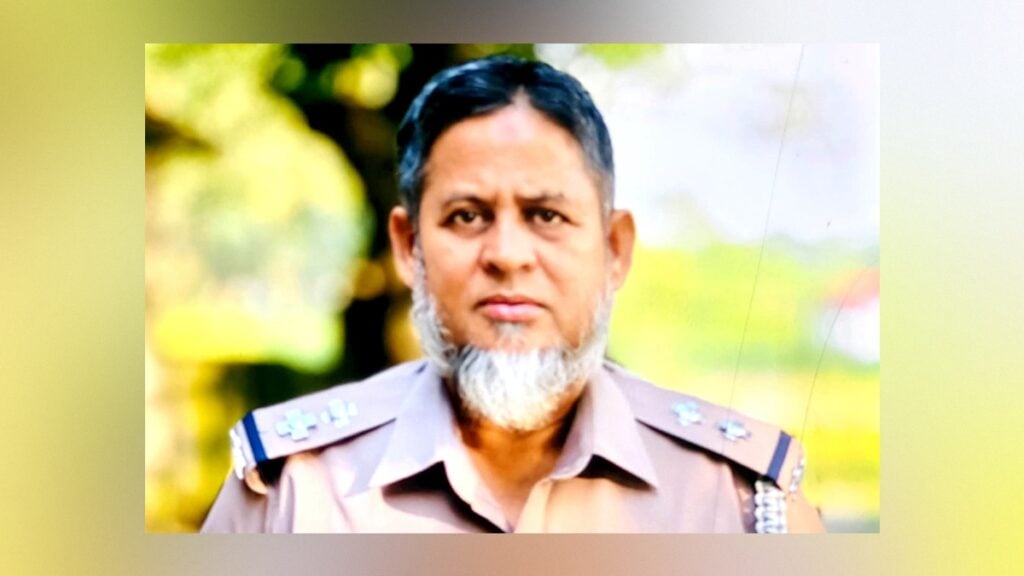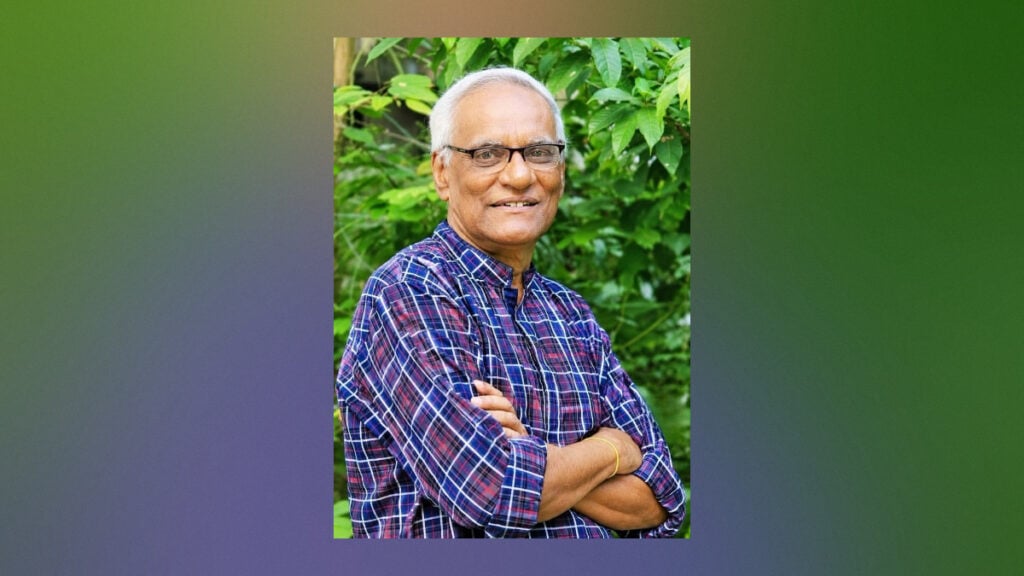
The measure of a truly exceptional life lies not merely in years lived, but in the enduring imprint left upon the intellect, culture, and collective conscience of a community. Shyamal Ranjan Bhattacharya belonged to that rare lineage of visionary figures whose life work illuminated an entire region. A revered pedagogue, playwright, actor, and cultural organiser, he stood for decades as an undisputed pioneer across the educational and artistic landscape of Bogra. Whilst his professional life was anchored as a legendary master at Bogra Zilla School, his true canvas extended far beyond the confines of a conventional classroom.
Born on 10 August 1939 in Bogra, Bhattacharya evinced an acute social consciousness and progressive ethos from early youth. His commitment to justice was forged in the crucible of historical upheaval. In 1952, whilst merely a sixth-standard pupil, the thirteen-year-old boy led a spirited demonstration of nearly 300 students in Bogra, risking retribution to demand the official recognition of Bengali during the historic Language Movement. By the time he reached the eighth standard, he had co-founded a night school alongside his peers to eradicate illiteracy amongst the underprivileged residents of Jaleshwaritala. By the tenth standard, his leadership was formally recognised with an appointment as the library secretary for the district committee of the Students’ Union.
Although he trained as a diploma engineer and initially joined the Electricity Board of Greater Chittagong as a sub-assistant engineer following the 1965 Indo-Pakistani War, his heart ultimately called him towards education. On 16 January 1967, he formally joined the faculty of Bogra Zilla School as an instructor of Industrial Arts. He later transitioned into teaching Bengali literature, acquiring widespread acclaim for his deep erudition. His linguistic command was formidable, encompassing not only Bengali language and literature but also classical Sanskrit and Arabic. Beyond academic instruction, he prioritised the moral development, aesthetic sensibility, and critical faculties of his pupils.
Bhattacharya was equally instrumental in embedding the nationwide literary movement, Bishwo Shahitto Kendra, into the cultural fabric of Bogra. Driven by the conviction that an enlightened populace requires habitual reading and free intellectual inquiry, he championed reading circles and intellectual forums across the district until his final days.
Concurrently, he emerged as the beating heart of Bogra’s theatre movement. Believing theatre to be a potent instrument for social critique rather than passive entertainment, he founded the ‘Bogra Natya Gosthi’ in 1972 to revitalise regional drama in post-independence Bangladesh. He subsequently established the ‘Bogra Natya Dal’ in 1987, conducting regular drama workshops at the Shahid Titu Auditorium to mentor emerging actors, directors, and playwrights. Over the decades, he penned, directed, and acted in scores of productions performed across Bogra and Dhaka, making his final memorable stage appearance in the 2013 play *Kharij*.
His civic engagement extended to local heritage preservation through his dedicated involvement with the Prafulla Chaki Smriti Sangsad—honouring the first Bengali martyr against British colonial rule—and the Kobi Rostom Ali Kornopuri Sangsad. Even in death, his progressive convictions remained absolute. Upon his passing on 4 November 2020, his body was donated to medical science for clinical research, fulfilling his lifelong commitment to human welfare. Though his physical presence has departed, his legacy as a beacon of enlightenment remains deeply woven into the heritage of Bengal.