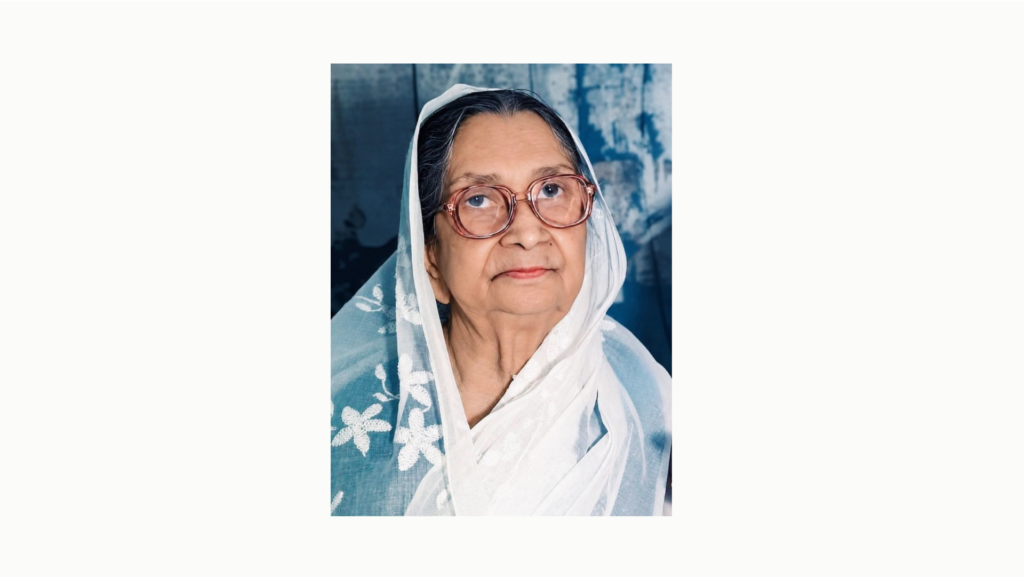
Her life embodied a remarkable combination of poetic sensitivity, intellectual courage and determination. Through her writings, activism and public engagement, she challenged social inequalities, stood against oppression and helped shape the cultural and political consciousness of Bangladesh. She was not merely a literary figure but also a prominent voice in movements for democracy, women’s emancipation and a society free from communal discrimination.
Born on 20 June 1911 in Shayestabad, Barishal, Sufia Kamal grew up in an aristocratic family at a time when educational opportunities for women, particularly in conservative Muslim communities, were severely restricted. Her father, Syed Abdul Bari, and mother, Sabera Begum, raised her in an environment shaped by the social conventions of the period.
Despite the limitations imposed on women, she developed a strong interest in literature and learning from an early age. Her mother introduced her to the Bengali language. Although she did not receive formal schooling, she educated herself through persistent reading and personal effort, eventually becoming one of the most celebrated literary figures of her generation.
At the age of 13, she married her cousin, Syed Nehal Hossain, in 1924. He was relatively progressive and had an interest in literature and culture. His encouragement helped her pursue literary studies and develop her creative abilities. The works of Rabindranath Tagore, Kazi Nazrul Islam and other contemporary writers played an important role in shaping her literary outlook.
Her first poem, Basanti, was published in the literary magazine Saugat in 1926. Her entry into the literary world was significant, particularly at a time when Muslim women faced considerable social barriers to writing and public expression. She gradually established herself as a distinctive literary voice, writing about nature, love, human emotions, social injustice, patriotism and the pursuit of freedom.
She also served as the first editor of Begum, a pioneering magazine dedicated to women’s literary and creative expression. The publication provided an important platform for women writers and helped broaden opportunities for women to participate in intellectual and cultural life.
Following the Partition of India in 1947, Sufia Kamal moved from Kolkata to Dhaka with her family. Her involvement in literary, cultural and social activities expanded considerably after settling in the city.
She played an active role in the Language Movement of 1952, supporting the struggle to establish Bengali as a state language and encouraging women to participate in the movement. Her commitment to cultural freedom and democratic rights became increasingly visible in the years that followed.
In 1961, when the Pakistani authorities sought to restrict Rabindra Sangeet, she took part in cultural resistance against the move. She also maintained a courageous position during the mass uprising of 1969, standing alongside those demanding political rights and democratic freedoms.
During the Liberation War of 1971, she protested against the atrocities committed by the Pakistani military and expressed solidarity with the struggle for Bangladesh’s independence. Her moral courage and commitment to justice remained evident throughout the turbulent period.
Following independence, she continued her work on women’s rights, education, democracy, social justice and secularism. She firmly believed that a society could not achieve meaningful progress while women remained deprived of education, dignity and equal opportunities.
As a leading figure in the Bangladesh Mahila Parishad, she helped organise and strengthen the women’s rights movement. She served as its president for many years, advocating for women’s empowerment, legal rights and greater participation in public life.
Her literary contributions extended across poetry, short stories, memoirs, travel writing and other genres. Among her notable poetry collections are Sanjher Maya, Maya Kajal, Mon O Jibon, Udatta Prithibi, Diwan, Abhijatrik and Soviet Din-guli. Her writings reflect both the emotional richness of human experience and her deep concern for society.
Her memoir Ekattorer Diary remains an important literary record of the experiences and realities of the Liberation War, offering insight into the turbulent days of 1971.
In recognition of her contributions to literature, social reform, women’s rights and national life, she received numerous honours, including the Bangla Academy Award, Ekushey Padak, Begum Rokeya Padak and the Independence Award. In 1997, she was awarded the Independence Award, Bangladesh’s highest civilian honour.
Sufia Kamal died in Dhaka on 20 November 1999, aged 88. Although her death marked the end of an extraordinary life, her ideals, literary works and activism continue to resonate across generations.
She transformed literature into a vehicle for social consciousness, used her voice to challenge injustice and devoted herself to advancing the rights and dignity of others. Her life stands as a powerful reminder that courage, education, compassion and unwavering conviction can enable an individual to influence society profoundly.
On the anniversary of her death, Begum Sufia Kamal is remembered with profound respect for her contributions as a poet, cultural icon, women’s rights pioneer and champion of human freedom.
Her words, ideals and legacy remain alive — a lasting source of inspiration for those who seek a more just, humane and inclusive society.