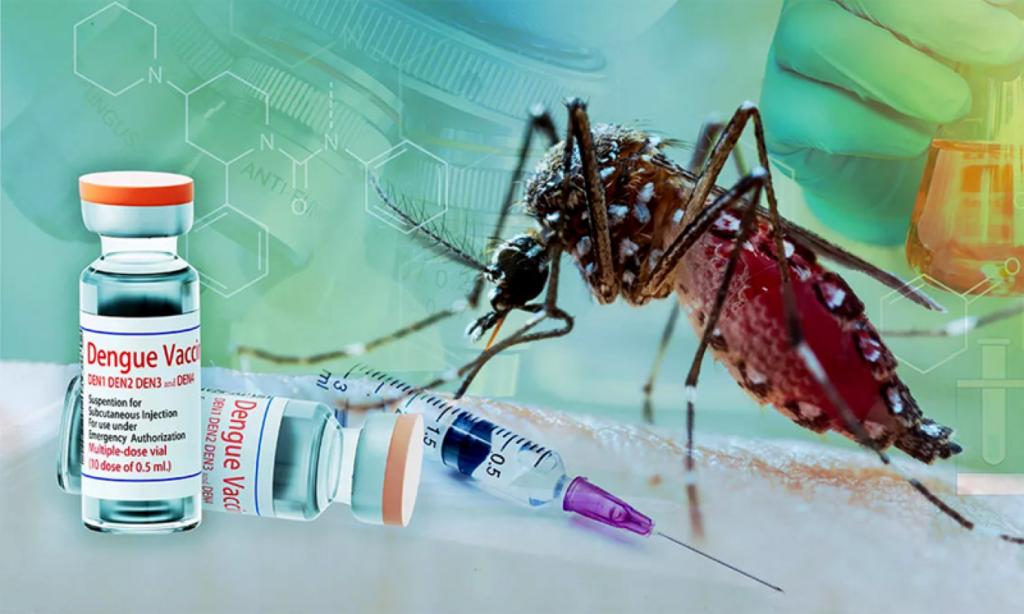
Brazil has become the first country in the world to approve a single-dose dengue vaccine, marking a historic milestone in global public health. On Wednesday local time, the Brazilian health authorities granted approval for the vaccine, describing it as a “historic achievement.” With rising global temperatures contributing to the spread of mosquito-borne diseases, Brazil is now taking a proactive step to curb dengue, a potentially fatal illness.
The National Health Surveillance Agency (ANVISA) authorised the vaccine, named Butantan-DV, for individuals aged between 12 and 59 years. The vaccine was developed by the Butantan Institute in São Paulo, a leading biomedical research centre in Brazil. According to the World Health Organization, the only other dengue vaccine currently available, known as TAK-003, requires two doses administered three months apart.
Following eight months of nationwide trials, the single-dose vaccine demonstrated high efficacy and can now be distributed quickly and efficiently across the country. Speaking at a press conference in São Paulo, Butantan Institute Director Esper Kalas said, “This is a historic achievement for Brazilian science and the healthcare sector. For decades, dengue has devastated our communities, and now we have a powerful tool to fight back.”
Brazil has also partnered with Chinese company US BioLogics to produce approximately three million doses by the second half of 2026. Prior to approval, the vaccine was tested on 16,000 volunteers, showing a 91.6% effectiveness against severe dengue infection. Dengue is transmitted by the Aedes aegypti mosquito and has affected over 146 million people worldwide, resulting in nearly 12,000 deaths. Last year, half of these fatalities occurred in Brazil. Research from Stanford University in 2024 also highlighted that 19% of this year’s dengue infections were linked to global warming.
This approval represents a major step forward in combating one of the world’s most persistent mosquito-borne diseases.