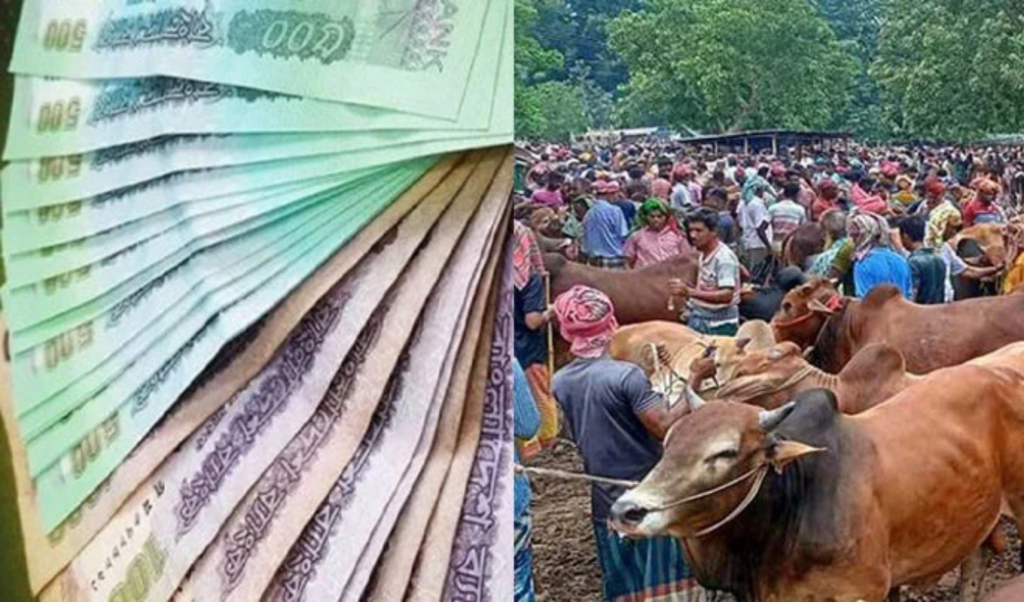
Bangladesh Bank, the nation’s central monetary authority, has issued a formal advisory urging the public to exercise heightened vigilance when handling high-value currency notes during the forthcoming Eid-ul-Adha period. The directive specifically highlights the increased risk of counterfeit banknote circulation at cattle markets (Qurbani Haats), where substantial cash transactions traditionally take place.
According to the central bank’s statement, the significant surge in the exchange of 1,000-taka and 500-taka banknotes during the purchase of sacrificial animals creates a seasonal opportunity for fraudulent circles to inject forged currency into the economy. Consequently, the bank has stressed the necessity for buyers and sellers alike to be well-versed in the security features of legal tender to mitigate the risk of financial loss.
Verification of Security Features
To distinguish genuine banknotes from counterfeits, Bangladesh Bank has recommended that the public meticulously examine the distinct security characteristics of 100, 200, 500, and 1,000-taka denominations. The primary features that require close inspection include:
-
Watermarks: Genuine notes contain a distinct portrait of the Father of the Nation, Bangabandhu Sheikh Mujibur Rahman, and the bank’s logo, which are visible when held against the light.
-
Security Thread: Each high-value note features an embedded security thread that appears as a continuous line when viewed against the light and often includes micro-text or holographic elements.
-
Optically Variable Ink (OVI): The colour-shifting ink used in the denomination figures should change hue when the note is tilted at different angles.
-
Intaglio Printing: Real currency is produced using an uneven, raised-surface printing technique. This results in a tactile feel that can be sensed by touch, particularly on the portrait, the denomination figures, and the lines intended for the visually impaired.
On-Site Support and Institutional Assistance
In anticipation of the massive cash flow at cattle markets, Bangladesh Bank, in coordination with various commercial banks, is implementing a robust support system. Temporary banking booths will be established within the premises of major Qurbani Haats across the country.
Should any individual harbour suspicion regarding the authenticity of a banknote, the central bank advises seeking immediate assistance from the officials stationed at these temporary booths. Furthermore, individuals may visit the nearest branch of any commercial bank, where staff are equipped with ultraviolet (UV) light detectors and the technical expertise required to verify currency.
The central bank has explicitly cautioned against engaging in transactions with unfamiliar or suspicious sources. It recommends that large-scale payments be conducted through formal banking channels or authorised digital financial services where possible to ensure traceability and security.
Public Awareness and Regulatory Guidelines
The advisory underscores that public awareness remains the most effective deterrent against the spread of counterfeit currency. Citizens are encouraged not only to verify their own cash but also to educate others on the fundamental differences between real and forged notes. Detailed descriptions and visual guides regarding the security components of all legal tender denominations are available for public viewing on the official Bangladesh Bank website.
Historically, the period leading up to Eid-ul-Adha sees the highest volume of physical cash movement in the country, largely due to the decentralised nature of livestock trading. By adhering to these regulatory guidelines, the central bank aims to preserve the integrity of the national currency and protect the financial interests of the agrarian and trading communities involved in the sacrificial animal market. All commercial banks have been instructed to provide full cooperation to the public during this high-demand festive season.