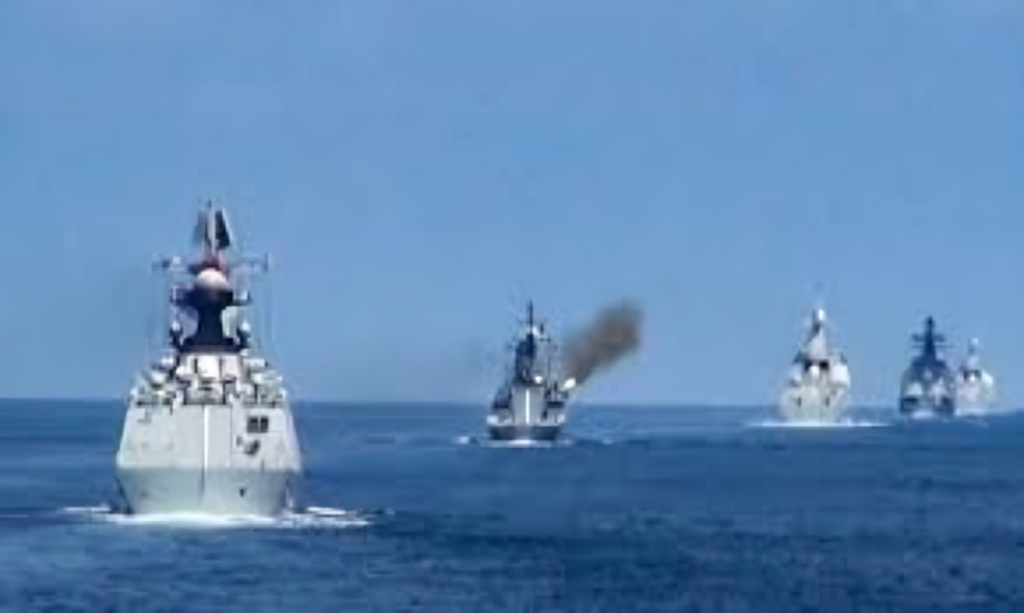
China and Russia commenced joint naval drills in the Sea of Japan on Sunday, reinforcing their growing strategic partnership and presenting a united front against the prevailing US-led global order.
Overview of the Exercises
| Exercise Name | Joint Sea-2025 |
| Start Date | Sunday |
| Duration | 3 Days |
| Location | Waters near Vladivostok, Russia |
| Participating Forces | Chinese and Russian navies |
| Chinese Vessels | Includes guided-missile destroyers Shaoxing and Urumqi |
China’s Ministry of Defence announced the start of the Joint Sea-2025 drills, which include:
- Submarine rescue operations
- Joint anti-submarine warfare
- Air defence and anti-missile exercises
- Maritime combat manoeuvres
Following the three-day exercises, the two navies will also undertake joint naval patrols in specific regions of the Pacific Ocean.
Strategic Context
The military cooperation between China and Russia has significantly intensified over the past decade and especially since Russia’s invasion of Ukraine in February 2022. Their annual Joint Sea exercises, which began in 2012, exemplify the deepening defence ties.
| Year | Drill Location |
| 2024 (current) | Sea of Japan, near Vladivostok |
| 2023 | Southern coast of China |
On Friday, China’s defence ministry stated that this year’s exercises are intended to:
“Further deepen the comprehensive strategic partnership between the two countries.”
Political and Diplomatic Alignment
Despite widespread international condemnation of Russia’s war in Ukraine, China has notably refrained from criticising Moscow. It has:
- Not condemned Russia’s invasion
- Not called for Russian troop withdrawal
- Repeatedly called for peace, but
- Blamed Western nations for prolonging the war by supplying arms to Ukraine
While Western allies, particularly the United States, allege that China is materially and diplomatically supporting Russia, Beijing insists it remains neutral in the conflict.