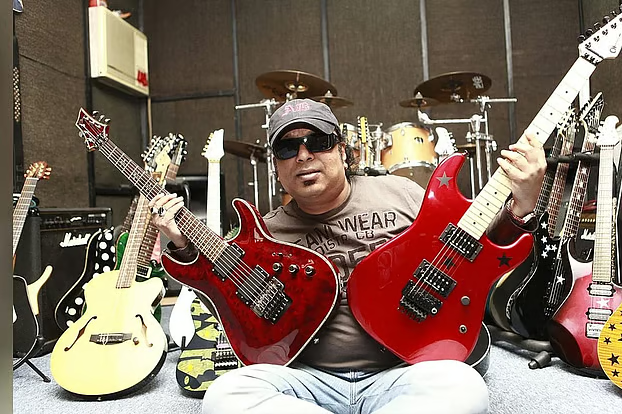
The life and musical odyssey of Ayub Bachchu—one of Bangladesh’s most revered rock icons and guitar maestros—holds all the elements of a compelling cinematic narrative, according to prominent lyricist and music producer Asif Iqbal. Speaking at a memorial event in Dhaka, Iqbal argued that Bachchu’s transformation from a young musician in Chattogram known as Robin to a nation-defining legendary artist requires no fictional embellishment. A screenwriter need only structure the extraordinary facts of his life.
The solemn gathering was held on Sunday evening in Moghbazar to mark the eighth death anniversary of the rock legend. Jointly organised by the Chattogram Musicians Club Dhaka, the Ayub Bachchu Foundation, and the late musician’s close friends and colleagues, the event served as a platform to celebrate his enduring impact on Bengali music.
Reflecting on Bachchu’s monumental career, Iqbal stressed that true artists transcend their time through their craft. Bachchu’s vast body of work will continue to inspire and resonate across generations, serving as a guiding light for aspiring young musicians long into the future.
Key Milestones in Ayub Bachchu's Life and Legacy:
• Origins: Early musical beginnings in Chattogram under the nickname Robin
• Breakthrough: Rising to prominence with the legendary band Souls
• Independence: Departure from Souls and founding LRB at age 28
• Innovation: Releasing Bangladesh's first double album in 1992
• Health Struggle: Major health crisis and admission to the CCU in 2012
• Untold Treasures: Around 200 unreleased tracks managed by the AB Foundation
• Untimely Passing: Tragic death at the age of 56
Elaborating on the imperative for a feature film, Iqbal noted that while Bangladesh has produced biopics centred on political figures, the country has yet to immortalise its musical pioneers on the silver screen. Bachchu’s journey is rich with dramatic arcs: his early struggles, the disappointment of his debut solo album, his departure from Souls, founding his signature band Love Runs Blind (LRB) at the age of 28, and producing Bangladesh’s landmark first double album in 1992. His later years brought personal rivalries, serious health struggles including intensive hospitalisation in 2012, and ultimately his sudden passing at the age of 56.
Drawing a direct parallel to the acclaimed international film Bohemian Rhapsody, Iqbal highlighted that music biopics carry a unique advantage. Audiences are already deeply familiar with the soundtrack, allowing filmmakers to seamlessly weave timeless melodies with the raw human narrative behind them. Although many in today’s younger generation encounter iconic tracks such as Rupali Guitar through brief social media clips, a film would offer a comprehensive look at the artist’s dedication and artistic trials.
Furthermore, a film adaptation could serve to address two of Bachchu’s unfulfilled dreams: performing before a crowd of 1.5 million people at Manik Mia Avenue, and establishing a dedicated institute to train youth in playing the guitar. A biographical film could vividly recreate the grand concert visually whilst generating funds and awareness to establish the music academy.
The project could also draw upon an invaluable archive of material. The AB Foundation currently holds approximately 200 unreleased tracks, which are slated for gradual release and could provide a rich, authentic soundtrack for any future production.
Iqbal, who penned the memorable song Eksahta Swapno (A Hundred Dreams) rendered by Bachchu, recalled their personal creative collaboration. He reflected that while Bachchu gave voice to the dreams of others, the cultural community now bears the responsibility of bringing the legend’s own dreams to the screen, ensuring his immortal legacy endures for generations to come.