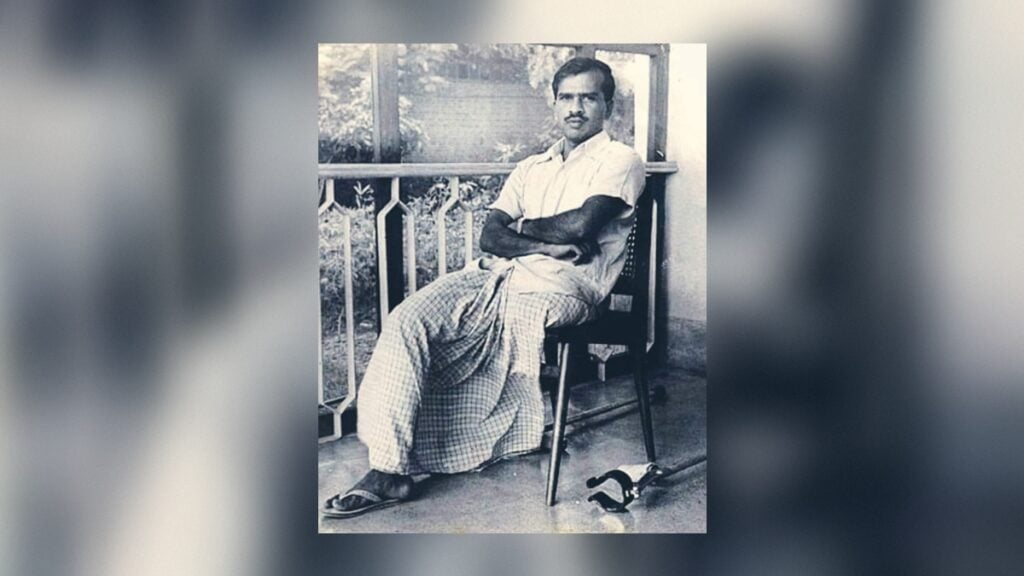
Today, 14 November, marks the 87th birth anniversary of Colonel Abu Taher Bir Uttam, a decorated freedom fighter, revolutionary and commander of Sector 11 during Bangladesh’s Liberation War. He was born on 14 November 1938.
During the 1971 Liberation War, Taher was a trained officer in the Pakistan Army. However, when the question of Bangladesh’s independence arose, he chose to abandon his military career and the relative security of his position to join the struggle for an independent homeland. His military experience, leadership, organisational abilities and determination soon established him as a significant figure in the resistance against Pakistani forces.
One of the most important and fiercely contested battles of the Liberation War took place at Kamalpur in Jamalpur. The Pakistani military had established a heavily fortified position there, making its capture a strategically important objective for the freedom fighters. The battle was marked by intense fighting and considerable casualties on both sides.
On 14 November 1971, while leading operations at Kamalpur, Taher was seriously wounded when an artillery shell struck him. The incident occurred on his 33rd birthday. He lost one of his legs in the attack, suffering a life-changing injury on the battlefield.
Yet the loss of a limb did not diminish his determination or commitment to the cause of independence. His sacrifice became an enduring symbol of courage and dedication during the war. In recognition of his exceptional contribution and bravery in the Liberation War, he was awarded the Bir Uttam gallantry title, one of Bangladesh’s highest military honours.
Taher’s role in the country’s history, however, did not end with independence in December 1971. He continued to pursue his vision of a society free from exploitation, inequality and oppression. He became involved in political movements driven by his belief in social justice and a more equitable distribution of power and resources.
His political activities and revolutionary outlook made him a prominent and controversial figure in the turbulent years following independence. His ideas about the restructuring of state institutions, the role of ordinary people and the armed forces, and the future direction of Bangladesh became part of the wider political debates of the period.
The country’s post-independence political landscape was marked by instability, military involvement in politics and competing visions for the new state. Taher emerged as one of the central figures in these developments, particularly during the political upheaval of November 1975.
His life came to a tragic end on 21 July 1976, when he was executed following a military tribunal trial widely regarded as controversial. The circumstances surrounding his trial and execution have remained subjects of historical and legal debate in Bangladesh.
The irony of his fate remains particularly striking. A man who had risked his life and sacrificed a leg on the battlefield for the country’s independence was ultimately executed in independent Bangladesh. His death remains a painful and significant episode in the nation’s political history.
Colonel Abu Taher was more than a military commander. He was a freedom fighter whose wartime contribution, revolutionary convictions and post-independence political activities left a lasting mark on Bangladesh. His legacy is remembered through different historical and political perspectives, but his participation in the Liberation War and his sacrifice at Kamalpur remain important parts of the country’s history.
His life also raises enduring questions about freedom, equality, political accountability and the responsibilities of those entrusted with national leadership. The ideals he pursued continue to feature in discussions about the country’s social and political development.
On the occasion of his 87th birth anniversary, tribute is paid to this distinguished freedom fighter, with respect for his contribution to the Liberation War and recognition of the complex historical legacy he left behind.
A person’s life may come to an end, but the memory of their courage and sacrifice can endure across generations.
Colonel Abu Taher Bir Uttam will remain a significant figure in the history of Bangladesh’s struggle for liberation and in the country’s continuing efforts to understand its past.
Red salute to the freedom fighter.