Liquefied petroleum gas (LPG) traders across Bangladesh have announced a nationwide two-day shop closure for the upcoming Thursday and Friday to press home a seven-point demand, threatening an indefinite shutdown if their grievances remain unaddressed.
The strike call came during a press conference held by the LP Gas Merchants Co-operative Society Limited at the National Press Club in Dhaka. Announcing the action, the society’s president, Md Salim Khan, warned that failure to resolve the issues within the two-day period would force business owners to escalate their movement.
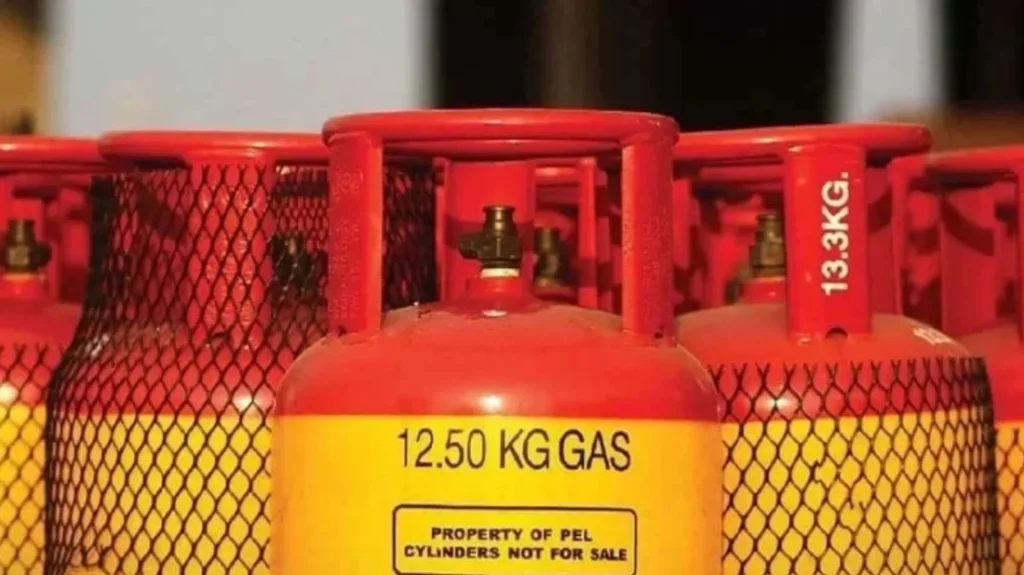
The announcement coincides with severe market volatility, where retail customers are forced to purchase gas cylinders at prices well above government-sanctioned rates. On 4 October, the Bangladesh Energy Regulatory Commission (BERC) raised the tariff for a standard 12kg LPG cylinder by Tk 252, fixing the maximum retail price at Tk 1,837. However, consumers report paying an extra Tk 500 to Tk 700 above the official price tag. Field reports submitted by several deputy commissioners to the Energy and Mineral Resources Division confirmed widespread sales above the mandated cap.
Distributors contend that selling at government prices is financially unviable without an upward revision of their official commission. Conversely, the LPG Operators Association of Bangladesh (LOAB), representing importers, maintains that national inventory and import pipelines remain entirely adequate, calling on authorities to take stern measures against those inflating prices.
Seven-Point Demands and Operational Costs
Central to the traders’ demands is a substantial hike in distribution margins. BERC set the commission at Tk 50 per cylinder five years ago, a figure traders say has been completely rendered obsolete by rising fuel prices, increased transport overheads, higher loading and unloading charges, soaring warehouse rents, and inflated licensing fees. Losses incurred from idle, unreturned cylinders have further squeezed margins. The society is demanding a revised commission of Tk 150 per cylinder, or alternatively, a flat 7 per cent share of the total retail price.
In a formal representation submitted to BERC on 8 October, the association detailed the cost breakdown involved in moving a single cylinder:
-
Transport from company depots to distributor warehouses costs Tk 50.
-
Handling charges and final delivery to retailers account for Tk 35.
-
Staff salaries, utility bills, and warehouse rents add another Tk 25.
-
Factoring in a net profit margin of Tk 40 yields the requested Tk 150 commission.
Mid-Month Price Volatility and Supply Bottlenecks
Beyond financial margins, traders accused several private operators of manipulating prices mid-month. While BERC officially determines LPG prices once a month, certain companies allegedly adjust rates unilaterally after five to seven days, destabilising the retail market. The association demands that any mid-month price adjustments receive explicit BERC authorisation and that company invoices accurately reflect real transaction values.
Supply constraints and foreign exchange hurdles were also highlighted. According to Salim Khan, most market players barring six or seven major distributors are currently struggling to deliver gas. Letters of credit (LC) opening difficulties have left hundreds of thousands of empty cylinders sitting idle across the country. The society urged the government to intervene, either by facilitating gas refilling for insolvent operators or enabling alternative distribution mechanisms using existing cylinder stocks.
The comprehensive seven-point manifesto submitted by the association demands:
-
Increasing the distributor commission to Tk 150 per cylinder or 7 per cent of the retail price.
-
Prohibiting unilateral mid-month price changes by companies without formal BERC notification.
-
Government-backed refilling initiatives for idle cylinders belonging to supply-distressed firms.
-
Mandatory listing of accurate sale prices on official company invoices.
-
Provision of fair transportation allowances by companies that do not deliver directly to distributor warehouses.
-
Halting law enforcement prosecutions against transport vehicles over minor structural issues, such as side railings, provided all vehicular documentation is in order.
-
Immediate cessation of “arbitrary and unethical” financial penalties imposed by the Directorate of National Consumer Rights Protection.
This is not the first instance of friction between fuel retailers and state regulators. On 8 January, traders suspended LPG distribution nationwide to protest administrative raids and spot fines. That strike was called off later the same evening following assurances from BERC officials during emergency talks. With importers claiming stable supply lines and retailers citing mounting overheads, ordinary consumers remain caught in the middle of an escalating