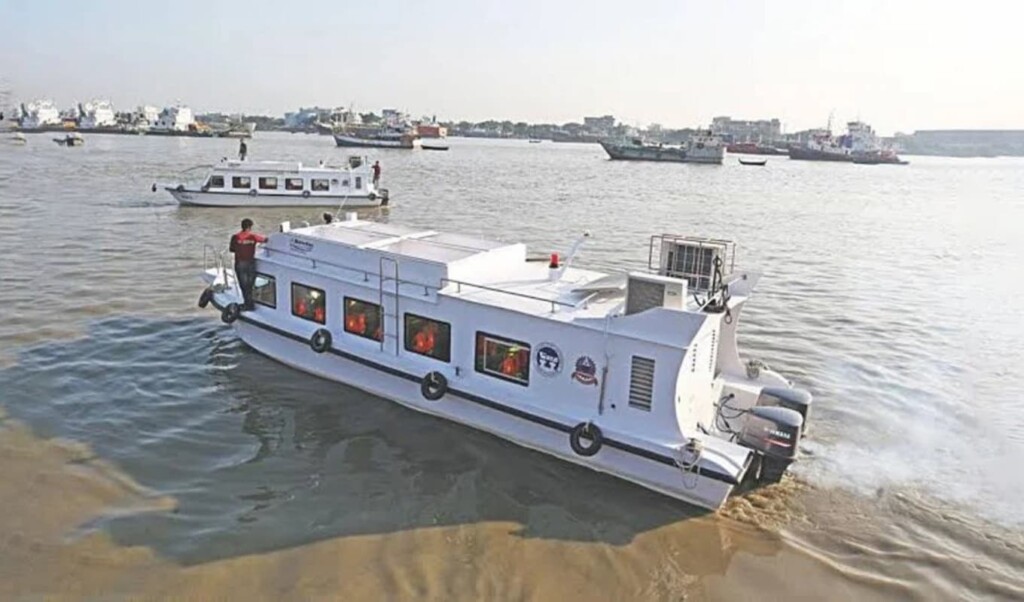
The Government of Bangladesh has embarked on an ambitious initiative to introduce an electric water bus service along a 110-kilometre circular route encircling Dhaka. Designed to alleviate the capital’s chronic traffic congestion and promote eco-friendly urban transport, the integrated network will weave through five major rivers: the Buriganga, Turag, Shitalakhya, Balu, and Dhaleshwari. The comprehensive roadmap envisions connecting four vital river ports—Dhaka, Narayanganj, Tongi, and Mirkadim—supported by 45 key access points, comprising five major terminals and nine landing stations.
Despite high-level directives from the Prime Minister’s Office to expedite operational timelines, several operational and technical frameworks remain under development. The Bangladesh Inland Water Transport Corporation (BIWTC) and the Bangladesh Inland Water Transport Authority (BIWTA) are currently assessing fleet specifications, utility requirements, and sustainable electricity supply infrastructures. To ensure financial viability, authorities are actively seeking private sector engagement to manage commercial passenger ferries, high-speed launches, and tourism vessels.
This new undertaking follows previous attempts to establish water transport that suffered severe financial losses. Between 2010 and 2020, services along the Badamtali–Gabtali and Narayanganj–Tongi routes were rendered unsustainable due to slow transit times, severe river pollution, poor multimodal road connectivity, and competition from uncoordinated cargo vessel traffic.
| Financial Metric / Operational Indicator | Historical Outcome / Target Value |
| Initial Capital Expenditure (12 Water Buses) | ৳9.20 Crore |
| Total Revenue Generated (2010–2020) | ৳2.52 Crore |
| Total Operational Expenditure | ৳37.87 Crore |
| Cumulative Financial Loss | ৳35.35 Crore |
| Total Length of Circular Waterway | 110 Kilometres |
| Waterway Section at 12-Foot Depth | 63 Kilometres |
| Waterway Section at 8-Foot Depth | 47 Kilometres |
| Active Dredging Zone (Sirnichtek to Ashulia) | 10 Kilometres |
| Identified Liquid Waste Outfalls | 424 Sources |
| Industrial / Private Pollution Sources Identified | 244 Sources |
| Completed Bank Walkways Construction | 20 Kilometres |
| Walkways Under Construction (92% Complete) | 52 Kilometres |
| Targeted Boundary Pillars for River Demarcation | 7,100 Pillars |
| Boundary Pillars Installed to Date | 6,320 Pillars |
| Evicted Illegal Structures (Dhaka & Narayanganj Ports) | 24,792 Structures |
| Reclaimed Riverbank Land (Dhaka & Narayanganj Ports) | 835.10 Acres |
Transportation and environmental experts, including Professor Dr Md Hadiuzzaman and Professor Dr Ainun Nishat, emphasise that long-term success requires robust regulation, waste management, prompt feeder connections, and efficient private sector execution rather than direct state operation. Modernising landing sites and controlling river pollution will prove decisive in transforming this circular route into a viable commuter alternative.