Khabowrala online Desk
Published: 27 Mar 2026, 03:59 pm

Businesses across the Asia-Pacific (APAC) region are facing mounting cyber and financial crime risks as fraudsters deploy increasingly sophisticated tactics, including synthetic identities and human-like automated attacks. A sharp rise in digital fraud activity is prompting renewed calls for stronger cyber defences and more advanced risk management frameworks.
According to the latest LexisNexis Risk Solutions Cybercrime Report, synthetic identity fraud has surged dramatically in 2025, increasing eightfold on a global scale. Based on an analysis of approximately 116 billion digital transactions, this form of fraud now accounts for 11% of all detected cases, underlining its rapid emergence as a critical threat.
Synthetic identity fraud involves the creation of “Frankenstein” identities by blending genuine personal data—such as national identification numbers or addresses—with fabricated information. These hybrid identities are particularly difficult to detect because they do not correspond to a real individual, meaning there is no direct victim to raise an alert. As a result, traditional fraud detection systems often fail to identify suspicious activity at an early stage.
Criminal networks are exploiting this vulnerability by using synthetic profiles to pass initial Know Your Customer (KYC) checks, secure insurance policies or financial services, and gradually build credible transaction histories over time. Once these identities appear legitimate, fraudsters may file substantial claims or default on obligations, leaving insurers and financial institutions exposed to significant losses.
The scale of the threat varies by region. In Latin America, synthetic identity fraud now represents a striking 48.3% of all reported fraud cases, making it the dominant method of attack. Meanwhile, first-party fraud—where genuine customers deliberately misrepresent information for financial gain—remains the leading category globally, accounting for 38.3% of cases. This issue is particularly acute in Europe, the Middle East and Africa (EMEA), where it contributes to more than half of all reported fraud incidents.
The report also highlights a sharp escalation in automated cyberattacks. Malicious bot activity has risen by 59%, with advanced tools now capable of mimicking human behaviour, including cursor movements and typing patterns. This level of sophistication allows fraudsters to bypass behavioural analytics systems that were previously effective in identifying non-human interactions.
In the APAC region, the combination of rapid digital adoption and evolving fraud techniques has created a complex risk environment. While digital transaction volumes continue to grow at pace, the fraud attack rate has climbed to 1.7%, signalling increased exposure for businesses operating in the region. Notably, attacks originating from desktop browsers have surged, as cybercriminals leverage more advanced automation frameworks to execute large-scale operations.
The convergence of these trends is placing pressure on organisations to rethink their approach to fraud prevention. Traditional rule-based systems are increasingly insufficient against adaptive threats that exploit both technological loopholes and human behaviour. As such, businesses are being urged to invest in multi-layered security strategies, combining artificial intelligence, behavioural analytics, and real-time monitoring to detect anomalies more effectively.
Industry experts also emphasise the importance of strengthening identity verification processes. Enhanced KYC protocols, continuous authentication, and improved data-sharing mechanisms between institutions could help mitigate the risks posed by synthetic identities. At the same time, workforce training and awareness remain critical in identifying suspicious patterns that automated systems may overlook.
| Category | Key Insight |
|---|---|
| Global Transactions Analysed | 116 billion |
| Synthetic Identity Fraud Growth | Increased eightfold in 2025 |
| Share of Digital Fraud | 11% attributed to synthetic identities |
| Latin America Impact | 48.3% of fraud cases involve synthetic identities |
| First-Party Fraud | 38.3% of global fraud cases |
| EMEA Fraud Trend | Over 50% driven by first-party fraud |
| Bot Attack Growth | Increased by 59% |
| APAC Fraud Attack Rate | Rose to 1.7% |
| Attack Method Trend | Significant rise in desktop browser-based attacks |
As digital ecosystems expand and fraudsters refine their methods, the insurance and financial services sectors face a pivotal moment. The ability to detect and prevent increasingly complex fraud schemes will depend on a combination of technological innovation, regulatory alignment, and organisational preparedness. Without decisive action, the growing sophistication of synthetic identity fraud and automated attacks could erode trust and stability across the global financial system.

> Primary Schools Face Acute Leadership Shortfall
> Fire at Sitakunda Farm Claims 23 Livestock
> Argentina’s Win Conceals Growing Concerns
> Measles Outbreak Strains Rajshahi Hospital Resources
> Dhoni Injury Hits Chennai Start
> Shariatpur July Memorial Set Ablaze by Chhatra League Member
> Insurance Leaders Accelerate AI Investment Amid Rising Cyber Risks and Skills Shortages
> Bangladesh Currency Exchange Rates Firm on 27 March
> Major Shake-Up Planned in 22 Banks
> Oil Prices Ease After US Delay
> Fraud Surge Threatens APAC Firms as Synthetic Identities Proliferate
> Chattogram Receives Major Fuel Shipment
> Bangladesh Arrive in Singapore Ahead of Final AFC Asian Cup Qualifier


Argentina’s 2–1 triumph over Mauritania delivered the expected result, but beneath the surface, the...

The opening day of the 2026 Indian Premier League has brought an early setback for Chennai Super Kin...

Dua Lipa is confirmed to join the cast of the upcoming A24 comedy Peaked, marking her first foray in...

The ongoing war in Iran has left an indelible mark on citizens, but when reflections come from the d...

American pop icon Taylor Swift celebrated an extraordinary evening on Thursday, 26 March, as she sec...

In the early hours of Saturday, the United Arab Emirates witnessed a significant escalation in regio...

The insurance sector witnessed a particularly active week from 23 to 27 March 2026, characterised by...

The ongoing conflict between Israel and Hamas, now entering its second month, has escalated to a wid...

Recent incidents in Bangladesh’s insurance industry have revealed critical weaknesses, particularly...

In a dramatic turn of events, former Prime Minister K. P. Sharma Oli and ex-Home Minister Ramesh Lek...
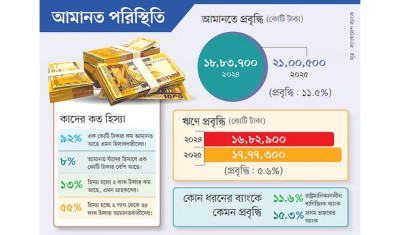
Small and medium-sized depositors continue to be the cornerstone of Bangladesh’s banking sector, und...

Bangladesh is likely to face mounting pressure on its remittance inflows as ongoing conflict in the...


Availabe for iphone & ipads

Available in google play
 বাংলা
বাংলা