khaborwala online desk
Published: 27 Mar 2026, 01:55 pm

Global oil markets retreated on Friday after the United States signalled a postponement of potential military action targeting Iran’s energy infrastructure, a move that eased immediate fears of supply disruption and tempered a sharp rally seen a day earlier.
US President Donald Trump announced a delay in any planned strikes on Iranian fuel facilities, prompting traders to reassess the near-term geopolitical risk premium that had driven prices higher. On Thursday, crude benchmarks surged significantly amid escalating tensions in the Middle East, with concerns centred on the vulnerability of key oil-producing and transit regions.
Although prices declined on Friday, the pullback only partially reversed the previous session’s steep gains. Market sentiment remains fragile, as analysts warn that prolonged instability involving Iran could still trigger substantial volatility in energy markets.
Industry experts note that the prospect of a wider conflict has heightened concerns about disruptions to global supply chains, particularly through strategic chokepoints such as the Strait of Hormuz, a critical artery for oil shipments. If tensions escalate into a sustained conflict, some forecasts suggest crude oil prices could surge dramatically—potentially reaching as high as $200 per barrel under worst-case scenarios.
However, there is also cautious optimism among market observers. Should diplomatic efforts succeed and tensions de-escalate in the coming weeks, oil prices may stabilise or even decline further. Seasonal demand patterns, combined with adequate global reserves, could help cushion the market against short-term shocks.
The following table summarises recent market movements:
| Date | Market Trend | Key Drivers |
|---|---|---|
| 26 March | Sharp increase | Rising geopolitical tensions, war concerns |
| 27 March | Moderate decline | Delay in US action, easing immediate fears |
Despite Friday’s dip, the broader outlook remains uncertain. Investors continue to monitor geopolitical developments closely, with price movements expected to remain sensitive to any shifts in diplomatic or military dynamics.
In the longer term, analysts emphasise that sustained peace and stable supply conditions will be crucial in maintaining balanced oil prices. Conversely, any renewed escalation could quickly reverse the current downward trend, underscoring the market’s ongoing vulnerability to geopolitical shocks.

> Fire at Sitakunda Farm Claims 23 Livestock
> Argentina’s Win Conceals Growing Concerns
> Measles Outbreak Strains Rajshahi Hospital Resources
> Dhoni Injury Hits Chennai Start
> Shariatpur July Memorial Set Ablaze by Chhatra League Member
> Dua Lipa Headlines A24 Comedy ‘Peaked’ Ensemble
> Insurance Leaders Accelerate AI Investment Amid Rising Cyber Risks and Skills Shortages
> Bangladesh Currency Exchange Rates Firm on 27 March
> Major Shake-Up Planned in 22 Banks
> Oil Prices Ease After US Delay
> Fraud Surge Threatens APAC Firms as Synthetic Identities Proliferate
> Chattogram Receives Major Fuel Shipment
> Bangladesh Arrive in Singapore Ahead of Final AFC Asian Cup Qualifier

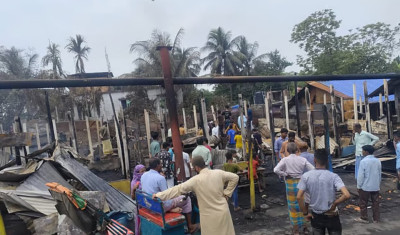
A devastating fire broke out late on Friday night at a farm in the Goalini Gate area of Bhatiari Uni...
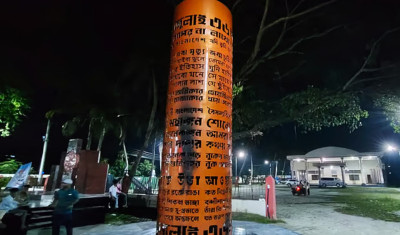
In a disturbing incident in Shariatpur, a portion of the July Memorial was deliberately set on fire,...

Recent incidents in Bangladesh’s insurance industry have revealed critical weaknesses, particularly...
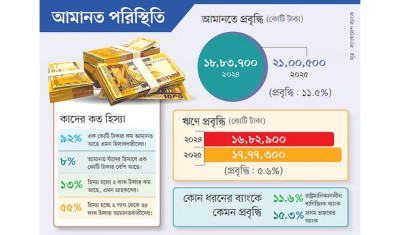
Small and medium-sized depositors continue to be the cornerstone of Bangladesh’s banking sector, und...

A pressing question confronts policymakers today: how should poverty be defined in Bangladesh? Shoul...
Bangladesh is likely to face mounting pressure on its remittance inflows as ongoing conflict in the...

A Dhaka court has ordered the remand of a model and social media personality following her arrest at...

The Bangladesh Road Transport Authority (BRTA) has temporarily suspended the registration of a passe...
Distinguished nephrologist Dr Mohammad Rashed Anwar has been appointed as the new Director of the Na...

A profound sense of grief has enveloped a community in Lakshmipur after a madrasa teacher, his wife,...

A human skeleton has been recovered from a rubbish dump in the Kamarkuri area under Gacha Police Sta...

Land Minister Mizanur Rahman Minu has claimed that the so-called “helmet group”, which he alleged wa...


Availabe for iphone & ipads

Available in google play
 বাংলা
বাংলা