Khabowrala online Desk
Published: 27 Mar 2026, 03:38 pm

Chief executives across the global insurance sector are significantly increasing their commitment to artificial intelligence (AI), with a growing majority expecting tangible returns within a relatively short timeframe. Despite a backdrop of economic volatility, climate-related challenges, and rapid technological disruption, industry leaders remain broadly confident about both company performance and sector-wide prospects.
According to the latest outlook report by KPMG International, 82% of insurance CEOs express confidence in their organisations’ growth over the next three years—an improvement from 74% recorded in 2024. Confidence in the broader insurance industry is also robust, with 78% of respondents indicating optimism about sector resilience and expansion.
Artificial intelligence has firmly established itself as a cornerstone of strategic investment. Approximately 73% of CEOs rank machine intelligence among their top spending priorities, reflecting a decisive shift from experimentation to scaled implementation. Notably, 67% of respondents plan to allocate between 10% and 20% of their budgets to AI-related technologies, including analytics, automation, and generative AI.
Even more striking is the acceleration in expected returns. Around 67% of CEOs anticipate seeing returns on AI investments within one to three years—more than triple the 21% who held this expectation in 2024. This signals increasing confidence in AI’s capacity to deliver measurable business value in the near term.
| Category | 2025 (%) | 2024 (%) |
|---|---|---|
| CEO confidence in company growth | 82% | 74% |
| Confidence in insurance industry | 78% | N/A |
| AI as top investment priority | 73% | N/A |
| Expect AI ROI within 1–3 years | 67% | 21% |
| Identify cybercrime as top threat | 83% | N/A |
| Workforce skills gap concern | 83% | N/A |
| Ethical concerns over AI | 56% | N/A |
| Data readiness challenges | 51% | N/A |
| Regulatory barriers to AI | 77% | N/A |
Despite the enthusiasm surrounding AI, several structural and operational challenges remain. A significant 83% of CEOs cite workforce readiness and skills shortages as major impediments to effective AI adoption. This highlights the urgent need for reskilling initiatives and talent development strategies across the sector.
Ethical considerations also feature prominently, with 56% of respondents expressing concern about responsible AI deployment. Meanwhile, 51% identify data readiness as a critical issue, underscoring the importance of high-quality, well-governed datasets for successful implementation. Regulatory complexity is another major hurdle, with 77% warning that evolving compliance requirements could slow progress.
Cybercrime has emerged as the most pressing threat to growth, identified by 83% of surveyed CEOs. As insurers become increasingly digitised, the sector faces heightened exposure to cyberattacks, data breaches, and operational disruptions. This has prompted a parallel rise in investment in cybersecurity frameworks and risk mitigation strategies.
Mergers and acquisitions are expected to remain an important avenue for growth and consolidation. Half of the CEOs anticipate high-impact deals over the next three years, whilst a further 41% foresee moderate levels of activity. These transactions are likely to focus on acquiring technological capabilities, expanding market reach, and enhancing product portfolios.
Sustainability is no longer a peripheral concern but a central component of corporate strategy. Around 72% of insurers report that sustainability principles are now embedded in their operations. In addition, 81% are enhancing their environmental, social, and governance (ESG) reporting practices, and 77% are strengthening climate risk modelling capabilities to better assess long-term exposures.
In India, these global dynamics are mirrored by strong premium growth, rising demand for protection and retirement products, and rapid digital transformation. Insurers in the country are placing increasing emphasis on governance, regulatory compliance, and workforce reskilling as they expand their use of AI and digital tools.
Crucially, the industry is moving beyond pilot programmes towards full-scale AI deployment. Applications now span risk assessment, claims processing, fraud detection, and customer service—areas where efficiency gains and improved accuracy can deliver significant competitive advantages.
The findings suggest that whilst optimism remains high, the path forward will require careful navigation of technological, regulatory, and human capital challenges. Investment in innovation, talent, and strategic partnerships will be essential for insurers seeking to remain competitive in an increasingly complex and digitised landscape.

> Primary Schools Face Acute Leadership Shortfall
> Fire at Sitakunda Farm Claims 23 Livestock
> Argentina’s Win Conceals Growing Concerns
> Measles Outbreak Strains Rajshahi Hospital Resources
> Dhoni Injury Hits Chennai Start
> Shariatpur July Memorial Set Ablaze by Chhatra League Member
> Insurance Leaders Accelerate AI Investment Amid Rising Cyber Risks and Skills Shortages
> Bangladesh Currency Exchange Rates Firm on 27 March
> Major Shake-Up Planned in 22 Banks
> Oil Prices Ease After US Delay
> Fraud Surge Threatens APAC Firms as Synthetic Identities Proliferate
> Chattogram Receives Major Fuel Shipment
> Bangladesh Arrive in Singapore Ahead of Final AFC Asian Cup Qualifier


Argentina’s 2–1 triumph over Mauritania delivered the expected result, but beneath the surface, the...

The opening day of the 2026 Indian Premier League has brought an early setback for Chennai Super Kin...

Dua Lipa is confirmed to join the cast of the upcoming A24 comedy Peaked, marking her first foray in...

The ongoing war in Iran has left an indelible mark on citizens, but when reflections come from the d...

American pop icon Taylor Swift celebrated an extraordinary evening on Thursday, 26 March, as she sec...

In the early hours of Saturday, the United Arab Emirates witnessed a significant escalation in regio...

The insurance sector witnessed a particularly active week from 23 to 27 March 2026, characterised by...

The ongoing conflict between Israel and Hamas, now entering its second month, has escalated to a wid...

Recent incidents in Bangladesh’s insurance industry have revealed critical weaknesses, particularly...

In a dramatic turn of events, former Prime Minister K. P. Sharma Oli and ex-Home Minister Ramesh Lek...
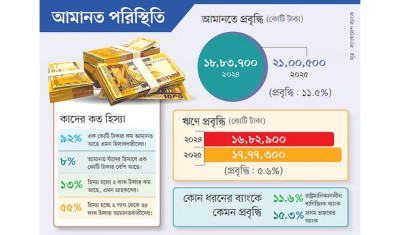
Small and medium-sized depositors continue to be the cornerstone of Bangladesh’s banking sector, und...

Bangladesh is likely to face mounting pressure on its remittance inflows as ongoing conflict in the...


Availabe for iphone & ipads

Available in google play
 বাংলা
বাংলা