Friday, 24th July 2026
Breaking News :
Severe Weather Alert Issued as Gales Threaten Ten Regions BNP Protesters Burn Jamaat MP’s Effigy in Mongla Two Killed in Kushtia Territorial Rivalry Attack Four Children Die With Measles Symptoms Fake Ministry Sticker Used in Yaba Smuggling, Three Held Students Blocked Outside Education Building Security Tightened Ahead of Students’ Education Ministry March Bangladeshi Students Block Roads Over Exams Amid Severe Flooding Five-Hour Power Outage Cripples Life in Central Dhaka One Dead and Another Injured in Old Dhaka Warehouse Blast Severe Weather Alert Issued as Gales Threaten Ten Regions BNP Protesters Burn Jamaat MP’s Effigy in Mongla Two Killed in Kushtia Territorial Rivalry Attack Four Children Die With Measles Symptoms Fake Ministry Sticker Used in Yaba Smuggling, Three Held Students Blocked Outside Education Building Security Tightened Ahead of Students’ Education Ministry March Bangladeshi Students Block Roads Over Exams Amid Severe Flooding Five-Hour Power Outage Cripples Life in Central Dhaka One Dead and Another Injured in Old Dhaka Warehouse Blast Severe Weather Alert Issued as Gales Threaten Ten Regions BNP Protesters Burn Jamaat MP’s Effigy in Mongla Two Killed in Kushtia Territorial Rivalry Attack Four Children Die With Measles Symptoms Fake Ministry Sticker Used in Yaba Smuggling, Three Held Students Blocked Outside Education Building Security Tightened Ahead of Students’ Education Ministry March Bangladeshi Students Block Roads Over Exams Amid Severe Flooding Five-Hour Power Outage Cripples Life in Central Dhaka One Dead and Another Injured in Old Dhaka Warehouse Blast Severe Weather Alert Issued as Gales Threaten Ten Regions BNP Protesters Burn Jamaat MP’s Effigy in Mongla Two Killed in Kushtia Territorial Rivalry Attack Four Children Die With Measles Symptoms Fake Ministry Sticker Used in Yaba Smuggling, Three Held Students Blocked Outside Education Building Security Tightened Ahead of Students’ Education Ministry March Bangladeshi Students Block Roads Over Exams Amid Severe Flooding Five-Hour Power Outage Cripples Life in Central Dhaka One Dead and Another Injured in Old Dhaka Warehouse Blast Severe Weather Alert Issued as Gales Threaten Ten Regions BNP Protesters Burn Jamaat MP’s Effigy in Mongla Two Killed in Kushtia Territorial Rivalry Attack Four Children Die With Measles Symptoms Fake Ministry Sticker Used in Yaba Smuggling, Three Held Students Blocked Outside Education Building Security Tightened Ahead of Students’ Education Ministry March Bangladeshi Students Block Roads Over Exams Amid Severe Flooding Five-Hour Power Outage Cripples Life in Central Dhaka One Dead and Another Injured in Old Dhaka Warehouse Blast Severe Weather Alert Issued as Gales Threaten Ten Regions BNP Protesters Burn Jamaat MP’s Effigy in Mongla Two Killed in Kushtia Territorial Rivalry Attack Four Children Die With Measles Symptoms Fake Ministry Sticker Used in Yaba Smuggling, Three Held Students Blocked Outside Education Building Security Tightened Ahead of Students’ Education Ministry March Bangladeshi Students Block Roads Over Exams Amid Severe Flooding Five-Hour Power Outage Cripples Life in Central Dhaka One Dead and Another Injured in Old Dhaka Warehouse Blast Severe Weather Alert Issued as Gales Threaten Ten Regions BNP Protesters Burn Jamaat MP’s Effigy in Mongla Two Killed in Kushtia Territorial Rivalry Attack Four Children Die With Measles Symptoms Fake Ministry Sticker Used in Yaba Smuggling, Three Held Students Blocked Outside Education Building Security Tightened Ahead of Students’ Education Ministry March Bangladeshi Students Block Roads Over Exams Amid Severe Flooding Five-Hour Power Outage Cripples Life in Central Dhaka One Dead and Another Injured in Old Dhaka Warehouse Blast Severe Weather Alert Issued as Gales Threaten Ten Regions BNP Protesters Burn Jamaat MP’s Effigy in Mongla Two Killed in Kushtia Territorial Rivalry Attack Four Children Die With Measles Symptoms Fake Ministry Sticker Used in Yaba Smuggling, Three Held Students Blocked Outside Education Building Security Tightened Ahead of Students’ Education Ministry March Bangladeshi Students Block Roads Over Exams Amid Severe Flooding Five-Hour Power Outage Cripples Life in Central Dhaka One Dead and Another Injured in Old Dhaka Warehouse Blast Severe Weather Alert Issued as Gales Threaten Ten Regions BNP Protesters Burn Jamaat MP’s Effigy in Mongla Two Killed in Kushtia Territorial Rivalry Attack Four Children Die With Measles Symptoms Fake Ministry Sticker Used in Yaba Smuggling, Three Held Students Blocked Outside Education Building Security Tightened Ahead of Students’ Education Ministry March Bangladeshi Students Block Roads Over Exams Amid Severe Flooding Five-Hour Power Outage Cripples Life in Central Dhaka One Dead and Another Injured in Old Dhaka Warehouse Blast Severe Weather Alert Issued as Gales Threaten Ten Regions BNP Protesters Burn Jamaat MP’s Effigy in Mongla Two Killed in Kushtia Territorial Rivalry Attack Four Children Die With Measles Symptoms Fake Ministry Sticker Used in Yaba Smuggling, Three Held Students Blocked Outside Education Building Security Tightened Ahead of Students’ Education Ministry March Bangladeshi Students Block Roads Over Exams Amid Severe Flooding Five-Hour Power Outage Cripples Life in Central Dhaka One Dead and Another Injured in Old Dhaka Warehouse Blast

Bangladesh

History Will Judge Courage, Not Courtesy

Khabor Wala Desk

Published: 24th July 2026, 6:16 AM

History Will Judge Courage, Not Courtesy


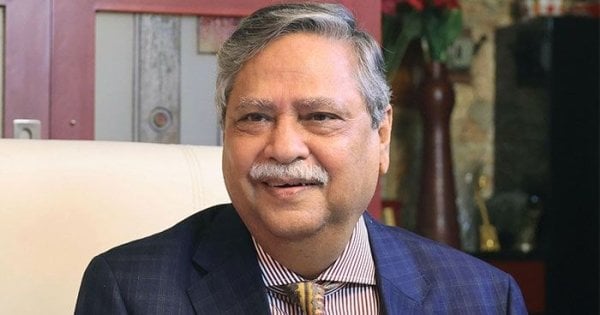
The decision by former Prime Minister Sheikh Hasina to nominate Mohammad Shahabuddin (popularly known as Chuppu) as the President of Bangladesh has remained, in my view, one of the most puzzling political appointments in recent years.

I still vividly remember the day when the matter first surfaced. At the Paltan office of the Rajshahi University Alumni Association (RUA), the then Convener and former Vice-President of the Rajshahi University Central Students’ Union (RUCSU), Nurul Islam Thandu, informed us that Mohammad Shahabuddin would have to be formally relieved of his responsibilities within the alumni organisation. He also said that a courtesy meeting with him should be arranged before his departure.

Many of us, including Ayub Bhai and myself, were surprised and immediately asked why such a step was necessary.

Thandu Bhai calmly replied, “Mohammad Shahabuddin is going to become the President.”

At the time, I found it difficult to believe. Even today, I continue to question the considerations that led one of Bangladesh’s oldest and most experienced political parties, the Awami League, to nominate him for the country’s highest constitutional office.

On a personal level, Mohammad Shahabuddin has always struck me as a courteous, humble and approachable individual. During his involvement with RUA, he maintained warm relations with fellow members. Even after assuming the presidency, he remained in touch with many of us, invited us to Bangabhaban on several occasions and extended generous hospitality. His personal conduct has consistently reflected civility and kindness.

Yet history rarely judges holders of high office by their personal manners alone.

Leadership during moments of national crisis demands constitutional integrity, moral courage and the willingness to uphold principles even under immense political pressure. Those qualities ultimately define a statesman.

In my assessment, this is where President Shahabuddin fell short.

Following the dramatic political developments of 5 August 2024, his conduct as Head of State became the subject of widespread public and political debate. Critics questioned whether several of his decisions and public statements reflected the constitutional neutrality expected from the office of the President.

Among the principal concerns raised by critics were allegations that confusion surrounded public statements regarding Sheikh Hasina’s resignation as Prime Minister. Questions also emerged over references made concerning the Supreme Court and the legal interpretation of subsequent constitutional developments. The constitutional foundation for administering the oath of the interim government became another point of contention. Later, further criticism followed over the presidential approval of various ordinances and political decisions. The swearing-in of the succeeding government, conducted under his authority, likewise remained part of the wider constitutional debate.

Collectively, these developments fuelled public discussion about the independence, impartiality and institutional dignity of the presidency.

To me, the most regrettable aspect is that an alternative course appeared possible.

He could have declared that he would not participate in any process he believed to be inconsistent with the Constitution.

He could have publicly asked where the constitutionally valid resignation of the Prime Minister was.

He might also have insisted that any transition of power should remain strictly within the constitutional framework, including the timely holding of elections as prescribed by law.

Such a position would undoubtedly have carried enormous personal risk. It might have resulted in his removal from office, detention or other serious consequences. Yet history may have remembered him as a President who placed constitutional principles above political expediency.

History offers many examples of individuals who lost power yet earned lasting respect because they defended their principles. Others retained office but gradually faded into obscurity because they failed to act when their resolve was tested. Ultimately, history evaluates character more than authority.

From that perspective, I believe Mohammad Shahabuddin missed a defining opportunity.

A well-known Bengali proverb states: “A brave person dies only once, while a coward dies repeatedly.” The saying reflects the idea that those who refuse to compromise their principles may face a single moment of sacrifice, whereas those who surrender their integrity often endure continuing humiliation and regret.

As a freedom fighter, expectations of Mohammad Shahabuddin were understandably high. Many believed that, if confronted with a constitutional crisis, he would firmly defend the Constitution, democratic governance and the dignity of the Republic.

Whether those expectations were fulfilled remains a matter of public opinion and historical interpretation.

History’s judgement is seldom influenced by personal relationships or individual kindness. Instead, it weighs the courage with which public responsibilities are discharged, the strength of one’s moral convictions and unwavering loyalty to the constitutional order. Time alone will determine who is ultimately remembered with honour and who is criticised for failing to rise to the demands of the moment.

Author: Editor and Publisher, Khaborwala
Comments