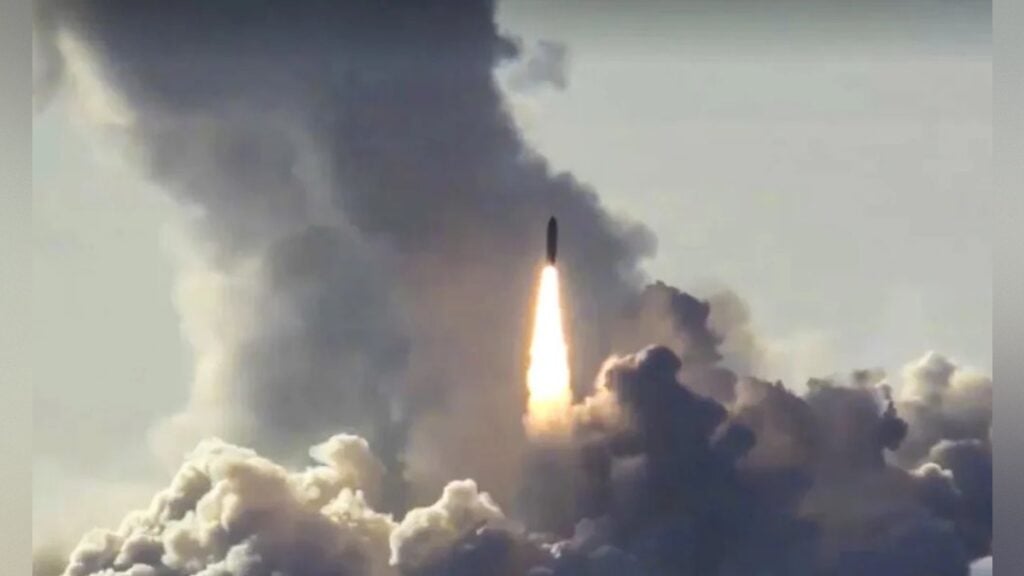
The claims were made by Houthi military spokesman Yahya Saree in a televised statement broadcast by the group’s Al-Masirah television channel. China’s state news agency Xinhua reported on the announcement.
According to Saree, three ballistic missiles were fired at facilities in Saudi Arabia’s Eastern Province, targeting the Ras Tanura oil refinery and Saudi Aramco installations in the city of Abqaiq. The Ras Tanura facility is one of the country’s major oil refining and export centres, while Abqaiq hosts critical infrastructure belonging to Saudi Arabia’s state-owned energy giant, Saudi Aramco.
The spokesman also claimed that the Rabigh oil refinery, situated along Saudi Arabia’s Red Sea coast, was among the targets.
In addition to the attacks on energy infrastructure, the Houthis said they had launched a missile towards King Khalid International Airport in the Saudi capital, Riyadh. A drone attack was also reportedly directed at King Fahd International Airport in Dammam, in the Eastern Province.
Saree claimed that the drone strike disrupted air traffic at the airport. However, he did not provide further details about the extent of the disruption or the damage caused by the alleged attacks.
Another reported target was a military command centre in the Najran region, near Saudi Arabia’s southern border with Yemen. The Houthi spokesman claimed that several Saudi military personnel and officials were killed or injured in the attack. No specific casualty figures were provided.
The latest claims came amid reports of further missile interceptions by Saudi Arabia’s air defence systems.
On Thursday evening, the Saudi-led military coalition announced that its air defences had intercepted and destroyed two ballistic missiles heading towards Riyadh. The coalition had previously reported intercepting three additional missiles, two of which were reportedly directed towards the capital and one towards the Eastern Province.
Meanwhile, the Houthis accused Saudi Arabia of carrying out air strikes against areas under their control in Yemen, claiming that 27 people had been killed. The allegation has not been independently verified.
The conflicting accounts highlight the growing confrontation between the two sides, with both reporting attacks on each other’s territory in recent weeks. The latest developments have raised concerns about the security of Saudi Arabia’s energy infrastructure and the potential consequences for regional stability.
Saudi Arabia is one of the world’s leading oil producers, and its energy facilities play a significant role in global petroleum supplies. Attacks targeting major refineries and oil processing installations can therefore have implications beyond the immediate conflict, particularly if they threaten production or disrupt export operations.
The reported targeting of international airports also adds another dimension to the security concerns. Airports are vital civilian infrastructure, and any disruption to their operations can affect passengers, commercial flights and wider transport networks. However, the full impact of the alleged strikes remains unclear.
Background to the Yemen Conflict
The current conflict in Yemen dates back to late 2014, when the Houthi movement seized the capital, Sanaa, and took control of large parts of the country’s north.
The takeover weakened Yemen’s internationally recognised government and plunged the country into a prolonged political and military crisis.
In March 2015, Saudi Arabia led a military coalition into Yemen to support the internationally recognised government and counter the Houthi advance. The intervention significantly widened the conflict, drawing in regional powers and turning Yemen into one of the Middle East’s most protracted wars.
Over the years, the fighting has caused widespread destruction, displaced millions of people and severely damaged Yemen’s economy and essential infrastructure. The conflict has also repeatedly spilled across the country’s borders, with Saudi Arabia facing missile and drone threats from Houthi-controlled territory.
Saudi Arabia and the Houthis have experienced periods of reduced hostilities and attempts at diplomatic engagement. However, recurring cross-border attacks and military operations have continued to threaten prospects for lasting stability.
The latest allegations of strikes against oil installations, airports and a military facility suggest that tensions remain high. Nevertheless, the Houthis’ claims regarding the six attacks, the reported disruption to air traffic and the military casualties have yet to be independently established in full. Further confirmation from Saudi authorities and independent sources will be necessary to determine the actual scale of the damage.