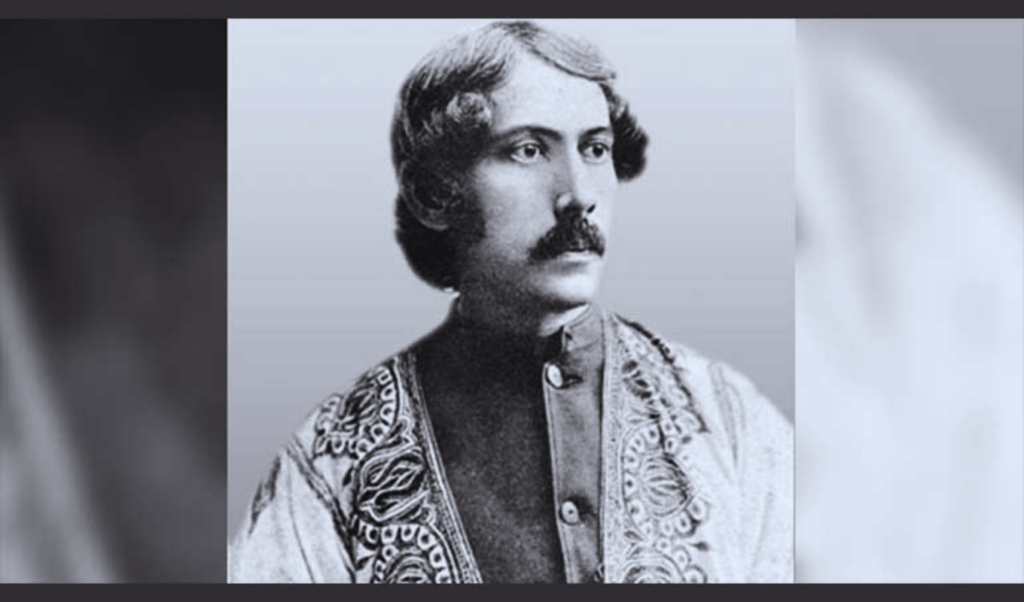
A luminous star of the Bengal Renaissance, Jyotirindranath Tagore, a proud scion of the illustrious Tagore family of Jorasanko, was simultaneously a poet, playwright, translator, composer, painter, and organiser. With the brilliance of his multifaceted talents, he carved out a distinctive place in the intellectual landscape of 19th-century Bengal.
Born on 4 May 1849 in Jorasanko, Kolkata, he was the son of Maharshi Debendranath Tagore and the “elder uncle” of Rabindranath Tagore. Jyotirindranath’s influence on the early literary development of his younger brother was profound and far-reaching. In literature, theatre, and music, he encouraged and inspired Rabindranath, fostering his creative spirit.
Education and Cultural Initiatives
After passing his entrance examination at Kolkata College, Jyotirindranath enrolled in the F.A. course at Presidency College. However, his formal education remained incomplete due to his dedication to family cultural initiatives, particularly the founding and management of the Jorasanko Theatre. From a young age, he was appointed editor of the Adi Brahmo Samaj and actively led its cultural and intellectual activities.
He played a key role in establishing and managing organisations such as the Brahmo Dharma Bodhini Sabha, Adi Brahmo Samaj Sangeet Vidyalaya, Sanjibani Sabha, and Saraswat Samaj, leaving an enduring legacy in the cultural sphere.
Prominence as a Playwright
Jyotirindranath’s theatrical journey began with the play Purubikram, resonating with patriotic fervour and national consciousness. Some of his notable works include:
Kinchit Jolojog
Sarojini
Hothat Nawab
Alik Babu
His plays combined social satire, humanism, and patriotic sentiment in a compelling synthesis.
A scholar of classical literature, he translated several Sanskrit masterpieces, including Kalidasa’s Shakuntala, Ratnavali, Uttam Charit, Malati-Madhava, and Mrichchhakatik, making them accessible to modern Bengali readers. His translation of Jhansi Rani from Marathi also stands out as a notable achievement. He was equally proficient in English and Persian.
Contributions to Music and Art
Jyotirindranath was not only a distinguished playwright but also a celebrated musician. His compiled work Swaralipi Gitimala remains an invaluable record of Bengali musical notation. An accomplished sitar player, he preserved the beauty of melody and rhythm for future generations.
In painting, he demonstrated exceptional skill, particularly in portraiture, earning high praise from contemporaries.
Thought and Social Vision
He was a liberal-minded and culturally sophisticated figure, a staunch advocate of women’s emancipation, and a vocal critic of societal orthodoxy and superstition. His writings reflect deep patriotism and a yearning for human freedom.
Final Chapter
Jyotirindranath Tagore passed away on 4 March 1925 in Ranchi. Yet, his contributions to Bengali literature, theatre, and cultural practice remain indelible. He reminds us how a single individual, through diverse creative pursuits, can enrich the intellectual life of an era. In the history of the Bengal Renaissance, his name shines eternally.