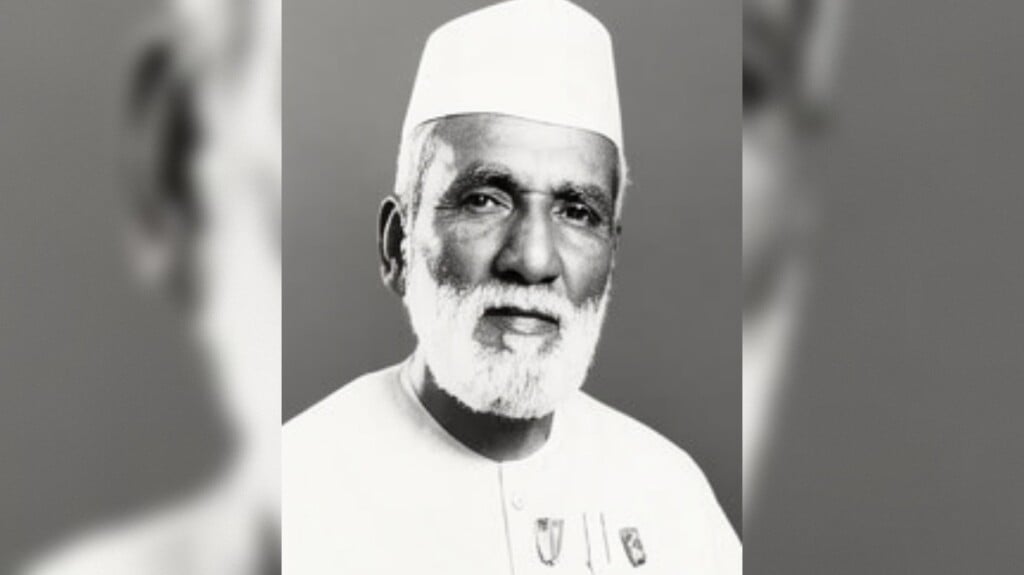
Ustad Ayet Ali Khan, a distinguished surbahar maestro, remains one of the brightest figures in the history of classical music in Bengal and the Indian subcontinent. He was born on 26 April 1884 in Shibpur village of Nabīnagar upazila in Brahmanbaria. His father was Sabdar Hossain Khan and his mother was Sundari Begum. He was born into a family deeply rooted in music, where artistic practice was an integral part of daily life. His brother, the renowned music guru Ustad Alauddin Khan, was also a towering figure in the subcontinent’s classical music tradition.
From an early age, Ayet Ali Khan showed a profound passion for music. This dedication led him to receive rigorous training under Ustad Wazir Khan Sahib, a leading exponent of the traditional classical style and a descendant of a prestigious musical lineage. Under his guidance, Ayet Ali Khan mastered the surbahar, an instrument known for its deep, meditative tonal quality, often considered a bass version of the sitar. His command over this instrument earned him widespread respect among contemporaries and audiences alike.
At the invitation of Rabindranath Tagore, he later joined the music department at Santiniketan as a teacher. During his time there, he played a significant role in nurturing students and strengthening the guru–shishya tradition. After a period of teaching, he returned to his homeland, where he continued to contribute to music through performance and instruction.
His family also carried forward his musical legacy. Among his eleven children, many were actively involved in music. Notable names include Ambia Khanam, Ustad Abed Hossain Khan, Bahadur Hossain Khan, Mobarak Hossain Khan, Mamata Khanam, Sheikh Sadi Khan, Tansen Khan, and Yasmin Khanam. Their contributions helped extend his influence across generations.
Between 1951 and 1965, he regularly performed on Pakistan Radio, captivating listeners with his profound interpretations of classical ragas. In recognition of his outstanding contributions, he received the Governor’s Medal in 1960, the Pride of Performance Award in 1966, and was posthumously honoured with the Shilpakala Academy Award in 1976.
Ustad Ayet Ali Khan passed away on 2 September 1967. His legacy lives on through his music, his disciples, and his lasting impact on classical traditions. He remains an invaluable part of the region’s cultural heritage.
Tribute.