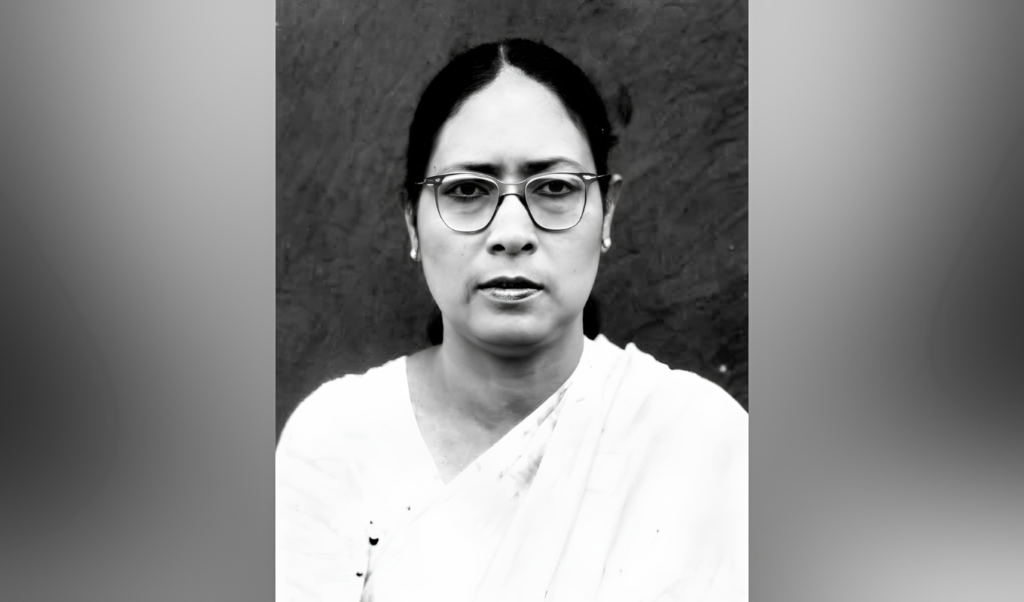
“A person passes away, but their ideals, their deeds, and their memories endure—generation after generation.”
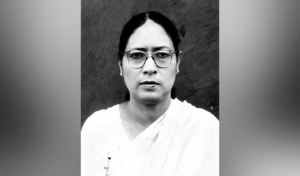
In the history of education and women’s empowerment in Bangladesh, Basanti Guhathakurta represents a brilliant yet understated chapter. She was an accomplished educationist, a dedicated teacher, an author, and a pioneering figure in women’s education. Her most profound and painful identity, however, was that of a widow to a martyr of the 1971 Liberation War—Professor Dr Jyotirmoy Guhathakurta.
Born in 1922 into an aristocratic and educated family in Fatullah, Narayanganj, Basanti exhibited a deep passion for learning from an early age. In 1937, she passed her Matriculation examination with first-division honours from Morgan Girls’ School in Narayanganj under the University of Calcutta. She later earned a Master’s degree in Bengali Literature from the University of Dhaka in 1952.
Her teaching career began in 1943 after completing her Bachelor of Teaching degree. For over four decades, she dedicated herself to expanding educational opportunities for women. As the headmistress of Gandaria Girls’ High School—later renamed Monija Rahman Girls’ High School—she served with distinction from 1944 through to the late 1980s.
Her professional experience extended beyond national borders. After earning a diploma in English language teaching from the University of London, she taught at Tower Hamlets Secondary School for Girls in London. Upon returning to Bangladesh, she applied these modern pedagogical methods to enhance local education standards.
Basanti’s contributions reached far beyond the classroom walls. A socially conscious and progressive thinker, she engaged actively with early post-war rehabilitation initiatives in independent Bangladesh, supporting women who suffered violence at the hands of the Pakistani military and their local collaborators. She also served as a member of the Kudrat-e-Khuda Education Commission and represented Bangladesh at the 1975 International Women’s Year Conference in Alma-Ata.
The most tragic chapter of her life unfolded on the dark night of 25 March 1971. During the brutal military crackdown at Dhaka University, her husband, Professor Dr Jyotirmoy Guhathakurta, was fatally shot by Pakistani forces. Basanti witnessed the atrocity firsthand. Despite the overwhelming grief of losing her husband, she persevered, dedicating her remaining years to education and social service. Her only daughter, Meghna Guhathakurta, subsequently became a prominent academic and researcher.
Basanti documented her painful experiences during the war for future generations. Her notable book, Ekattorer Smriti (Memoirs of 1971), published in 1992, details her survival in Dhaka during the nine months following her husband’s martyrdom. Another key work, Kaler Bhelay (On the Raft of Time), published in 1994, offers a literary reflection on her childhood and personal journey.
In recognition of her extraordinary contributions to women’s education, she received the Kazi Mahbubullah Award in 1991, along with honours from various civic and educational institutions.
Basanti Guhathakurta passed away on 9 September 1993. On her death anniversary, Bangladesh remembers her as a pioneering educator, a resilient witness to the 1971 atrocities, and an enduring symbol of courage and self-respect.