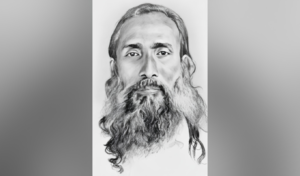
A star fell from the sky—an artiste in whose voice the songs of Rabindranath Tagore became the language of love, protest, and liberation.
“Amar Sonar Bangla, Ami Tomai Bhalobashi…”
When this song was stirring dreams of independence, patriotism, and the longing for freedom in the hearts of Bengalis, Suchitra Mitra’s resonant voice served as a deep source of inspiration. During the tumultuous days of Bangladesh’s Liberation War in 1971, her rendition of this Tagore song forged a profound spiritual bond with the Bengali struggle for freedom.
Suchitra Mitra was an eminent Rabindra Sangeet exponent, music educator, researcher, and actress from West Bengal. Embodying the emotion, lyrics, and melody of Rabindranath Tagore’s songs, she built a distinct musical realm of her own. In her voice, Rabindra Sangeet was not merely a melodic cascade; it became a unique expression of human emotion, philosophy, humanity, and resistance.
Early Life and Musical Beginnings
Suchitra Mitra was born on 19 September 1924 in Gujhandi, Bihar, in former British India. Her father, Sourindra Mohan Mukherjee, was a distinguished literary figure. Her family shared a close bond with the Tagore family and the cultural realm of Santiniketan.
Her deep affinity for Rabindra Sangeet developed during early childhood. She received her initial music lessons from Pankaj Mullick and later earned a scholarship to study at Sangeet Bhavana in Santiniketan. Her musical journey matured under the tutelage of legendary mentors like Indira Devi Chaudhurani, Shantidev Ghosh, and Sailajaranjan Majumdar.
The nature, philosophy, and musical atmosphere of Santiniketan deeply shaped her artistic persona. Although she never had the opportunity to meet Rabindranath Tagore directly, his songs and philosophy became the anchor of her life.
A Distinct Voice in Rabindra Sangeet
Suchitra Mitra held a pioneering and influential position in the world of Rabindra Sangeet. Her renditions were marked by clarity, emotional depth, steadfast conviction, and an unwavering devotion to the lyrics. She took meticulous care to express every word, tune, and sentiment with absolute fidelity.
She remained uncompromising regarding the purity of the lyrics, notation, and melody. Simultaneously, she dedicated her life to conveying the beauty and inner philosophy of Tagore’s songs to younger generations.
In her voice, love songs found delicate emotion, songs of nature carried intimate beauty, and songs of patriotism and humanity echoed with firm resolve. She did not confine Rabindra Sangeet to musical limits alone, but highlighted its deep connection to human life and society.
Standing with Bangladesh During the Liberation War
A significant aspect of Suchitra Mitra’s artistic identity emerged during the 1971 Liberation War of Bangladesh. Her empathy and support for the independence movement became vital within the cultural arena.
Tagore’s “Amar Sonar Bangla” became an emotional expression of love for the motherland and the aspiration for freedom in her rendition. The song—which later became the national anthem of independent Bangladesh—occupied a special place in the Bengali consciousness during the war.
Suchitra Mitra’s voice transformed the song into a cultural bridge uniting the language, heritage, and freedom-loving spirit of Bengalis across both sides of the border. Her cultural contributions remain memorably etched in the history of Bangladesh’s Liberation War.
The Intersection of Art and Human Liberation
Another milestone in Suchitra Mitra’s artistic journey was her long association with the Indian People’s Theatre Association (IPTA). She firmly believed that music could convey messages of unity, peace, and humanity to the masses.
Reaching ordinary people through mass songs and cultural activism added a broader dimension to her career. She also contributed as a playback singer and acted in several films.
Besides starring in Umaprasad Maitra’s film Joy Bangla during the 1971 war, her performance in Mrinal Sen’s Padatik gained critical acclaim. This multifaceted experience across acting, music, and cultural movements established her as a complete cultural icon.
Educator, Researcher, and Tagore Music Scholar
Suchitra Mitra served for many years as a professor and Head of the Department of Rabindra Sangeet at Rabindra Bharati University, contributing significantly to music education and research until 1984.
As an educator, she guided numerous students to grasp the depth, grammar, lyrics, and melodic nuances of Tagore’s compositions. To her, teaching music was not merely about teaching songs, but a gateway to understanding Tagore’s literature, philosophy, and humanistic vision.
She authored several books and articles on music. In her later years, she devoted herself to compiling an encyclopedia of Rabindra Sangeet—a valuable initiative aimed at preserving the history, data, and heritage of Tagore’s music for future researchers.
Honours and Recognition
In recognition of her extraordinary contributions to music and culture, she received numerous prestigious accolades:
| Year | Award / Recognition | Conferring Body / Detail |
| 1974 | Padma Shri | Government of India |
| 1986 | Sangeet Natak Akademi Award | Sangeet Natak Akademi |
| Desikottama | Desikottama (D.Litt.) | Visva-Bharati University |
| 2001 | Sheriff of Kolkata | Appointed as the Sheriff of Kolkata |
Her appointment as the Sheriff of Kolkata in 2001 reflected her prestigious stature in the civic and cultural life of the city.
Passing: The Departure of a Celestial Voice
On 3 January 2011, Suchitra Mitra breathed her last in Kolkata following a cardiac arrest after a prolonged illness. She was 86 years old.
With her demise, the world of Rabindra Sangeet lost a devoted practitioner. Yet, a true artiste’s voice is never confined to their lifetime. Her recorded songs, educational legacy, research, and cultural contributions continue to help new generations appreciate the depth of Tagore’s music.
Listening to Rabindra Sangeet in Suchitra Mitra’s voice remains an eternal journey into the inner realm of the human soul—at times filled with love, at times with longing, nature, or patriotism.
Did a star truly fall from the sky, or did it leave its luminous melody radiating across the hearts of millions? Her legacy reminds us that while an artiste may pass away, the light of their creation never fades.
We pay our deepest respects and humble tributes to the memory of the legendary Rabindra Sangeet artiste, Suchitra Mitra. May the melody of her voice live on in the hearts of the people across both Bengals, from generation to generation.