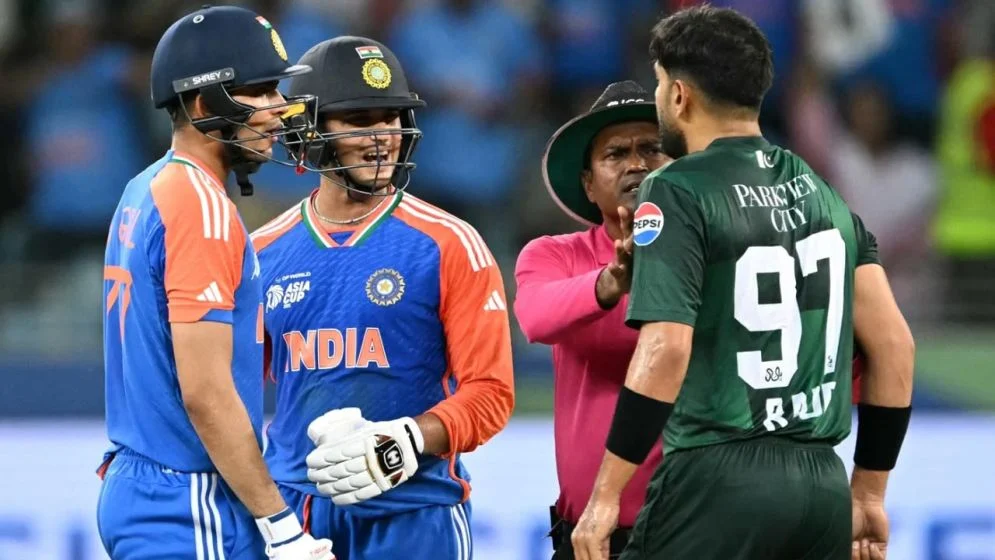
International encounters between Asian arch-rivals India and Pakistan consistently generate unmatched sporting drama. Due to ongoing political and border tensions, bilateral series between the two nations remain suspended, leaving fans reliant on International Cricket Council (ICC) and Asian Cricket Council (ACC) tournaments to witness the marquee fixture. Cricket enthusiasts now have a firm date on their calendar, as the ICC has officially scheduled the next chapter of this fierce rivalry for 10 October during the 2027 Cricket World Cup.
The announcement was unveiled on Thursday at an official ICC launch event held in Cape Town, South Africa. Scheduled to take place across October and November 2027, the flagship tournament will officially commence on 7 October with an opening fixture between the previous edition’s finalists, India and Australia. Following weeks of intense competition, the tournament will culminate in the final on 21 November.
Under the newly confirmed tournament structure, twelve nations will compete across two primary groups in the main stage. Group A features India, Pakistan, Afghanistan, Australia, Zimbabwe, and the first qualifying team. Group B comprises Bangladesh, England, South Africa, Sri Lanka, New Zealand, and the second qualifying nation.
The tournament framework incorporates a multi-tier qualification system prior to the knockouts:
-
Super Series (First Round): The bottom three teams among 14 qualifying nations will play a round-robin series on 2, 4, and 6 October, with the top team advancing to the second round.
-
Group Stage (Second Round): Twelve teams divided into two groups of six will play 30 round-robin matches from 7 to 24 October. The top three teams from each group, along with the best fourth-placed team overall, will advance to the next stage.
-
Super 7 (Third Round): Seven teams will compete in a round-robin format consisting of 21 matches starting 25 October. Points from earlier stages will reset to zero, ensuring an equal starting point. Should both India and Pakistan qualify from Group A, they will face each other for a second time in this round.
To maintain structural clarity, the ICC has pre-assigned seeding positions for potential Super 7 contenders: India (A1), Australia (A2), Pakistan (A3), England (B4), New Zealand (B1), South Africa (B2), and Sri Lanka (B3). If an unseeded team, such as Bangladesh or Afghanistan, qualifies in place of a seeded nation, they will inherit that specific seed designation for the Super 7 phase.
Following the completion of the Super 7 stage, the top four teams will advance to the knockout rounds. The first-placed team will face the fourth-placed side in the first semi-final, while the second and third-placed teams will contest the second semi-final on 17 and 18 November respectively.
Owing to their top-tier world ranking, Shubman Gill’s Indian side bypasses the opening qualifying round and enters directly into the second stage. To reach the final and lift the trophy, India will need to navigate at least 13 matches across the group stage, the Super 7 phase, and the knockout rounds.