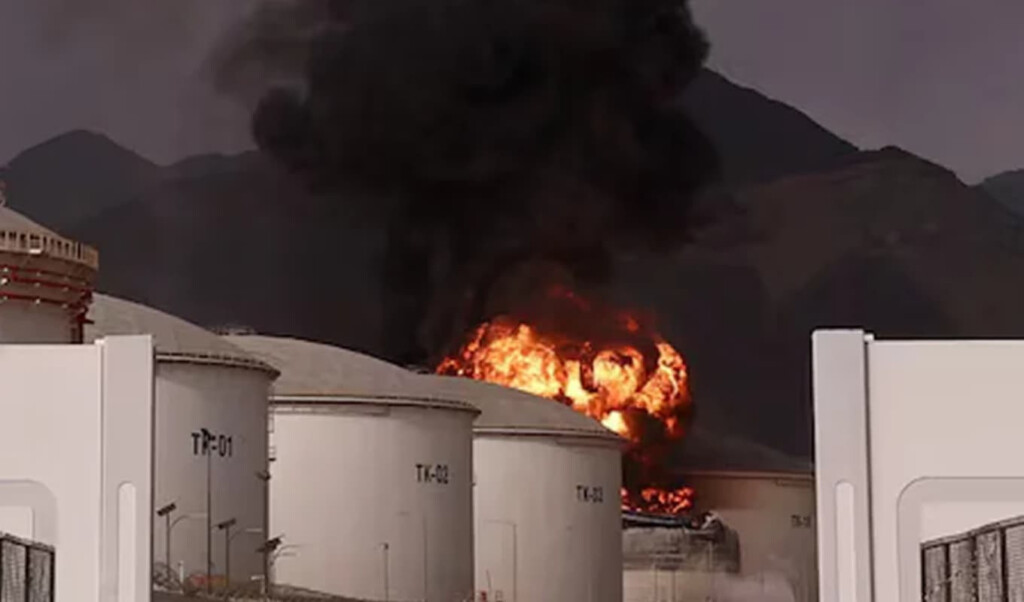
In the early hours of Saturday, the United Arab Emirates witnessed a significant escalation in regional tensions when Iranian-launched cruise missiles and drones targeted the Khalifa Economic Zone in Abu Dhabi, igniting a major fire within the industrial area. Authorities confirmed that there were no casualties, although several warehouses and manufacturing facilities sustained partial damage.
The UAE Ministry of Defence stated that the nation’s air defence systems were largely effective, intercepting most of the incoming projectiles. However, debris from a ballistic missile fell within the industrial zone, triggering one of the fires. Analysts view this incident as a stark indication of Tehran’s increasing assertiveness in the Gulf region.
According to the Abu Dhabi Government Media Office, emergency services responded promptly, bringing two separate fires under control. Firefighting units and emergency security forces acted swiftly to contain the blazes, preventing more extensive infrastructural damage. Initial assessments reported no loss of life, underscoring the effectiveness of both the defence and emergency response systems.
Regional security experts have expressed concern that such attacks pose a serious threat to industrial and commercial stability across the Gulf. The ongoing tension between Iran and the UAE appears to be escalating, raising fears that a prolonged conflict could disrupt production and international trade in Abu Dhabi’s industrial hubs, including the strategic Khalifa Economic Zone.
The table below summarises the preliminary details of the attack:
| Aspect | Details |
|---|---|
| Date & Time | 28 March, early morning |
| Target | Khalifa Economic Zone, Abu Dhabi |
| Attack Type | Cruise missiles and drones |
| Air Defence Response | Active; one ballistic missile intercepted, debris caused fire |
| Number of Fires | 2 |
| Casualties | None reported |
| Initial Damage | Several warehouses and manufacturing facilities partially affected |
Local authorities indicated that controlling the fires prevented more extensive structural damage, though the incident caused temporary disruptions to electricity and water supplies in affected areas. Analysts highlight that this attack serves as a warning to the international community about the fragility of regional stability and underscores the need for reinforced security measures in industrial zones, as well as strategies to counter remote attacks.
This event has further intensified tensions between Iran and the UAE, prompting international observers to closely monitor developments in the Gulf and consider measures to mitigate the risk of future conflicts in this strategically vital region.