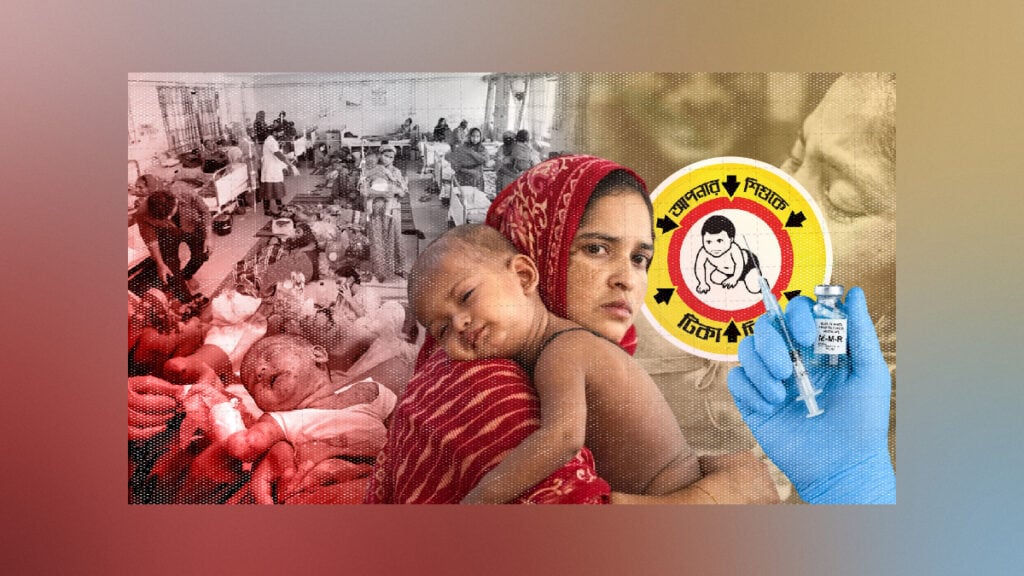
Seven more children have died with symptoms of measles across Bangladesh in the past 24 hours, while 1,351 new suspected and confirmed cases have been reported, according to the Directorate General of Health Services (DGHS).
The latest figures were disclosed in the DGHS’s regular measles situation report issued on Friday, 27 November.
According to the report, three children died with measles-related symptoms in Dhaka Division, another three in Sylhet Division and one in Khulna Division during the 24-hour reporting period.
The cumulative death toll from confirmed measles infections and suspected measles cases has risen to 1,378 since 15 March. Of these, 106 deaths were attributed to confirmed measles infections, while the remaining 1,272 involved patients who died with symptoms consistent with the disease.
The latest report also recorded 1,273 new patients displaying symptoms of measles. This brings the total number of suspected cases reported across the country since 15 March to 262,808.
Meanwhile, 78 additional confirmed measles infections were identified during the same 24-hour period, taking the cumulative number of confirmed cases to 26,554.
The figures indicate that the outbreak continues to place considerable pressure on Bangladesh’s healthcare system, with thousands of patients requiring medical attention across different parts of the country. The distinction between suspected and confirmed cases is significant, as suspected cases are identified through clinical symptoms, while confirmed infections are established through the relevant diagnostic procedures.
Hospital admission figures further illustrate the scale of the situation. Since 15 March, a total of 235,482 patients suspected of having measles have been admitted to hospitals across the country. During the same period, 226,440 patients have recovered sufficiently to be discharged and return home.
Measles is a highly contagious viral disease that spreads through respiratory droplets and airborne particles when an infected person coughs, sneezes or breathes. Common symptoms include fever, cough, a runny nose, red or watery eyes and a characteristic skin rash. Young children, particularly those who are not fully vaccinated, face a greater risk of severe complications.
In serious cases, the disease can lead to pneumonia, severe dehydration and other potentially life-threatening conditions. Timely medical attention is therefore essential, particularly when children develop persistent high fever, breathing difficulties or signs of dehydration.
Health authorities continue to monitor the spread of the disease through daily surveillance and hospital reporting. The latest figures underline the continuing public health challenge, particularly the risks facing children as suspected and confirmed infections continue to be reported in multiple divisions.