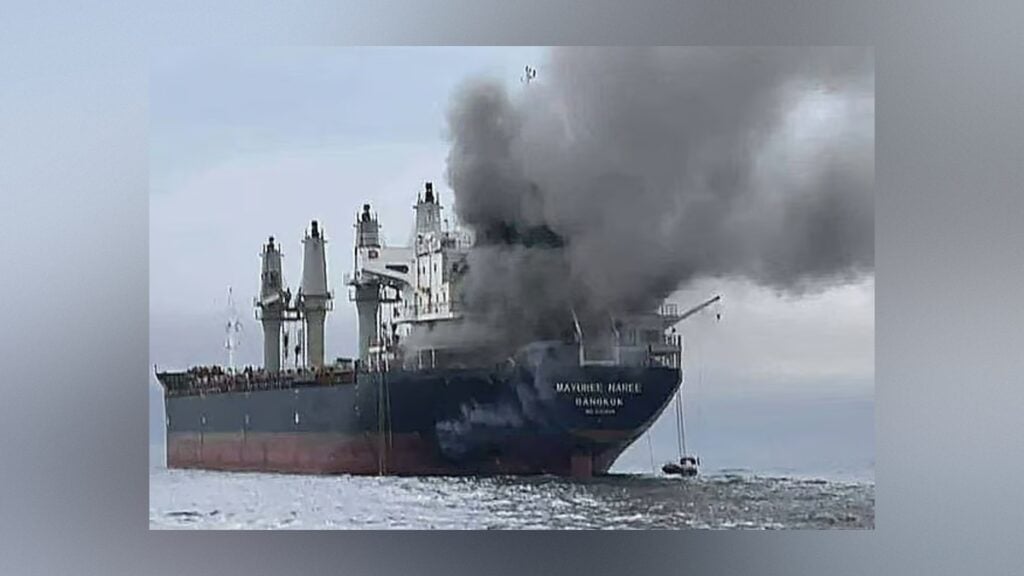
In a statement, Iran’s Islamic Revolutionary Guard Corps (IRGC) said three oil tankers had attempted to pass through the Strait of Hormuz using an unauthorised southern route over the previous 24 hours. The vessels reportedly struck naval mines, triggering explosions and fires.
The IRGC alleged that the ships had switched off their radar and navigation systems while attempting to cross the waterway. They had also ignored warnings issued by the organisation’s naval forces, according to the statement.
However, Iranian authorities did not immediately disclose when the incidents occurred or identify the tankers involved. Their countries of registration and the extent of the damage also remained unclear.
Separately, Iran’s army reported another incident involving an oil tanker in the eastern section of the strait on Thursday. A statement broadcast on Iranian state television said the vessel had entered a prohibited and dangerous area without authorisation before striking a naval mine. The impact damaged the tanker, causing a fire that eventually left it unable to continue sailing.
The latest reports add to a series of claims by Iran that vessels have struck naval mines in the Strait of Hormuz in recent days. The incidents have raised fresh questions about the safety of one of the world’s most important maritime energy corridors.
The reports also directly challenge an announcement by the United States Central Command (CENTCOM), which is overseeing American military operations in the Middle East. CENTCOM recently claimed on social media that all mines had been removed from the main shipping routes in the strait.
On Thursday, IRGC spokesman Hossein Mohebi criticised the American announcement in a post on the social media platform X. He argued that Washington should provide independently verifiable evidence to support its claim that the Strait of Hormuz had been cleared of mines, rather than relying solely on public statements.
The contrasting accounts highlight the growing dispute between Tehran and Washington over control and security in the waterway. While the United States maintains that major shipping routes have been cleared, Iran continues to report incidents involving naval mines and damaged vessels.
Since the war began on 28 February, Iran has imposed severe restrictions on maritime traffic through the strategically sensitive strait. The waterway connects the Persian Gulf with the Gulf of Oman and the Arabian Sea, making it a vital route for energy exports from major oil and gas-producing countries in the Middle East.
Around one-fifth of the world’s oil and gas consumption normally passes through the Strait of Hormuz. Major exporters, including Saudi Arabia, Iraq, Kuwait, Qatar, the United Arab Emirates and Iran, depend heavily on the route to transport energy supplies to international markets.
Any prolonged disruption to shipping through the strait could therefore have far-reaching consequences for global energy supplies. Restrictions on tanker movements, threats from naval mines and heightened military activity can increase shipping costs, raise insurance premiums and create uncertainty in international oil markets.
In response to Iran’s restrictions, the United States has imposed a blockade on Iranian ports and has been assisting oil tankers seeking to transit the strait. Washington says these measures are intended to maintain maritime access and support the movement of energy supplies from Gulf countries.
On Sunday, CENTCOM said American operations had helped Gulf countries export 1.5 billion barrels of oil through the Strait of Hormuz since the summer. The announcement was presented as evidence of Washington’s efforts to sustain regional energy exports despite the conflict.
However, the latest reported explosions and fires suggest that serious concerns remain over the security of commercial shipping. The absence of independently verified information about the damaged tankers, their identities and the circumstances surrounding the incidents makes it difficult to establish the full extent of the danger.
With the United States and Iran continuing to issue conflicting statements, the security of the Strait of Hormuz remains a critical concern for international shipping and the global energy market.