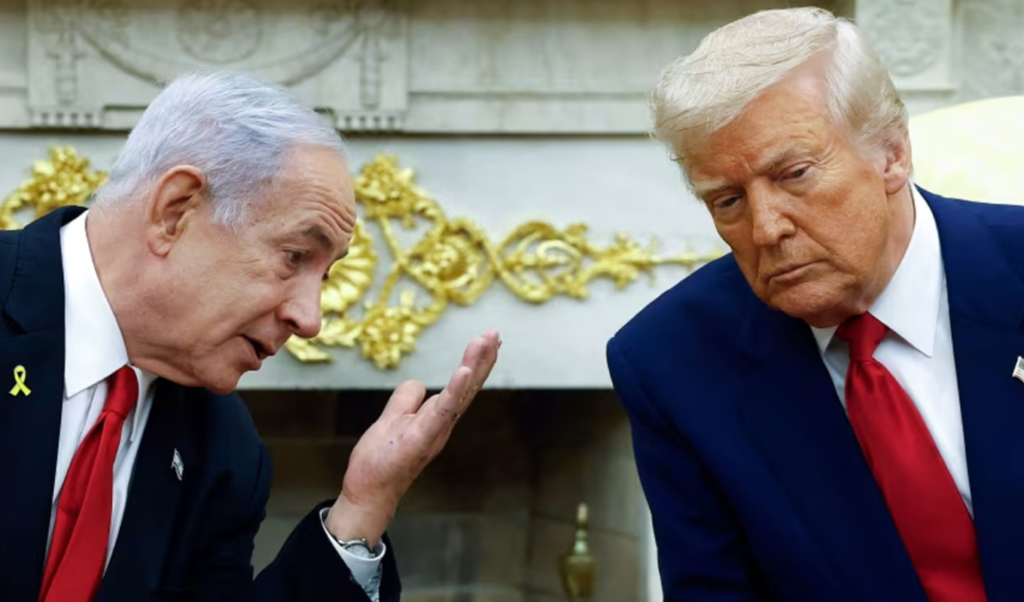
Netanyahu Rejects Trump’s 15-Point Gaza Peace Plan
JERUSALEM — Israeli Prime Minister Benjamin Netanyahu has decisively rejected a proposed 15-point peace framework advanced by US President Donald Trump’s ‘Board of Peace’, dampening hopes for a swift diplomatic resolution to the conflict in Gaza.
Speaking on Sunday, Netanyahu underscored that Israel would not withdraw its military forces from the Gaza Strip without the total and verified demilitarisation of Hamas. According to Israeli media reports, the Prime Minister made it clear that his administration refuses to accept the document in its current form, deeming any proposal that falls short of complete disarming unacceptable.
“Israel completely repudiates this 15-point document,” Netanyahu stated, stressing that his government demands genuine, enforceable disarmament rather than a cosmetic or superficial dissolution of Hamas on paper. He confirmed that discussions regarding these points remain ongoing with officials in Washington. While acknowledging that certain elements of the American proposal align with Israeli security interests, Netanyahu reiterated that several core stipulations remain entirely beyond the pale for his cabinet.
Background to the Diplomatic Impasse
The rejection highlights the persistent friction between Washington’s diplomatic initiatives and Tel Aviv’s military objectives. President Trump’s ‘Board of Peace’ initiative was designed to establish a structured roadmap toward ending the devastating hostilities in Gaza, addressing post-war governance, security arrangements, and humanitarian reconstruction. However, the requirement for an immediate or phased withdrawal of the Israel Defence Forces (IDF) without guaranteed mechanisms for Hamas’s permanent disarming has proven to be a major sticking point.
Since the outbreak of the conflict following the 7 October attacks, Netanyahu’s administration has consistently maintained three non-negotiable war aims:
-
The complete destruction of Hamas’s military and governing capabilities.
-
The safe return of all hostages held in Gaza.
-
Ensuring that Gaza never again poses a security threat to Israel.
Washington’s attempts to bridge the gap through multi-stage peace proposals have frequently encountered resistance over the sequencing of troop withdrawals and long-term security oversight. While the United States continues to push for a sustainable end to the fighting to prevent further regional escalation and address the severe humanitarian crisis, Israel insists that maintaining military control over strategic corridors in Gaza remains essential until Hamas is completely dismantled.
As talks between American and Israeli officials persist, the immediate prospect of a ceasefire under the ‘Board of Peace’ banner remains uncertain, with Tel Aviv demanding fundamental revisions before any agreement can move forward.