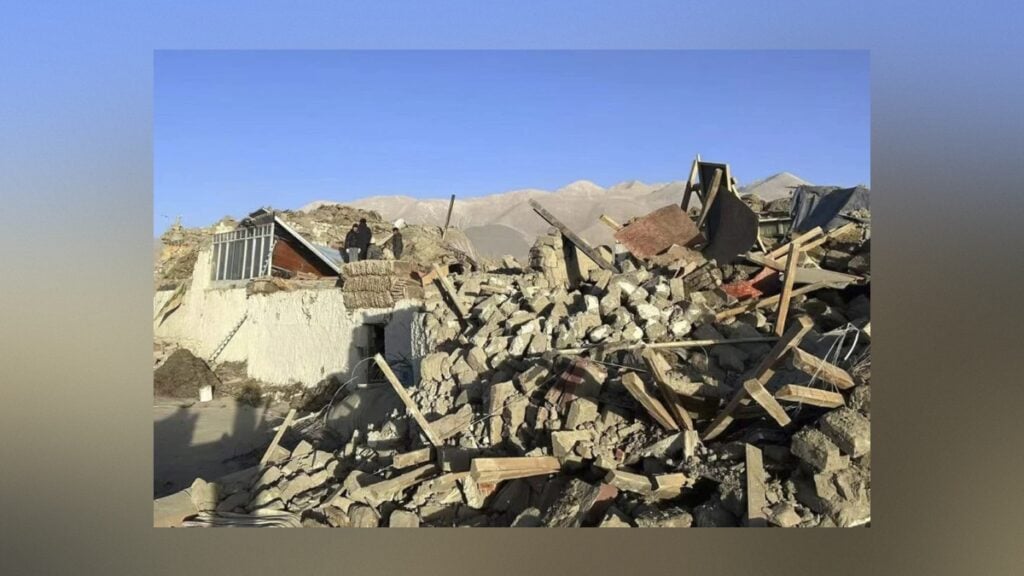
The earthquake hit on Thursday night, causing widespread damage to homes and infrastructure across the affected region. At least 32 people were reported to have sustained serious or critical injuries, while emergency teams were deployed to reach communities in some of the most difficult terrain in the area.
China’s state-run Xinhua News Agency, citing the local emergency management bureau, reported that the earthquake’s epicentre was in the Baken area of Nagqu, approximately 400 kilometres north-east of Lhasa, the regional capital.
The area lies within what the Chinese government officially calls the Tibet Autonomous Region. Its remote location and mountainous landscape have complicated efforts to assess the full extent of the destruction and provide immediate assistance to affected residents.
Local authorities declared an emergency in the aftermath of the earthquake and dispatched rescue teams to damaged settlements. Emergency workers have been attempting to reach affected communities, locate survivors and assess the condition of buildings and essential infrastructure.
The earthquake caused widespread disruption to basic services. Electricity supplies were reportedly cut across extensive parts of the affected area, leaving residents without power as rescue operations got under way.
Local media reports indicated that at least 339 houses and residential structures had been destroyed. Landslides and slope collapses were also reported in several locations, blocking major roads and making access to isolated communities considerably more difficult.
The combination of damaged roads, unstable mountain slopes and disrupted electricity supplies has created additional challenges for emergency responders. In high-altitude areas, difficult terrain can slow the movement of rescue personnel and equipment, while damaged buildings and continuing ground instability may increase the risks faced by both survivors and rescue workers.
The tremors were also felt in other important Tibetan cities, including Chamdo and Nyingchi, according to reports. However, the full geographical extent of the damage remained unclear as authorities continued their initial assessments.
Videos circulating on social media reportedly showed buildings shaking violently in darkness as frightened residents rushed out of their homes and into the streets. The footage appeared to capture the confusion and fear experienced during the earthquake. However, the videos could not be independently verified because of restrictions affecting the circulation and verification of information from the region.
The death toll and injury figures may change as rescue operations continue and emergency teams gain access to more remote settlements. The destruction of residential buildings has also raised concerns about the immediate needs of displaced families, including temporary shelter, food, medical assistance and access to clean water.
Tibet is situated in a seismically active part of the world, where powerful earthquakes can occur because of the movement and interaction of tectonic plates. The wider Himalayan region is particularly vulnerable to seismic activity, with mountainous terrain often increasing the danger through landslides, rockfalls and damage to transport routes.
The disaster has renewed concerns about the vulnerability of communities living in remote mountain regions, where reaching injured people and delivering emergency supplies can be particularly challenging.
In December 2023, an earthquake measuring 6.2 struck north-western China’s Gansu province, killing more than 120 people and damaging buildings and infrastructure. The disaster highlighted the destructive potential of earthquakes in the country’s western and north-western regions.
Tibet and neighbouring Nepal have also faced other severe natural disasters. The supplied report refers to devastating flooding and landslides associated with a glacial collapse less than two months earlier, which reportedly caused at least 1,400 deaths, with more than 100 people still missing. Those figures and the precise circumstances of that earlier disaster require independent confirmation.
As emergency operations continue following Thursday’s earthquake, authorities face the urgent task of determining the full scale of the damage, treating the injured and reaching residents cut off by blocked roads and power failures. The priority remains locating anyone trapped beneath collapsed structures and ensuring that assistance reaches the hardest-hit communities.
The difficult geography of the affected region means that a comprehensive assessment may take time. Until rescue teams can reach more settlements, the overall human and material cost of the earthquake is likely to remain uncertain.