Khaborwala Online Desk
Published: 18 Dec 2025, 09:51 am

More than a week after formally resigning from Bangladesh’s interim government, two former student advisers remain in their state-provided residences, sparking growing public curiosity and political debate over accountability, privilege, and the absence of clear regulations.
The advisers in question—Asif Mahmud Sajib Bhuiyan and Mahfuj Alam—submitted their resignations to Chief Adviser Professor Dr Muhammad Yunus on 10 December at the state guest house Jamuna. Their departures were linked to the announcement of the national election schedule, after which their resignations officially took effect. Despite this, both men continue to occupy government housing, with no confirmed timeline for vacating the properties.
Officials at the Ministry of Housing and Public Works admit that they have no specific information regarding when the residences will be vacated. Sources within the ministry suggest that, as of Wednesday, neither adviser had formally contacted the relevant authorities regarding relocation. Attempts by officials to reach them reportedly went unanswered.
The lack of clarity has been compounded by silence from the former advisers themselves. Repeated attempts by journalists to contact Asif Mahmud and Mahfuj Alam by telephone were unsuccessful, and text messages identifying reporters received no response.
At the heart of the issue lies a policy gap. Current government housing regulations do not explicitly state how long ministers, advisers, or public representatives may remain in official residences after resigning. While election conduct rules prohibit candidates from using state facilities during campaigns, there is no equivalent provision covering the immediate post-resignation period for advisers.
In contrast, rules governing government employees are far more explicit. Retired officials are typically allowed to remain in government housing for up to two months, with an additional four months granted if their children are still enrolled in educational institutions. No such timelines apply to political appointees.
This regulatory vacuum has prompted criticism from civil society observers, who argue that continued occupancy of state housing after resignation undermines public trust—particularly at a time when the interim government has pledged transparency and reform.
Asif Mahmud, a prominent figure in the July mass uprising, played a significant role in the student-led movement that ultimately hastened the fall of the Awami League government. His announcement of the “March to Dhaka” programme in early August 2024 proved pivotal. Recognising his influence, the interim administration appointed him on the very day it was formed, entrusting him initially with the labour, youth, and sports portfolios before later assigning him responsibility for local government.
Mahfuj Alam, meanwhile, emerged as a key strategist behind the student movement. Initially appointed as a special assistant, he was later elevated to adviser status and eventually given responsibility for information affairs. His international profile rose sharply when Professor Yunus introduced him at the United Nations as one of the masterminds of the student uprising.
Together, the two served for over a year—Asif Mahmud for 15 months and Mahfuj Alam for 13. Their continued residence in government housing now stands in stark contrast to the reformist ideals that brought them to prominence.
As public scrutiny intensifies, the issue has become symbolic of a broader challenge facing the interim administration: aligning political conduct with the promises of accountability that inspired a nation during a time of upheaval.

> Inkilab Manch Spokesman Osman Hadi Dies After Targeted Shooting
> Tragic Loss: NCP Leader Found Dead in Dhaka Hostel
> Court Rejects Appeal of Man Who Hired Kids to Commit Arson
> Safonov’s Four Penalty Saves Deliver PSG’s First Global Crown
> Olivia Dean Takes a Stand Against Sky-High Resale Ticket Prices
> Devastating Fire Engulfs Multi-Storey Building in Chattogram
> Bricks from Ritwik Ghatak’s Ancestral Home Found, Dumped Eleven Kilometres Away
> 61 Israeli Soldiers Have Taken Their Own Lives Since Gaza Offensive Began
> Young Footballer Ethan MacLeod Dies in Tragic Road Accident
> Anant Ambani Presents Lionel Messi with a £1 Million Watch During India Visit
> Mbappé Eyes Ronaldo’s Record With Few Matches Left
> Mustafizur Strikes Triple Wicket Haul in Single Over
> Inkilab Manch Spokesman Osman Hadi Dies After Targeted Shooting
> Olivia Dean Takes a Stand Against Sky-High Resale Ticket Prices
> Comilla Bus Owners Threaten 40-Route Service Shutdown Over Permit Dispute

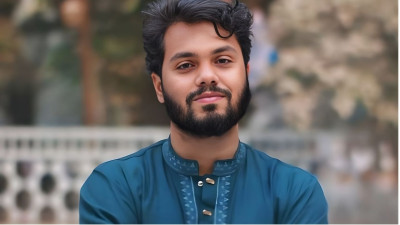
The political arena was plunged into mourning on Thursday night following the death of Sharif Osman...

Dhaka was shaken on Thursday morning, 18 December, as police recovered the lifeless body of a young...
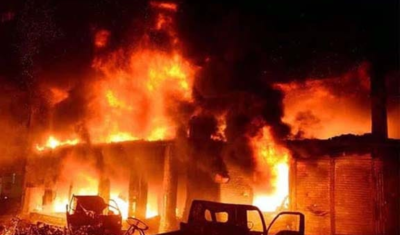
A severe fire broke out at a multi-storey building in the bustling district of Chattogram’s Chawk Ba...
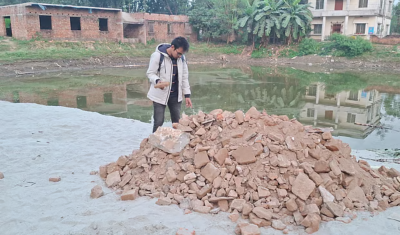
In a striking development for film and cultural enthusiasts, bricks from the ancestral home of the l...

The level of non-performing loans (NPLs) in Bangladesh’s banking sector had exceeded 12 per cent dur...
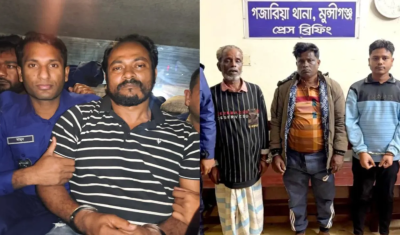
In a major law enforcement operation, Sajedul Islam Lalu, a notorious gangster and accused in multip...

Comilla is on the brink of a major transport disruption as the Comilla Bus Owners’ Association, the...

The Government has successfully frozen and seized assets worth a staggering 66,146 crore Bangladeshi...

In a tragic and shocking incident in Mohanpur, Rajshahi, a 25-year-old man, Zubair Hossain, lost his...
Jagannath University’s Central Students’ Union (JAKSU) and Hall Students’ Union elections have witne...
Support for U.S. President Donald Trump has declined to near the lowest point of his current term, p...

The Government of Bangladesh has seized a total of Tk 66,146 crore in movable and immovable assets f...


Availabe for iphone & ipads

Available in google play
 বাংলা
বাংলা