Khabowrala online Desk
Published: 02 Apr 2026, 12:20 am
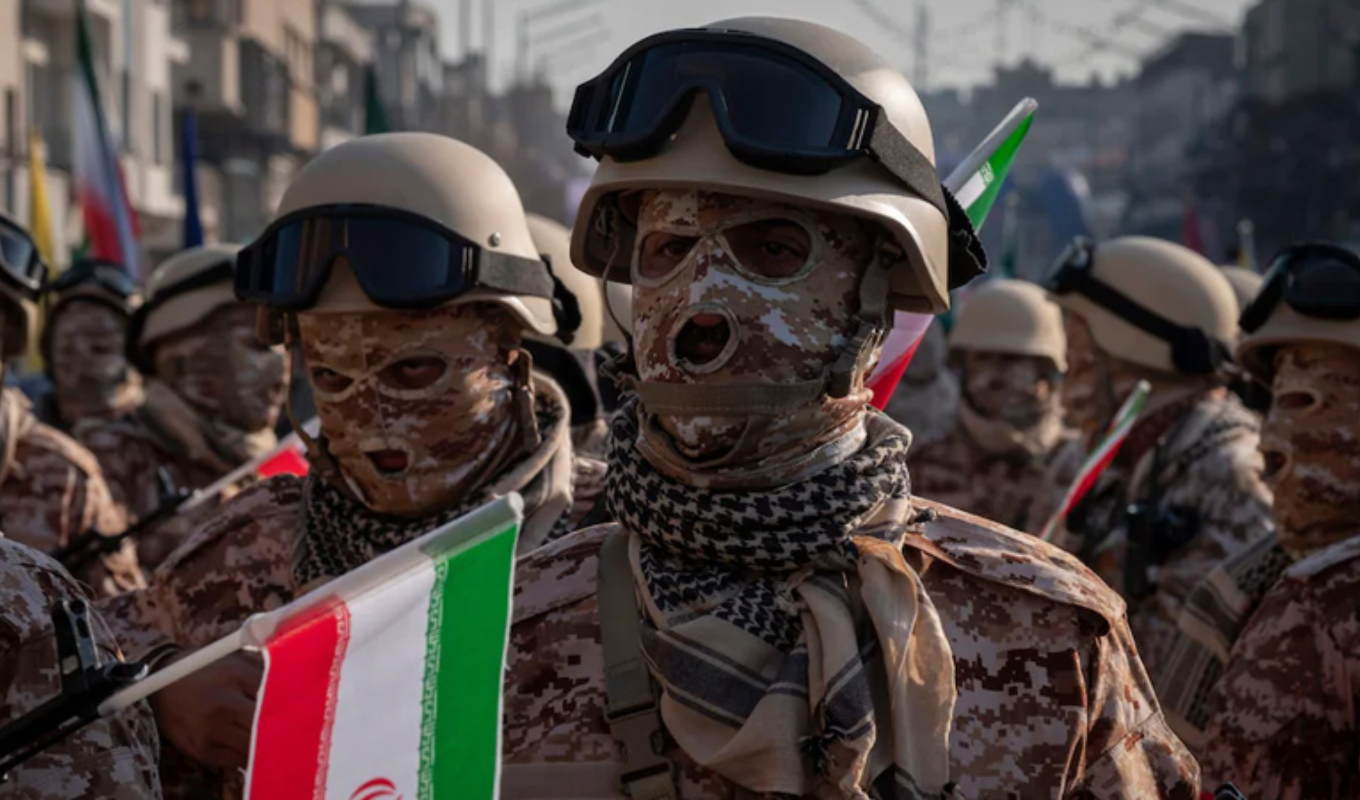
Iran has issued a stark warning that any United States-led ground invasion would face overwhelming and highly organised resistance, describing such a scenario as one that would draw American troops into a prolonged and bloody conflict with a deeply entrenched defensive force committed to protecting the Iranian state at all costs.
According to reporting referenced by The Telegraph, the strategic risks for Washington would increase dramatically should a future US administration attempt to seize or disable Iran’s enriched uranium stockpiles. Such an operation would reportedly require direct entry into Iranian territory and coordinated assaults on multiple heavily defended nuclear facilities, a task widely regarded by military analysts as exceptionally complex.
Former US Admiral James Stavridis has suggested that such an undertaking could amount to one of the largest special forces operations in modern military history, given the dispersion, protection, and geographical shielding of Iran’s strategic nuclear infrastructure.
Military analysts highlight that Iran’s nuclear and strategic facilities are positioned at significant distances from conventional US staging points in the Gulf, with some sites estimated to lie approximately 600 miles from key American naval or air bases. This distance creates considerable logistical challenges in terms of resupply, coordination, and sustained operational reach.
In addition, Iran’s terrain presents a formidable natural defensive system. The western region is dominated by the Zagros mountain range, a vast and rugged geographical barrier that significantly restricts land-based military penetration from coastal or neighbouring approaches. This terrain advantage is widely considered to be a critical element of Iran’s defensive doctrine.
Iran’s military strategy is built upon a multi-tiered defence system designed to counter technologically superior adversaries through depth, dispersion, and redundancy.
At long range, integrated air defence systems are tasked with detecting and intercepting incoming aircraft and missile threats before they can penetrate deeper into Iranian airspace. At the intermediate level, mobile air defence units provide flexibility against fast-moving targets such as fighter jets, drones, and cruise missiles.
At close range, infantry units are equipped with man-portable air defence systems (MANPADS), enabling them to engage low-altitude helicopters and aircraft. This layered approach is overseen primarily by the Islamic Revolutionary Guard Corps (IRGC), which has developed extensive operational experience based on lessons learned from the Iran–Iraq War and subsequent regional conflicts.
Iranian officials have claimed that up to one million personnel could be mobilised in defence of the country, including members of the IRGC, Basij militia forces, and other volunteer units. While the exact operational effectiveness of such a large force is difficult to independently verify, its scale alone is considered a significant deterrent to any potential invading army.
| Category | Description |
|---|---|
| Long-range defence | Integrated air defence systems targeting aircraft and missiles |
| Medium-range defence | Mobile units countering jets, drones, cruise missiles |
| Close-range defence | Man-portable missile systems for helicopters and low-altitude threats |
| Core force | Islamic Revolutionary Guard Corps (IRGC) |
| Auxiliary forces | Basij militia and volunteer formations |
| Estimated manpower | Up to 1,000,000 personnel (claimed mobilisation capacity) |
| Strategic terrain | Zagros mountain defensive barrier |
Former Iranian Vice President Ishaq Jahangiri has issued particularly strong warnings regarding any potential ground operation, stating that even attempting to seize a single inch of Iranian territory would come at an extraordinarily high human cost. He warned that such a conflict would effectively result in what he described as a “sea of blood”, underscoring Tehran’s declared willingness to resist occupation forces through prolonged warfare.
Another significant complication in any potential US-led operation would be the handling of Iran’s enriched uranium stockpiles. Estimates cited in the report suggest approximately 450 kilograms of enriched material may be dispersed across multiple locations and forms, including gaseous, metallic, and powdered states.
Some of this material is believed to be stored in highly secure facilities, while other portions may be distributed or buried beneath rubble following previous strikes or containment efforts. Recovering and safely transporting such material would require highly specialised equipment, trained personnel, and tightly coordinated logistical planning.
Iran has also warned that any ground incursion could trigger a broader regional escalation. Tehran has previously suggested it could retaliate by targeting United States military installations across the Middle East, disrupting key Gulf infrastructure, and potentially blocking strategic maritime chokepoints such as the Strait of Hormuz and the Bab al-Mandab Strait.
Such actions, if carried out, would have profound implications for global energy supply chains and international shipping routes, significantly raising the stakes of any direct military confrontation.
The challenges of operating inside Iran have drawn comparisons to past failed or limited US missions in the region. Analysts often cite the 1980 hostage rescue attempt in Tehran as an example of how complex and unpredictable operations on Iranian soil can become, particularly when faced with difficult terrain, hostile environments, and coordinated resistance.
However, modern scenarios would be far larger in scale and far more technologically sophisticated, involving advanced airpower, intelligence systems, and multi-domain warfare capabilities.
Taken together, the military geography, layered defensive systems, and mobilisation capacity of Iran present a highly complex strategic environment for any potential invading force. While military planners continue to debate feasibility and deterrence, analysts broadly agree that any ground operation would carry extraordinary risks.
In this context, Iran’s defensive posture—combined with its declared willingness to escalate regionally—creates a situation in which the costs of direct conflict would be extremely high for all parties involved, with no guaranteed strategic outcome.

> Fire Breaks Out Aboard Moored Luxury Launch
> Madaripur Hunger Strike Over Alleged Marriage Dispute
> Legal Notice Demands Disclosure of Bribery Allegation Names
> Iran Warns of Costly War Against US Ground Forces
> UAE Prepares Military Role in Hormuz Strait Push
> Seven Arrested Over Robbery Plot in Narayanganj
> Former Child Star Simrin Lubaba Marries Spiritual Transformation
> Chattogram Court Hands Nine Life Sentences
> Dhaka Raid Nets Liquor Worth Tk 70 Lakh in Kafrul
> Father’s Poison Attack Leaves Two Sons Critical, Alive
> Woman Dies Waiting For Doctor During Lunch Break
> Bangladesh Faces Energy Constraints Amid Global Crisis
> Dhaka Launches Week-Long Drive Against Street Encroachments

The United Arab Emirates (UAE) is reportedly undergoing a significant strategic shift in response to...

Spanish football sensation Lamine Yamal has issued a strong public condemnation following the emerge...

Global commercial insurance premiums are projected to reach approximately $1.4 trillion in 2025, sig...

The outlook for Sompo Japan Insurance Inc. remains stable, though execution risks linked to its rece...

A growing number of Australians are expressing regret over delaying private health insurance, as pre...

Popular singer and songwriter Arzin has returned with a strikingly original musical release that ble...

An Islamic preacher accused of promoting extremist rhetoric and antisemitic views has been deported...

The 2026 FIFA World Cup is now fully set, with all 48 participating nations confirmed following the...

LONDON, 1 April 2026 — The global reinsurance market has entered a new phase of expansion, with capi...

The April 1st reinsurance renewals have confirmed a continued softening in global property catastrop...

The qualification phase for the 2026 FIFA World Cup concluded with the final play-off matches held y...

Canadian global superstar Céline Dion has confirmed a highly anticipated return to the stage, markin...


Availabe for iphone & ipads

Available in google play
 বাংলা
বাংলা