Khabowrala online Desk
Published: 01 Apr 2026, 12:42 am
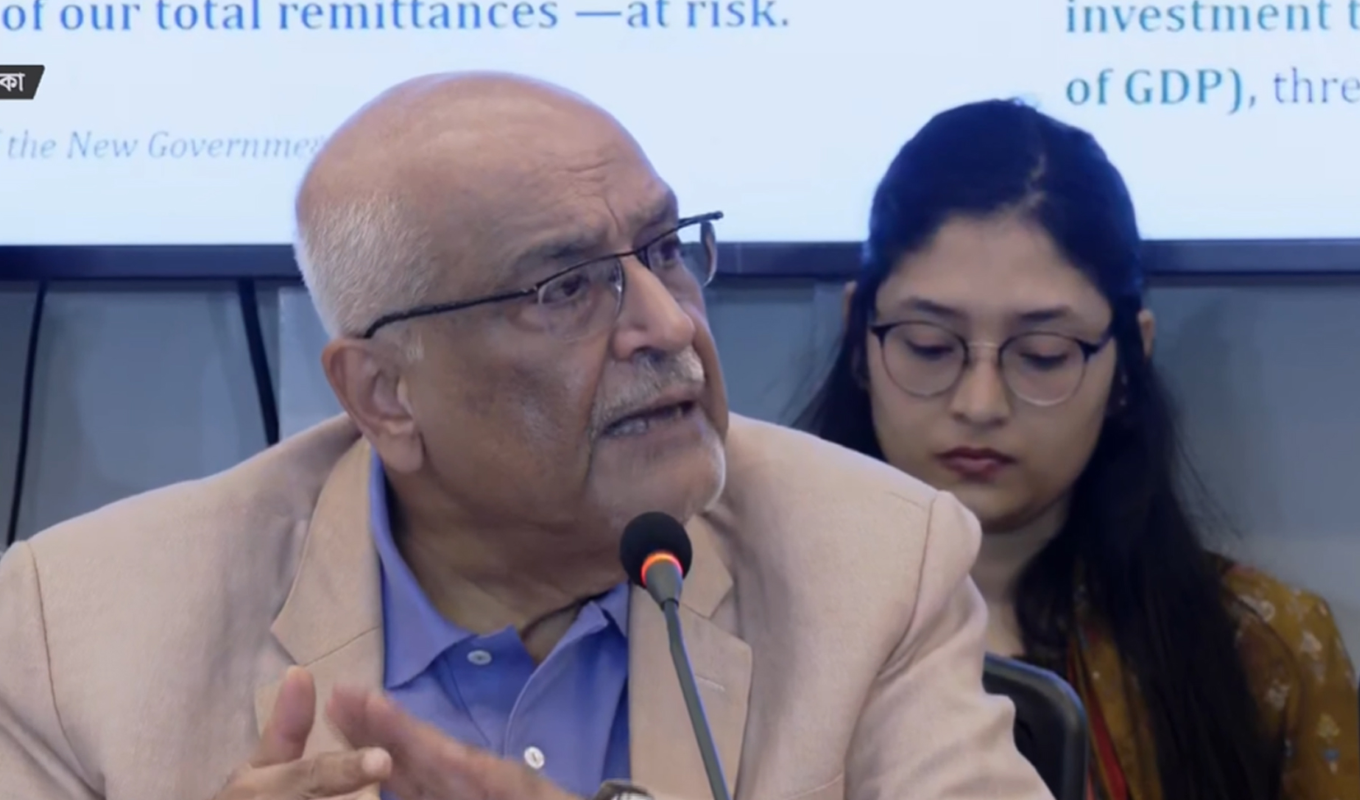
Prominent economist Debapriya Bhattacharya has warned that Bangladesh’s scope to import cheaper fuel has become increasingly constrained, citing what he described as the broader entanglement of economic policy with foreign relations under the interim government.
Speaking at a media briefing in Dhaka, he suggested that recent trade arrangements with the United States may have implications for Bangladesh’s ability to procure lower-cost energy from countries such as Russia, particularly in a highly competitive and politically sensitive global market.
“The economy is no longer separate from foreign policy considerations,” he observed, adding that current arrangements may require government approval or clearance for certain energy imports, thereby limiting flexibility in securing low-cost fuel supplies.
The remarks were made on Tuesday (31 March) at a briefing titled “Reflections on the First Budget of the New Government”, organised at the Centre for Policy Dialogue (CPD) conference centre in Dhanmondi. The event was jointly hosted by the CPD and the SDG Implementation Citizen’s Platform, Bangladesh.
Bhattacharya outlined a series of mounting macroeconomic challenges facing the country. He noted that external debt has risen significantly, the balance of payments remains under pressure, and investment as well as employment growth have continued to remain weak over an extended period.
Inflation, he said, remains persistently high, particularly in the food sector, while ongoing global instability is exacerbating pre-existing structural weaknesses in the domestic economy.
He further warned that the current geopolitical tensions in the Middle East have created three major risks for Bangladesh:
| Risk Area | Description |
|---|---|
| Liquid fuel supply | Potential disruption in global oil availability and pricing volatility |
| Gas supply constraints | Reduced reliability of imported gas flows |
| Electricity generation | Increased pressure on domestic power production capacity |
Given these risks, he stressed that the government should not wait for the upcoming budget cycle to act, but instead take immediate steps to mobilise financial and energy-related responses.
The economist suggested that the government consider increasing fuel imports to stabilise supply, while also exploring tax and duty reductions to keep domestic prices under control.
He also called for a reassessment of subsidy structures, arguing that inefficient or unjustified subsidies should be identified and gradually reduced. Particular emphasis, he said, should be placed on determining whether benefits are reaching low-income groups or disproportionately favouring wealthier segments of society.
Bhattacharya further recommended a phased reduction of cash incentive schemes over two to three stages as part of broader fiscal consolidation efforts.
Calling for urgent restructuring of the Annual Development Programme (ADP), he proposed the formation of a task force to review ongoing projects within one to one-and-a-half months. Without such scrutiny, he warned, continued approval of poorly designed development projects would fail to improve outcomes.
He also urged reforms in state-owned enterprises, arguing that many public sector industries are operating at a loss and place a burden on the national budget. According to him, non-performing state enterprises should either be privatised or restructured, with outstanding liabilities settled through asset divestment.
Bhattacharya further advocated selling government-held shares in various companies, recalling that earlier policy initiatives under former finance minister Saifur Rahman had supported partial divestment. He claimed that bureaucratic resistance has historically slowed such reforms, despite their potential to stimulate the stock market and ease fiscal pressure.
A key concern raised during the briefing was the setting of unrealistic revenue targets. Bhattacharya argued that even the National Board of Revenue is aware that such targets are often unattainable, leading to repeated shortfalls.
He emphasised the need for more realistic fiscal planning, suggesting that a smaller but achievable budget would be preferable to inflated projections that are unlikely to be met.
He also called for the removal of tax exemptions, expansion of the tax net, and stronger digital compliance mechanisms to improve revenue collection. Additionally, he advocated the introduction of wealth taxation and urged the swift implementation of the planned division of the National Board of Revenue.
Referring to political discourse, he noted that proposals to reduce tax exemptions and introduce wealth-based taxation had also appeared in opposition party election manifestos, signalling a broader policy consensus on the need for reform.
A background presentation at the briefing highlighted the scale of revenue foregone through tax exemptions. In the 2021–22 fiscal year alone, the government reportedly lost approximately BDT 272,850 crore due to income tax, VAT and customs exemptions, equivalent to 6.87% of GDP.
In addition, during the 2024–25 fiscal year, around BDT 32,230 crore was allocated in incentives for agriculture, exports, jute products and remittance inflows—equivalent to nearly 0.60% of GDP.
Experts at the event warned that such fiscal costs, if not rationalised, could further constrain the government’s ability to manage debt, inflation and development spending in an increasingly uncertain global economic environment.

> Legal Notice Demands Disclosure of Bribery Allegation Names
> Iran Warns of Costly War Against US Ground Forces
> UAE Prepares Military Role in Hormuz Strait Push
> Seven Arrested Over Robbery Plot in Narayanganj
> Fuel Train Derailment Halts Sylhet Rail Links Nationwide
> Court Jails Singer Jahid Antu Over Harassment Case
> Sagarika Double Strikes in Vain as Thailand Triumph
> Lamine Yamal Condemns Anti-Muslim Chants Barcelona Match Incident
> Former Child Star Simrin Lubaba Marries Spiritual Transformation
> Japan Post Deepens KKR Alliance
> Chattogram Court Hands Nine Life Sentences
> Dhaka Raid Nets Liquor Worth Tk 70 Lakh in Kafrul
> Father’s Poison Attack Leaves Two Sons Critical, Alive
> Dhaka Launches Week-Long Drive Against Street Encroachments


A legal notice has been issued to Member of Parliament (MP) Mufi Amir Hamza, demanding that he publi...

Police in Narayanganj have arrested seven individuals during a special overnight operation on suspic...

Rail communication between Sylhet and the rest of Bangladesh has been completely suspended after a f...

A Dhaka court has ordered the imprisonment of young singer Abu Zahid, also known as Jahid Antu, in c...

Despite a brilliant brace from Mosammat Sagarika, Bangladesh suffered a narrow 3–2 defeat against Th...

The Bangladesh national team’s trainer has expressed strong confidence that star all-rounder Shakib...
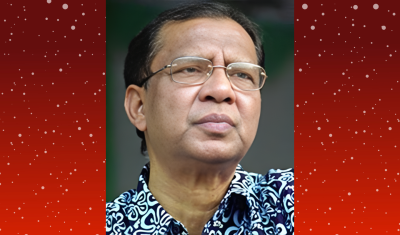
Mohammed Hanif remains one of the most enduring figures in the political history of Dhaka, remembere...
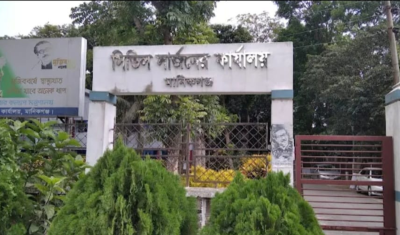
A sudden and concerning rise in measles infections has been reported in Manikganj, where 14 children...
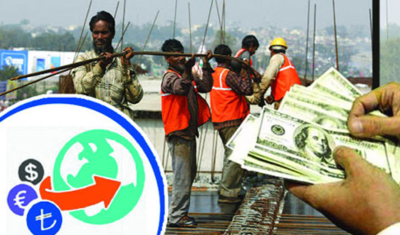
Bangladesh recorded an unprecedented surge in remittance inflows in March, with expatriates sending...
_1775056238.png)
A young housewife has been found dead in a field in Magura district of Bangladesh, in what police be...

The Anti-Corruption Commission (ACC) in Chattogram has filed two separate cases against a retired po...
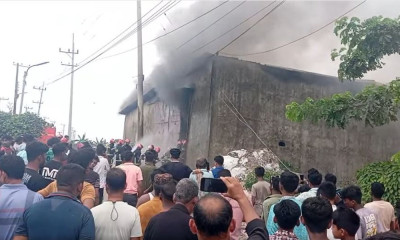
A suspected arson attack has damaged a garment waste (jhute) warehouse in the Anannya Residential Ar...


Availabe for iphone & ipads

Available in google play
 বাংলা
বাংলা