Khabowrala online Desk
Published: 02 Apr 2026, 12:17 am
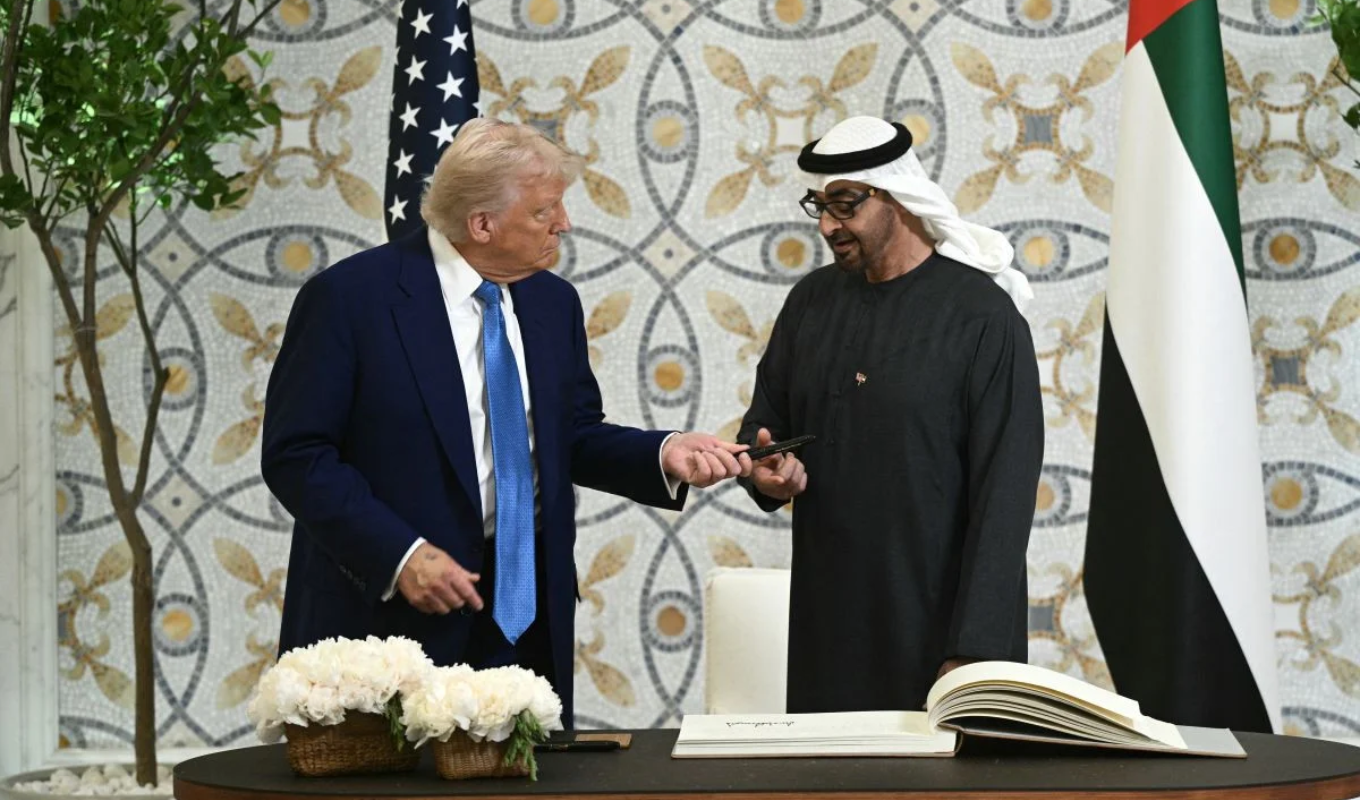
The United Arab Emirates (UAE) is reportedly undergoing a significant strategic shift in response to escalating tensions with Iran, with indications that it is preparing to join a potential US-led military effort aimed at keeping the Strait of Hormuz open to global shipping. According to a report cited by The Wall Street Journal, the Gulf nation is moving closer than ever to direct involvement in a possible confrontation with Tehran.
If confirmed, this would mark the first instance of a Gulf Arab state actively participating in a military campaign against Iran, significantly altering the regional security landscape.
Officials familiar with the discussions suggest that the UAE is working to draft a proposal for submission to the United Nations Security Council, seeking legal justification for operations aimed at ensuring the continued functionality of the Strait of Hormuz. Alongside this diplomatic effort, Abu Dhabi is also reportedly lobbying Western and Asian partners to form a broader multinational military coalition.
The UAE has argued through diplomatic channels that Iran’s leadership, facing internal and external pressure, may attempt to disrupt global energy supplies by closing or obstructing the strait. In response, Emirati officials contend that the use of force may become unavoidable if diplomatic and economic measures fail.
Early planning discussions are also said to include limited operational roles such as mine-clearing operations in the narrow waterway, alongside logistical and intelligence support for allied forces.
The report further suggests that the UAE has raised territorial claims over several disputed islands in the Strait of Hormuz, including Abu Musa, currently under Iranian control but also claimed by the UAE for decades. Emirati officials have reportedly argued that securing such locations could be critical for maintaining maritime security.
Saudi Arabia and other Gulf states are understood to support continued pressure on Iran until its military capabilities are significantly weakened, though they have not committed to deploying ground forces.
Bahrain, a close US ally and host to the US Navy’s Fifth Fleet, is expected to present a related resolution at the United Nations Security Council in the coming days, signalling growing regional alignment with Washington’s strategic objectives.
| Category | Details |
|---|---|
| Potential Operation | Security of Strait of Hormuz |
| UAE Role Under Discussion | Mine clearance, logistical and air support |
| Diplomatic Action | UN Security Council proposal under preparation |
| Military Assets | F-16 fighter jets, surveillance drones |
| Strategic Facility | Jebel Ali Port (logistics staging hub) |
| Key Allies | United States, Bahrain, Saudi Arabia (political alignment) |
| Main Adversary | Iran |
| Disputed Territory | Abu Musa Island |
Iran has reportedly intensified its military response amid the UAE’s shifting stance. According to regional accounts, Tehran recently launched dozens of ballistic and cruise missiles, as well as drones, targeting Emirati territory. Iranian officials have warned that any state assisting efforts to challenge its territorial or strategic interests will face retaliatory strikes against civilian infrastructure.
Since the escalation of hostilities, Iran is believed to have launched approximately 2,500 missiles and drones in total, with the UAE reportedly facing a greater proportion of attacks than Israel.
Security analysts have warned that direct involvement in securing the Strait of Hormuz could expose Gulf states to prolonged asymmetric warfare. A fellow at the Washington Institute, Elizabeth Dent, suggested that if the United States were to disengage prematurely after declaring strategic success, countries such as the UAE could be left exposed to sustained Iranian retaliation.
Similarly, US lawmaker Adam Smith has cautioned that maintaining open navigation in the strait would not be straightforward, noting that even small-scale drone or boat attacks could severely disrupt maritime traffic.
Chatham House expert Bilal Saab, meanwhile, has highlighted the UAE’s strategic infrastructure, particularly Jebel Ali Port, as a potential staging ground for Western-led operations. He also noted that the country’s advanced F-16 fleet, surveillance drones, and US-supplied precision weaponry could significantly enhance coalition capabilities.
While the UAE’s emerging position strengthens its alignment with Western allies, it also raises the risk of a wider and more complex regional conflict. With the Strait of Hormuz serving as a critical global energy chokepoint, any escalation could have far-reaching consequences for international trade and energy security.
As tensions mount, Gulf states now face an increasingly difficult balancing act between strategic alignment, economic stability, and the risk of direct military confrontation with Iran.

> Fire Breaks Out Aboard Moored Luxury Launch
> Madaripur Hunger Strike Over Alleged Marriage Dispute
> Legal Notice Demands Disclosure of Bribery Allegation Names
> Iran Warns of Costly War Against US Ground Forces
> UAE Prepares Military Role in Hormuz Strait Push
> Seven Arrested Over Robbery Plot in Narayanganj
> Former Child Star Simrin Lubaba Marries Spiritual Transformation
> Chattogram Court Hands Nine Life Sentences
> Dhaka Raid Nets Liquor Worth Tk 70 Lakh in Kafrul
> Father’s Poison Attack Leaves Two Sons Critical, Alive
> Bangladesh Faces Energy Constraints Amid Global Crisis
> Woman Dies Waiting For Doctor During Lunch Break
> Dhaka Launches Week-Long Drive Against Street Encroachments


A legal notice has been issued to Member of Parliament (MP) Mufi Amir Hamza, demanding that he publi...
Iran has issued a stark warning that any United States-led ground invasion would face overwhelming a...

Police in Narayanganj have arrested seven individuals during a special overnight operation on suspic...

Rail communication between Sylhet and the rest of Bangladesh has been completely suspended after a f...

Spanish football sensation Lamine Yamal has issued a strong public condemnation following the emerge...

A sudden and concerning rise in measles infections has been reported in Manikganj, where 14 children...

Global commercial insurance premiums are projected to reach approximately $1.4 trillion in 2025, sig...

The outlook for Sompo Japan Insurance Inc. remains stable, though execution risks linked to its rece...

A growing number of Australians are expressing regret over delaying private health insurance, as pre...

Popular singer and songwriter Arzin has returned with a strikingly original musical release that ble...

An Islamic preacher accused of promoting extremist rhetoric and antisemitic views has been deported...

The 2026 FIFA World Cup is now fully set, with all 48 participating nations confirmed following the...


Availabe for iphone & ipads

Available in google play
 বাংলা
বাংলা