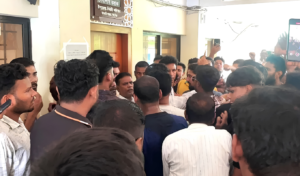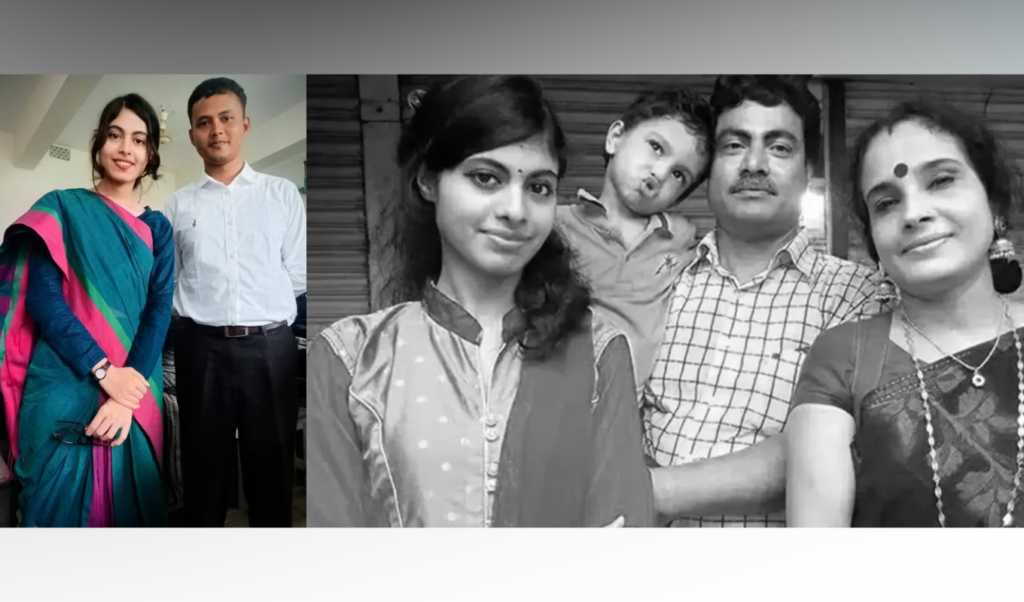
Skepticism surrounding the police investigation into the brutal murder of retired teacher Ganapati Chakraborty and three members of his family in Rangpur has intensified following detailed revelations by Joseph Mahbub, a close friend of deceased victim Agami Chakraborty. Following an on-site visit to the crime scene, Mahbub publicly dissected the official law enforcement account, raising critical technical and logical objections that cast serious doubt over whether the real perpetrators have been caught.
The controversy centres on the arrest of two local youths, Siddhartha and Mugdha, whom police presented as the primary suspects. According to the official police briefing, the pair allegedly murdered all four family members in a fit of rage after being interrupted while smoking yaba—a synthetic methamphetamine tablet—on the roof of the residence. Mahbub fundamentally rejected this premise, pointing out that local residents have no knowledge of either suspect being addicted to drugs, nor do the young men possess any history of violent behaviour.
Analyzing the logistics of the crime, Mahbub argued that if the suspects’ primary objective was simply a quiet location to consume narcotics, the adjoining rooftop occupied by female tenants offered a far safer alternative. Tenants might complain, but they would not intervene physically. He stressed that the police claim of finding drug consumption evidence inside the living quarters rather than on the roof suggests either an interrupted plot or a relaxed after-fact stay, rendering the argument that drug intoxication was the main trigger exceptionally weak.
Serious operational anomalies further undermine the credibility of the police presentation. Mahbub highlighted that the suspects’ attire mysteriously changed between their arrest and official presentation—shifting from a t-shirt to a short-sleeved button-down shirt without explanation. He described the police explanation regarding the electrical supply being deliberately cut as an artificially thin script, noting that disabling power is completely unnecessary if intruders simply wish to make a house appear empty. Furthermore, law enforcement claimed to identify the suspects’ trade as goldsmiths purely because they tested stolen jewellery with fire, while asserting definitive identity matches prior to formal DNA testing—an unprecedented speed of resolution that raises deep suspicions among locals.
The physical placement and condition of the four bodies offer additional grounds for skepticism. Adjacent tenants regularly access the roof to dry laundry, as the roofs of the neighbouring buildings are connected. Mahbub observed that if the killers were genuinely panicked enough to cut the power lines to hide their presence, fear would have prevented them from leaving corpses exposed on the roof and stairwell where neighbouring residents could easily discover them. This strategic placement suggests the killers deliberately positioned the bodies to mislead investigators, conceal evidence, or send a chilling message of brutality. He also noted that the mother and daughter were left in deeply distressing, compromised states of dress.
The sheer execution of the crime points toward trained professionals rather than panicking amateurs. Silently overpowering and killing four people one by one in the dead of night without alerting nearby neighbours requires precise coordination. The police narrative describes non-professional intruders who caused an electrical short circuit, ransacked rooms, dined from the refrigerator, stolen valuables, and attempted to clean their mobile phones with detergent water. Yet, the method of execution reflects a level of cold calculation that contradicts such chaotic behaviour.
Digital timeline evidence also presents unresolved questions. A text message was dispatched from Agami Chakraborty’s phone at 5:50 am on Friday, hours after the estimated time of the killings. Mahbub suggested that the perpetrators likely used the deceased victim’s fingerprint to unlock the device and transmit the message, intentionally planting false leads to derail the investigation timeline.
The horrific tragedy has left the victim’s social circle and the broader Rangpur community utterly devastated, as an entire family line has been effectively wiped out. While the quadruple homicide has captured widespread national and international media coverage across Bangladesh and India, local citizens express frustration over the central government’s perceived detachment from regional crises. Public discontent is further exacerbated by law enforcement’s routine focus on moral policing in public parks and hotels, alongside insensitive media coverage at the crime scene. As the investigation transfers to the Detective Branch, victims’ friends and citizens remain fearful that without a rigorous, independent judicial inquiry, the true masterminds behind the massacre will escape justice.