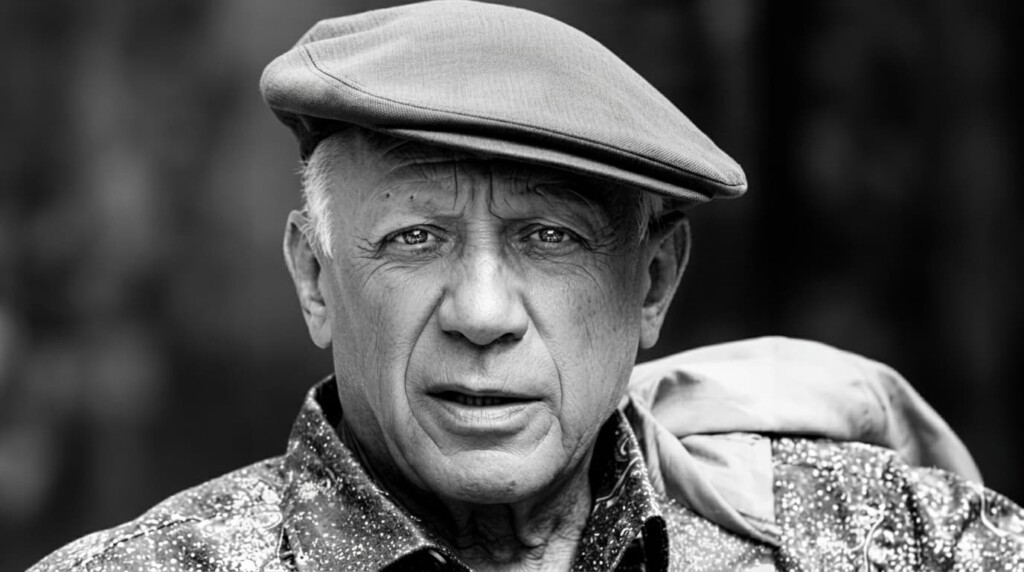
The global art community continues to honour the enduring legacy of Pablo Picasso, the Spanish master who fundamentally altered the trajectory of twentieth-century aesthetics. Recognised universally as the co-founder of Cubism, Picasso was far more than a painter. His relentless creative drive led him to excel as a sculptor, printmaker, ceramicist, stage designer, poet, and playwright. His avant-garde philosophy dismantled centuries of traditional artistic conventions, single-handedly propelling western art into the modern era.
Born on 25 October 1881 in the Andalusian city of Málaga, the artist carried the remarkably long baptismal name of Pablo Diego José Francisco de Paula Juan Nepomuceno María de los Remedios Cipriano de la Santísima Trinidad Ruiz y Picasso. Artistic inclination ran in his veins; his father, Don José Ruiz y Blasco, was a painter and an academic art professor who quickly recognised his son’s extraordinary prodigy. Under his father’s strict guidance, a young Picasso mastered the discipline of classical drawing and oil painting, producing his first accomplished canvas at the tender age of nine. By his teenage years, his technical ability surpassed that of many mature artists, allowing him to shift his focus from rigid academic realism to the raw emotional realities of working-class struggle. Seeking the absolute centre of the avant-garde world, he eventually left Spain for Paris, where his genius truly flourished.
Art historians categorise Picasso’s immense body of work into distinct, highly influential periods. Between 1901 and 1904, deeply affected by personal grief and the poverty surrounding him, he entered his Blue Period. These sombre, monochromatic paintings, dominated by shades of blue and green, focused heavily on themes of isolation, destitution, and human suffering. This gave way to the warmer, more optimistic Rose Period, characterised by shades of pink and orange, featuring circus performers, harlequins, and gentler human emotions.
His most radical transformation occurred alongside French painter Georges Braque. Together, they initiated Cubism, a revolutionary movement that rejected traditional perspective. Instead of depicting subjects from a single viewpoint, they broke objects down into geometric fragments, reassembling them to display multiple angles simultaneously on a two-dimensional canvas.
Amongst his vast catalogue, certain masterpieces stand as monumental achievements in human culture. His 1937 mural, Guernica, created in response to the devastating bombing of the Basque town during the Spanish Civil War, remains the world’s most powerful anti-war statement. Other definitive works, including Les Demoiselles d’Avignon, The Old Guitarist, The Weeping Woman, and Girl Before a Mirror, cemented his reputation as an artistic titan.
Picasso’s productivity was staggering. Throughout his long life, he produced an estimated 26,000 distinct pieces of art. This immense output includes approximately 13,500 paintings and drawings, over 100,000 prints and engravings, alongside thousands of sculptures and ceramic works. Unsurprisingly, his creations command astronomical figures, with several masterpieces fetching well over $100 million at international auctions, securing his place as one of the most commercially valuable artists in history.
His personal life was as tumultuous, colourful, and complex as his canvases, marked by intense relationships and political engagements that continuously fed into his work. His profound impact on culture has been examined in countless documentaries, biographies, and dramatised television series worldwide.
Picasso passed away on 8 April 1973 in Mougins, France, at the age of 91. Though his life ended over half a century ago, his influence remains entirely undiminished. He taught the world to view reality through a completely new lens, and his fearless spirit remains an eternal source of inspiration for contemporary artists navigating the modern world.