Russia has levelled serious allegations that the United Kingdom and France are secretly preparing to supply Ukraine with components and technology related to nuclear weapons. The claims, made by Russia’s foreign intelligence service (SVR) on Tuesday, 24 February, were reinforced by a statement from the Russian Ministry of Foreign Affairs, warning that such actions risk direct conflict between nuclear-armed states, with potentially catastrophic consequences for global security.
According to Moscow, these two European powers are assisting Kyiv in acquiring nuclear capabilities. However, the SVR has not provided any documentary evidence to substantiate its claims. France’s embassy in Moscow swiftly rejected the allegations as “completely false,” while the British government has yet to issue a public response. The Russian Ministry reiterated that any military confrontation among nuclear states could have devastating implications far beyond Europe.
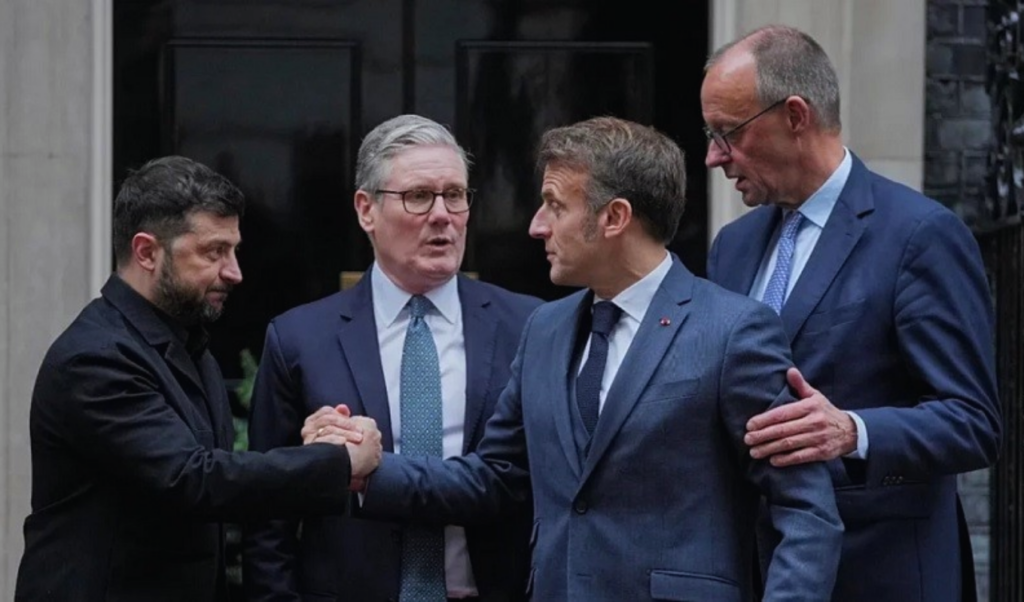
The accusations come as Ukraine marks the fifth year since Russia launched its full-scale invasion. European leaders have reiterated their commitment to supporting Kyiv, although divisions among Ukraine’s allies have become increasingly evident. Most notably, Hungary recently vetoed a €90 billion financial aid package for Ukraine and opposed new EU sanctions against Russia. Nevertheless, European Commission President Ursula von der Leyen, during a visit to Kyiv, assured that the EU would ensure financial and logistical support reaches Ukraine by any means necessary.
International Support for Ukraine
| Country/Group | Type of Support | Notes/Context |
|---|---|---|
| United States | Military & financial | G7 leaders reaffirmed unwavering support; first joint statement post-Trump’s White House return |
| European Union | Loans & infrastructure aid | Support maintained despite Hungary’s veto |
| France & UK | Alleged nuclear technology support | Claims denied by France; UK has not commented |
| G7 | Diplomatic backing | Support peace talks mediated by Trump; emphasise need for good-faith negotiations |
On the fourth anniversary of the invasion, G7 leaders, including US President Donald Trump, expressed firm backing for Ukraine. They encouraged direct dialogue between Kyiv and Moscow, while stressing that a lasting peace can only be achieved through genuine negotiations conducted in good faith.
On the battlefield, Russian forces continue missile and drone attacks on Ukrainian cities, disrupting electricity grids, but have made only limited territorial gains. President Vladimir Putin has accused Ukraine of obstructing the peace process. Conversely, Ukraine has refused to cede the remaining 20 per cent of its industrially rich Donetsk region.
In an emotional address, President Volodymyr Zelensky stated that the sacrifices of thousands of Ukrainians make it impossible to surrender their homeland to the enemy. Kyiv’s streets bear the somber atmosphere of a war-weary population, quietly commemorating fallen soldiers while carrying the weight of an ongoing conflict.
The situation underscores a perilous intersection of nuclear politics, international diplomacy, and territorial sovereignty, highlighting the complex global stakes surrounding the Ukrainian conflict.