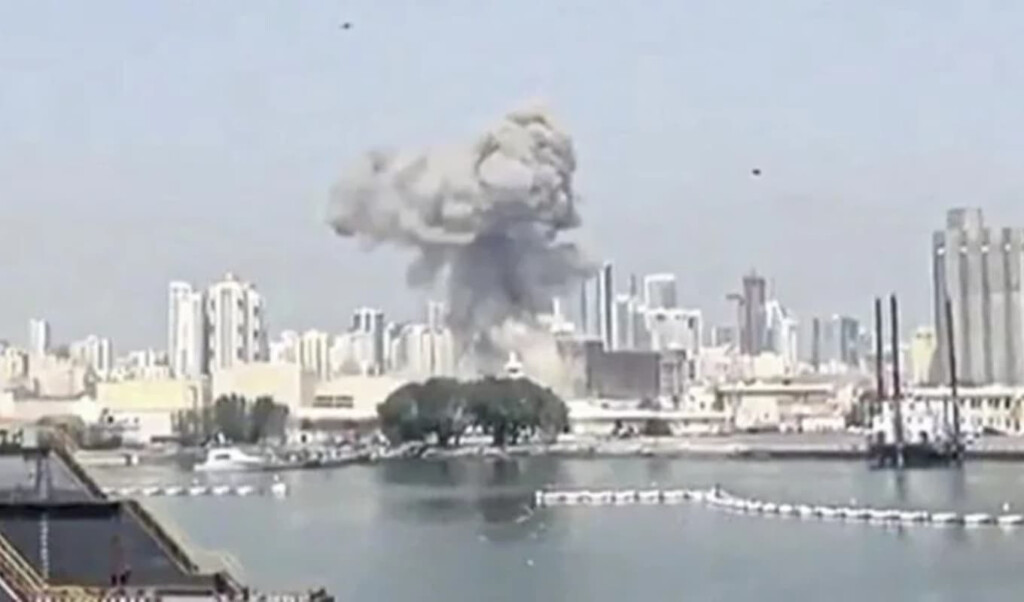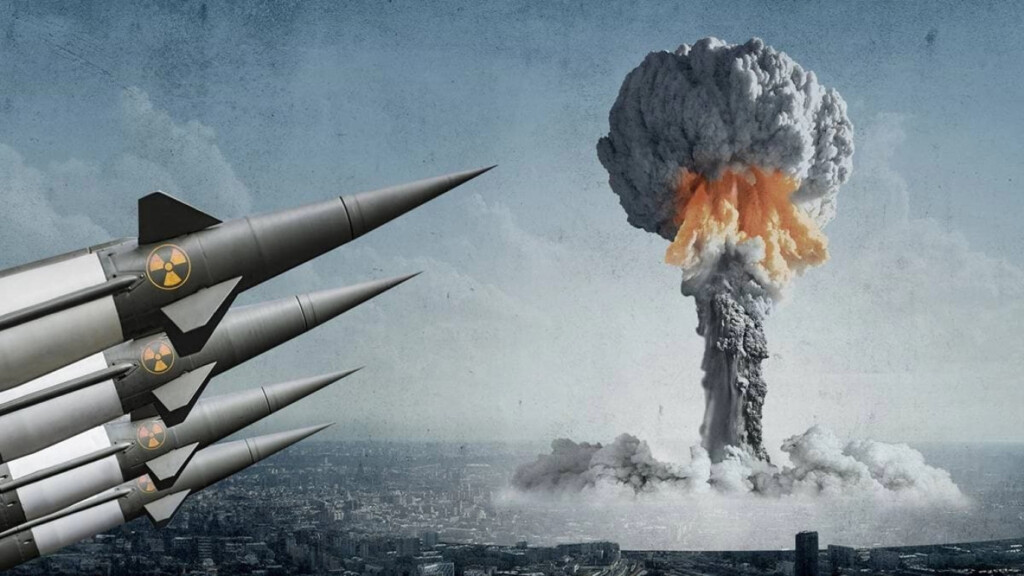
Amid heightened tensions in the Middle East, the United States faces renewed concern over six missing nuclear warheads. Experts warn that if these lost weapons fall into hostile hands, the consequences could be catastrophic. The British newspaper Daily Mirror reported on Tuesday (10 March) that the six warheads have yet to be recovered.
Nuclear warheads are typically mounted on missiles, rockets, or bombs. They are immensely powerful devices capable of generating destructive energy through nuclear reactions. A single warhead detonation could obliterate an entire city and result in the deaths of millions. In U.S. military terminology, incidents involving lost or accidentally detonated nuclear weapons are referred to as “Broken Arrow” events.
Over the past decades, at least six such incidents have occurred where U.S. nuclear weapons went missing, and their whereabouts remain unknown. Out of a total of 32 documented Broken Arrow incidents, these six warheads are still unaccounted for. The U.S. position is that if it cannot locate the lost bombs, hostile actors are unlikely to find them either.
Notable Missing Nuclear Warhead Incidents
| Year | Incident | Warhead Type | Location |
|---|---|---|---|
| 1958 | B-47 bomber accident | Mark 15 hydrogen bomb (3.8 megatons) | Wassaw Sound, Georgia, USA |
| 1966 | Mid-air collision | B-26 thermonuclear bomb | Mediterranean Sea |
| 1966 | Same collision | B-28 thermonuclear bombs (4 bombs, 1 missing) | Mediterranean Sea |
In 1958, a B-47 bomber near Tybee Island, Georgia, carrying a fully armed Mark 15 hydrogen bomb, became critically damaged. Fearing detonation, the pilot jettisoned the bomb into Wassaw Sound. Weighing 7,600 pounds, the Mark 15 had an explosive yield of 3.8 megatons—approximately 190 times more powerful than the “Fat Man” bomb dropped on Nagasaki during World War II. Despite a two-month naval search using sonar, the bomb was never recovered. Although the Air Force initially claimed that the bomb’s plutonium core had been removed before flight, declassified documents in 1994 confirmed that the Tybee bomb was indeed a complete nuclear device.
In 1966, two U.S. military planes collided over the Mediterranean, resulting in the loss of a B-26 thermonuclear bomb and one of four B-28 thermonuclear bombs. While three B-28 bombs were later recovered at different locations, one remains missing to this day.
Meanwhile, U.S. and Israeli operations have reportedly degraded Iran’s nuclear programme. Yet experts warn that reconstruction is likely only a matter of time. Nuclear security analyst Jeffrey Lewis noted: “If the attacks fail to remove the regime, thousands in Iran could rebuild this capability. The technology is decades old, and a retaliatory Iran might follow North Korea’s path. This is a dangerous, nuclear-armed world.”
The combination of lost warheads and regional instability underscores the continuing global security risks posed by nuclear weapons.