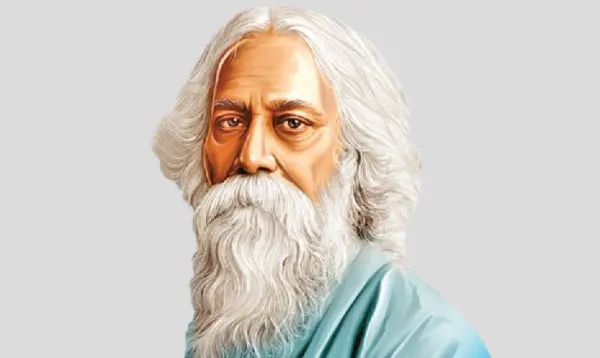
The 85th death anniversary of Nobel laureate and Bengali literary icon Rabindranath Tagore is being observed across Bangladesh on Thursday, August 6, with various cultural programmes, discussions and tributes highlighting his extraordinary contributions to literature, music and the arts.
Although Tagore passed away on August 7, 1941, in Calcutta at the age of 80, Bangladesh traditionally observes his death anniversary on the 22nd day of the Bangla month of Srabon. This year, the occasion falls on August 6 according to the Bangla calendar, bringing admirers, cultural organisations and institutions together to remember the life and legacy of the poet widely known as “Bishwakabi” (the World Poet).
Born on May 7, 1861, at the Jorasanko mansion in Calcutta, Tagore was the youngest of the 13 surviving children of philosopher Debendranath Tagore and Sarada Devi. Born into a prominent cultural family, he grew up in an environment that encouraged intellectual exploration, artistic expression and social reform.
Over a creative journey spanning nearly seven decades, Tagore reshaped Bengali literature and culture through his vast body of work. He wrote thousands of poems, novels, short stories, plays, essays and songs, while also making significant contributions as a painter and philosopher. His literary achievements established him as one of the most influential figures in global literature.
Tagore composed more than 2,000 songs, creating the unique musical tradition known as Rabindra Sangeet, which remains an integral part of Bengali cultural identity. His songs continue to be performed at cultural events, national occasions and personal gatherings across Bangladesh and beyond.
Among his most celebrated literary works are Gitanjali, Gora and Ghare-Baire. His poetry collection Gitanjali brought him international recognition and earned him the Nobel Prize in Literature in 1913, making him the first non-European recipient of the prestigious award in the category.
Tagore’s influence also extends to national identity. Two of his compositions were adopted as national anthems: Bangladesh’s “Amar Shonar Bangla” and India’s “Jana Gana Mana”. His writings reflected themes of humanity, freedom, social justice and harmony, allowing his work to transcend geographical and political boundaries.
To mark the anniversary, state-run and private television channels in Bangladesh are airing special programmes featuring Rabindra Sangeet, poetry recitations, documentaries, archival footage and discussions on Tagore’s life and philosophy. Cultural institutions are also organising events to highlight his enduring influence on Bengali heritage.
More than eight decades after his passing, Tagore’s works continue to inspire generations of readers, musicians, artists and thinkers. His vision of a world connected through creativity, compassion and knowledge remains relevant in contemporary society, keeping his legacy alive across cultures and continents.