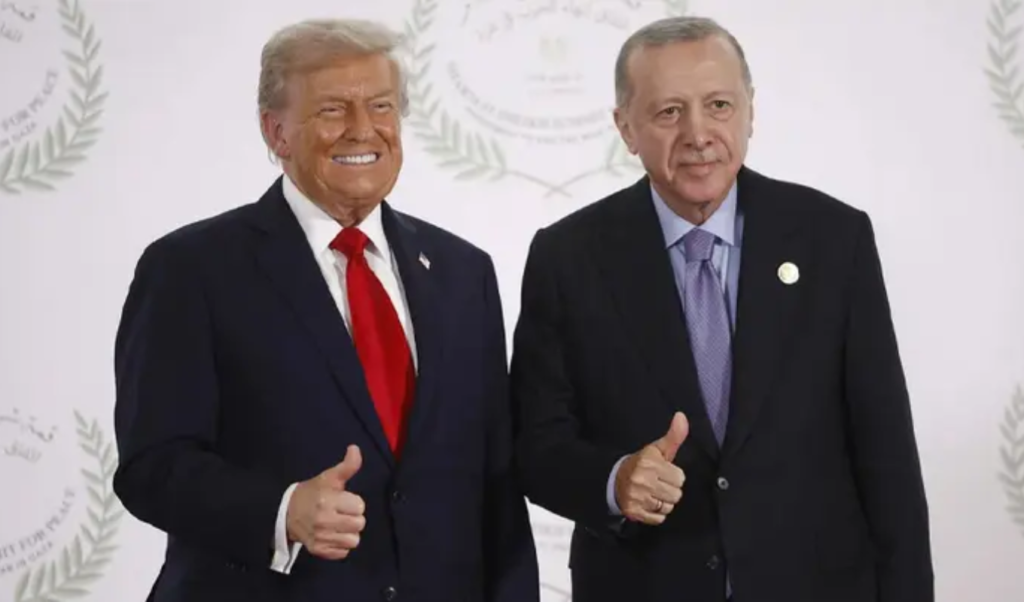
US President Donald Trump has issued a severe warning to Tehran, declaring that the month-old ceasefire agreement between the United States and Iran is officially “over”. Speaking on Wednesday, 8 July, in Ankara, Turkey, where he is attending the NATO summit, Mr Trump announced that American forces are prepared to launch heavy military strikes against Iranian targets as early as tonight.
The dramatic declaration came just before the President headed into a bilateral meeting with Ukrainian President Volodymyr Zelenskyy. Addressing a scrum of reporters, Mr Trump did not hold back his frustration with the Iranian leadership. “We hit them very hard last night,” he said, referencing a significant wave of US air assaults. “We’ll probably hit them hard again tonight. I’m giving them a little warning.”
Collapse of the Hormuz maritime truce
The collapse of the tentative peace agreement, which was signed on 17 June to restore stability, marks a sharp return to open hostilities. The original 60-day memorandum of understanding was designed to keep the critical shipping lanes of the Strait of Hormuz open while diplomats tackled broader issues, including Iran’s nuclear ambitions and the potential easing of Washington’s economic sanctions.
However, the truce unraveled rapidly following a series of maritime skirmishes. According to US Central Command, Iranian forces targeted three commercial vessels transiting the international trade corridor earlier in the week, including tankers flagged in Saudi Arabia, Liberia, and the Marshall Islands. Washington retaliated on Tuesday night by revoking oil export waivers and launching a massive wave of more than 80 air strikes against Islamic Revolutionary Guard Corps capabilities, hitting coastal radar networks, air defence systems, and dozens of small attack boats.
Tehran quickly responded by firing rockets at American military installations in Bahrain and Kuwait, cementing the death of the short-lived diplomatic breakthrough. Iranian parliamentary speaker Mohammad Bagher Ghalibaf fired back on social media, proclaiming that “the era of bullying and extortion is over” and asserting that Iran would not fold under American pressure.
Market panic and international anxiety
The impact of the President’s combative rhetoric was felt immediately across global financial sectors. Crude prices spiked on international markets within minutes of his remarks, driven by acute fears of prolonged disruptions in the Strait of Hormuz, a choke point responsible for the transit of roughly 20 per cent of the world’s petroleum products.
Economic Alert: The International Monetary Fund has already downgraded its global growth forecast for the year to 3 per cent, specifically citing the renewed outbreaks of violence across the Middle East as a primary risk to the maritime supply chain.
While Mr Trump was explicit about the imminent threat of evening bombardments, he stopped short of confirming whether the United States is prepared to slide into a full-scale, permanent war. He remained similarly ambiguous about whether his administration would ever return to the negotiating table for a lasting treaty, opting instead to question the fundamental trustworthiness of his adversaries.
“Under the agreement, they were never supposed to build a nuclear weapon,” Mr Trump told reporters. “But they break the deal every day. Frankly, it might be easier for us to handle this without a deal because these people do nothing but lie and cheat.”