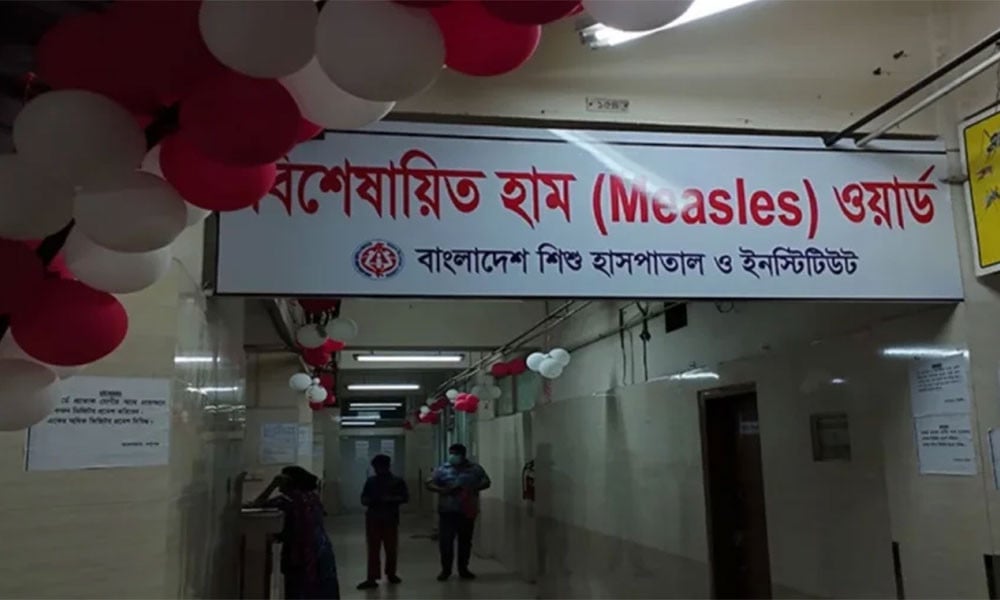
Health authorities in Bangladesh have reported two further deaths among children exhibiting symptoms of measles over the latest 24-hour reporting period ending at 8:00 am on Sunday, 8 November. Whilst no deaths were officially confirmed to be directly caused by the virus during this specific window, the daily toll underscores an ongoing public health challenge that continues to place heavy pressure on the country’s medical infrastructure.
According to the latest epidemiological bulletin issued by the Directorate General of Health Services (DGHS), a total of 1,225 new cases—encompassing both suspected and laboratory-confirmed infections—were registered across the nation in a single day. Of these newly reported cases, 1,138 individuals presented with classic symptoms of the disease, whilst 87 cases were definitively confirmed through laboratory testing.
The cumulative figures released by the DGHS illustrate the massive scale of the outbreak monitored since 15 March. Over this nearly eight-month period, the total number of fatalities attributed to measles and measles-like symptoms has reached 1,282. Among these deaths, 1,177 children succumbed to severe symptoms consistent with the illness, whilst 105 fatalities were conclusively verified as measles deaths following clinical verification.
| Epidemiological Parameter | Cumulative Metric (15 March – 8 November) |
| Total Suspected Hospital Admissions | 2,12,979 |
| Total Patients Discharged Following Treatment | 2,04,049 |
| Patients Currently Under Treatment or Outpatient Care | 8,930 |
| Total Individuals Presenting with Measles Symptoms | 2,38,840 |
| Laboratory-Confirmed Measles Cases | 24,442 |
| Proportion of Symptomatic Cases Confirmed Positive | ~10.24% |
| Fatalities Associated with Symptomatic Measles | 1,177 |
| Confirmed Measles Fatalities | 105 |
| Overall Combined Fatalities | 1,282 |
| Total New Cases Recorded in Latest 24-Hour Period | 1,225 |
Measles remains a highly contagious viral disease that spreads primarily through airborne droplets when an infected person coughs or sneezes. It poses a severe threat to young children, particularly those suffering from malnutrition or weakened immune systems. Common complications include high fever, widespread skin rashes, severe respiratory infections such as pneumonia, and dangerous swelling of the brain, known as encephalitis.
Public health experts emphasize that routine immunization through the Measles-Rubella (MR) vaccine is the most effective defense against widespread transmission. Medical teams across Bangladesh are continuing to monitor affected districts, manage hospital admissions, and urge parents to ensure their children complete the recommended two-dose vaccination schedule to stem further transmission.