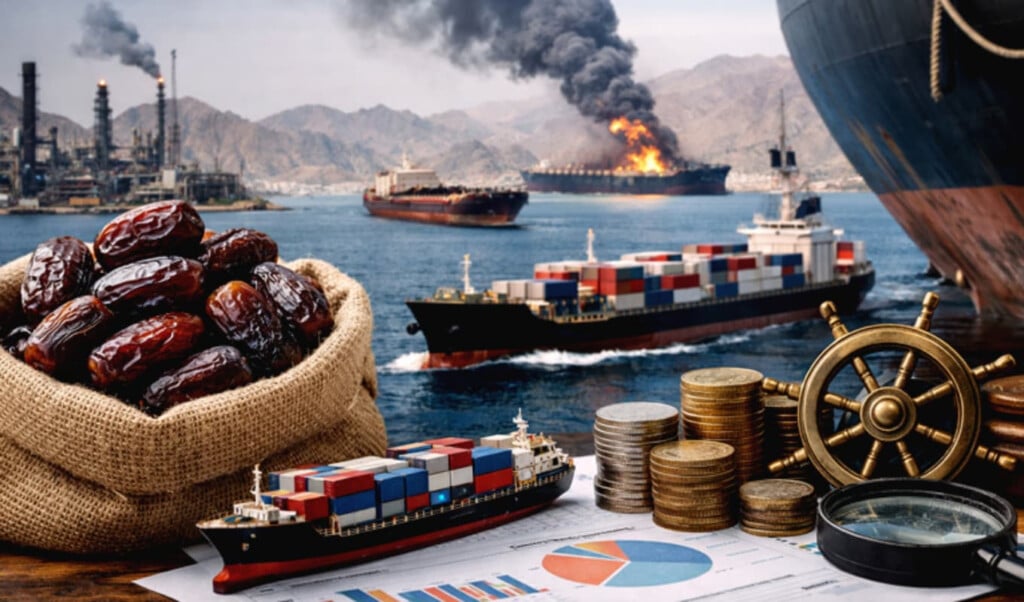
Ongoing tensions around the strategic Hormuz Strait are beginning to exert pressure on Bangladesh’s imports of energy and essential food items, notably dates. Despite recent reductions in import duties, market prices have remained high, as increased shipping costs and insurance premiums weigh on importers.
Reports indicate that in April 2026, the Bangladesh government submitted a list of six vessels to Iranian authorities for safe passage through the Hormuz Strait. Five of these vessels are carrying liquefied natural gas (LNG) from Qatar, while one is transporting crude oil from Saudi Arabia. Iran has assured Bangladesh, considered a “friendly nation,” of secure passage, provided vessel details are submitted in advance.
Shipping and insurance experts note that heightened geopolitical instability in the Middle East has led to the addition of “war risk premiums,” significantly raising marine insurance costs.
Importers report that, during the first quarter of 2026, the cost of importing fuel and other commodities has risen between 18% and 22%. Increased insurance and transportation expenses are directly reflected in consumer prices, limiting the impact of government measures.
To partially offset these pressures, the government has reduced customs duties on date imports from 25% to 15% and lowered advance income tax from 10% to 5%. Nonetheless, supply constraints continue to restrict the policy’s effectiveness. Congestion at the Chittagong port, coupled with global supply chain disruptions, has delayed shipments. A recent accident involving a vessel carrying dates from Iraq has further tightened supply.
Wholesale prices of Iraqi dates have increased from 150 taka per kilogram to between 180 and 185 taka.
| Commodity | Previous Price (per kg) | Current Price (per kg) | Customs Duty | Advance Income Tax |
|---|---|---|---|---|
| Iraqi Dates | 150 Taka | 180–185 Taka | 15% | 5% |
| LNG | – | – | – | – |
| Crude Oil | – | – | – | – |
Analysts caution that prolonged instability in the Hormuz Strait could have far-reaching effects. Rising energy and transportation costs may push up prices of food and essential commodities, intensifying inflationary pressure. Higher import expenditures could also strain Bangladesh’s foreign currency reserves. Interruptions in LNG supply may impact electricity generation, potentially reducing industrial output and economic growth.
While policy measures such as duty reductions aim to ease the burden, experts stress that until supply chains stabilise and security conditions improve in the Hormuz Strait, Bangladesh is likely to face further increases in import costs and market prices.