Khaborwala online desk
Published: 16 Nov 2025, 10:25 am

Every Thursday evening, the usually quiet pathways of the Rajnagar tea estate in Moulvibazar transform into a bustling one-evening-only weekly market. As tea workers return home—some carrying bundles of dry wood, some with grass on their heads, others with empty sacks after a long day’s labour—most make their way directly to the weekly bazaar rather than to their homes.
Thursday is wage day, known locally as talabbar, and that alone is enough to draw crowds from the labour lines, nearby villages, and surrounding settlements.
The market begins forming around 3 pm. Traders arrive from different areas carrying vegetables, fish, dried goods, spices, household items, clothing and children’s toys. As the afternoon fades, the crowd thickens. By sunset, the entire area becomes a lively hub of noise, colour, bargaining and social interaction.
Tea worker Nimai Shukla Baidya, waiting to collect his weekly wage, browsed the shops while talking.
“I haven’t received my wage yet,” he said. “When I get it, I’ll buy what I need. We get about 1,200 taka a week. It’s barely enough. Two or three days we eat well, then it becomes difficult again.”
Some traders have been attending this weekly market for decades. Vegetable seller Sufian Khan travels from Tengra every Thursday, a routine he has followed for four to five years. Sweet-maker Mohan Kanu, from Brahmanbazar, has been selling handmade snacks—khaja, bundiya, nimki, sweets, jilapi, gaja and chanachur—for nearly 25 years. As night approaches, his stall becomes one of the busiest.
Near the entrance sits a traditional barber, trimming hair and beards on a wooden stool—an old custom still alive in many rural markets. Vendors sell baskets, betel leaf, spices, cosmetics, ice cream, toys and even digital watches, advertised loudly through a portable speaker.
Abdul Karim, a spice seller from Gaibandha, brings packets of mixed hot spices—cloves, cardamom, cinnamon and cumin. He has been attending the market for 10–15 years.
“One packet lasts a long time,” he explained. “So I don’t need to come every week.”
The market continues until around 8 or 9 pm. Then, slowly, the noise fades, stalls pack up, and the tea estate returns to its usual nightly silence—until the next Thursday evening brings it alive once again.
Khaborwala/SJ

> Mbappé: A World Cup Without Neymar is Unthinkable
> Bangladesh Foreign Exchange Rates Update
> Warfaze Lead Independence Concert
> Nachiketa Sings Bhalobasho Composition
> Bangladesh and Five Other Nations’ Ships Safe in Hormuz: Iran Announces
> Four Dead, 41 Missing After Bus Sinks at Daulatdia Ferry Terminal
> Road Deaths Spike During Eid Holiday: Discrepancies Highlighted
> Nabin Fashion Branches Remain Open Amid Controversy
> Fuel Card Rule Enforced for Motorcyclists
> Shepherd Secures $42M to Transform Commercial Insurance
> Flights Suspended Amid Regional Tensions


Foreign trade between Bangladesh and the global market continues to expand steadily, driving a growi...

A landmark cultural celebration is set to take place in Dhaka this evening as the capital marks Bang...
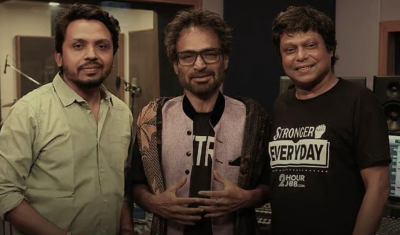
Renowned Bangladeshi composer and singer Belal Khan continues to strengthen his reputation not only...

A newly reinterpreted rendition of the celebrated patriotic anthem “Prothom Bangladesh” is scheduled...
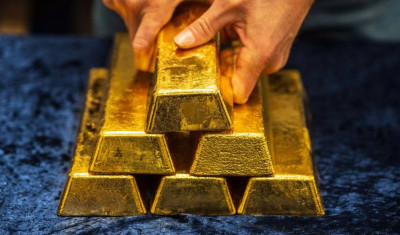
A sustained downturn in global gold prices appears increasingly likely as geopolitical tensions in t...
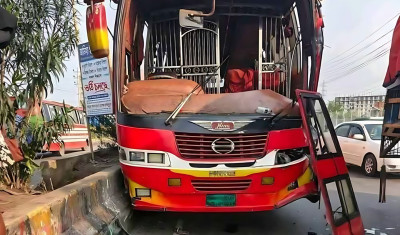
A tragic road accident in the early hours of Thursday claimed the life of a 50-year-old woman after...
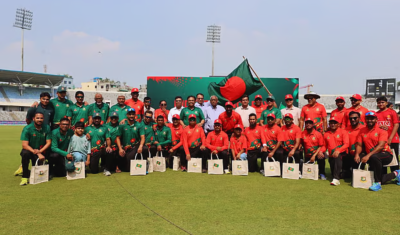
Independence Day celebrations at the Sher-e-Bangla National Cricket Stadium in Mirpur once again tra...
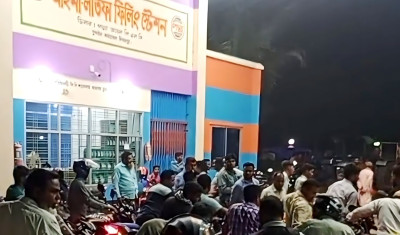
A routine visit to a petrol station turned tragic in Dinajpur’s Kaharol upazila when a 48-year-old m...
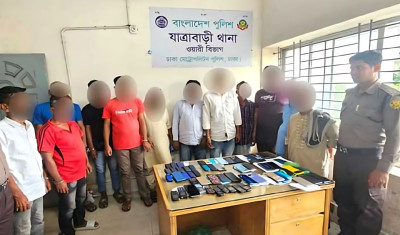
A coordinated police operation in the capital’s Jatrabari area has led to the arrest of 12 individua...

A violent confrontation between rival factions over local dominance in a village of northeastern Ban...
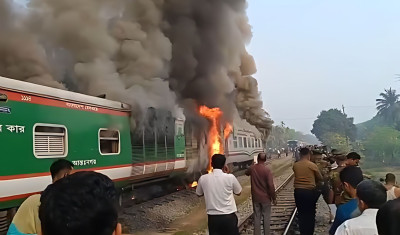
A passenger train in Bangladesh’s Chattogram region was forced to resume its journey after a fire br...
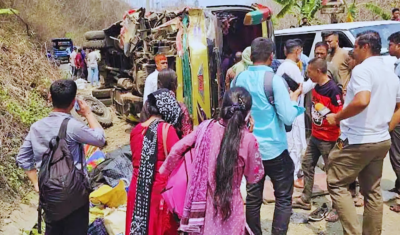
A passenger bus travelling from Naniarchar to Chattogram overturned in a road accident in Rangamati,...


Availabe for iphone & ipads

Available in google play
 বাংলা
বাংলা