khaborwala online desk
Published: 08 Feb 2026, 05:41 pm
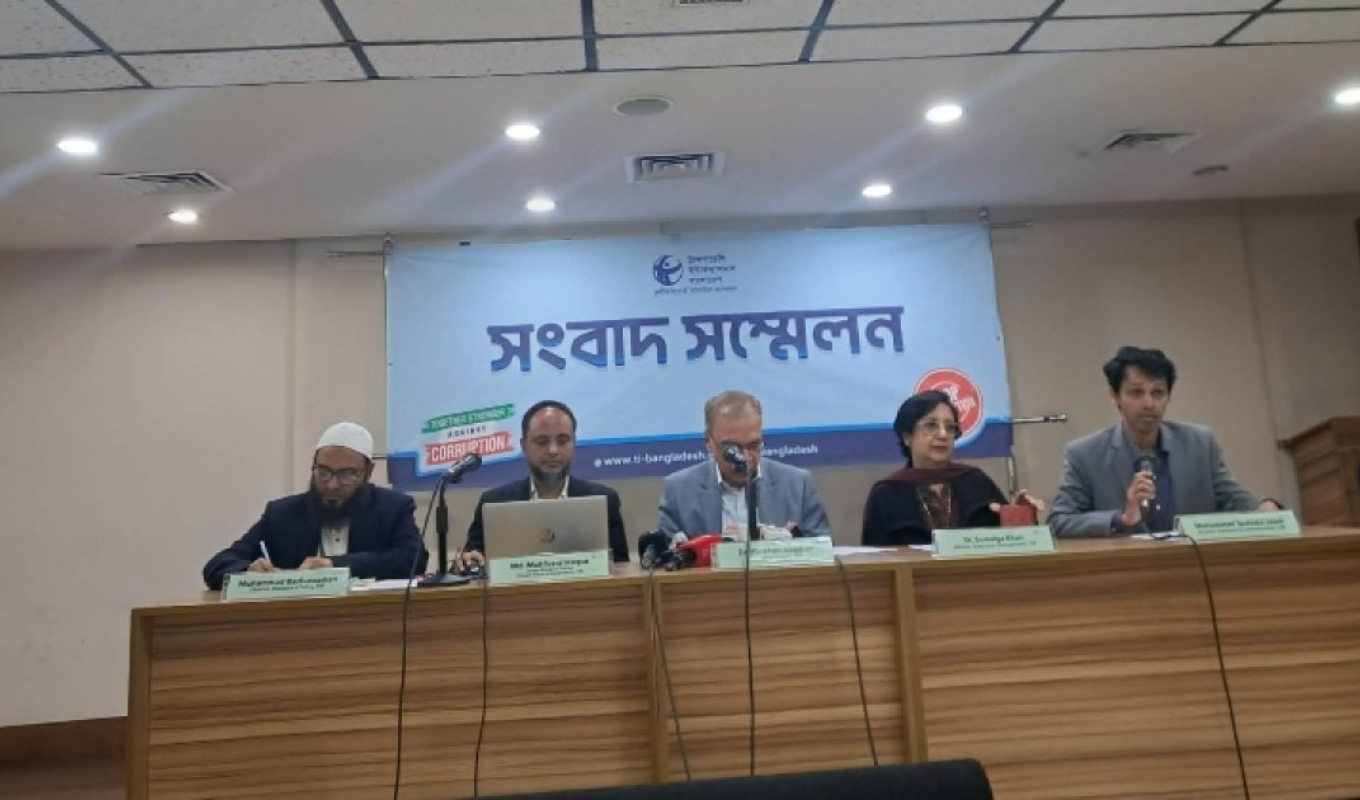
Transparency International Bangladesh (TIB) has warned that unhealthy competition, inter-party conflict, and violence are steadily escalating in the country’s ongoing election process. While initial signs suggested a relatively healthy electoral contest, tensions among political parties and alliances have intensified, according to TIB Executive Director Iftikharuzzaman.
Speaking at a press conference on Sunday at TIB’s Dhaka office, Iftikharuzzaman unveiled the organisation’s report titled “Referendum and Pre-Election Situation: TIB Observations”. The report presents a comprehensive assessment of both parliamentary elections and the ongoing national referendum.
“The successful conduct of elections and the referendum largely depends on adherence to the law by all stakeholders, particularly political parties and candidates,” Iftikharuzzaman said. “If parties genuinely commit to fair practices, transparent and peaceful elections are entirely feasible.”
The press conference began with senior research officer Md. Mahfuzul Haque summarising the report’s key findings. Iftikharuzzaman subsequently discussed overall observations and responded to journalists’ queries.
TIB highlighted serious concerns over gender representation, noting that despite a recommendation for a minimum of 5% female candidates, no party has complied. “Jamaat-e-Islami has set a regrettable precedent by nominating zero women, which was unexpected. Other major parties have only 2.7% female candidates,” Iftikharuzzaman remarked, also pointing to deficiencies in the Communist Party of Bangladesh’s candidate selection.
He identified five key “political capital” factors shaping Bangladesh’s elections: money, religion, ethnicity, patriarchy, and majoritarianism. While the Election Commission and security agencies bear responsibility for ensuring voter safety, he emphasised that the primary duty lies with the political parties.
Iftikharuzzaman also criticised the current government for failing to curb corruption, noting missed opportunities for reform within the Anti-Corruption Commission and a lack of transparency from caretaker advisers regarding asset declarations.
He condemned the removal of journalists from the Bangladesh Times office the previous night, describing it as “an unacceptable act reminiscent of medieval suppression, sending an intimidating message to the press.”
| Observation | Key Findings |
|---|---|
| 1 | Parties continue violent campaign practices despite early signs of fair competition. |
| 2 | Anti-election activities by authoritarian actors increase instability risks. |
| 3 | Use of money and religion in campaigns has intensified. |
| 4 | Election Commission shows growing deficiencies in ensuring free, fair, and peaceful elections. |
| 5 | Widespread violations of codes of conduct largely ignored due to commission’s inability. |
| 6 | Some government officials, particularly in law enforcement, fail to maintain impartiality. |
| 7 | Political parties show persistent non-cooperation with the Election Commission. |
| Observation | Key Points |
|---|---|
| 1 | Conflicting party positions caused initial confusion over the referendum question. |
| 2 | Concurrent elections and parliamentary obligations complicated the process. |
| 3 | Lack of constructive consultation between government and Election Commission. |
| 4 | Late directives for civil servants created further controversy. |
| 5 | Equating referendum with elections raised legal questions. |
| 6 | Pre-issuance consultation might have prevented unnecessary confusion. |
| 7 | Government’s direct involvement sparked avoidable debates. |
| 8 | Government responsible for ensuring ‘Yes’ outcome per July Mandate. |
| 9 | Excessive pressure on civil servants, NGOs, and banks questioned transparency. |
| 10 | Civil servants’ campaign participation often bypassed commission approval. |
| 11 | Government and commission missteps undermined the historic referendum’s credibility. |
The press conference was chaired by TIB Outreach and Communication Director Mohammad Touhidul Islam, with Executive Advisor Sumaiya Khair and Research Director Mohammad Badiuzzaman in attendance.
TIB’s report underscores the urgent need for political parties, government bodies, and the Election Commission to restore credibility, fairness, and safety in both parliamentary and referendum processes.

> Ramadan 2026 Likely to Last 29 Days
> Protest Shadows Israel at Olympic Opening
> Eight Dead in Northern China Biotech Blast
> Government Takes Firm Stand Over Port Strike
> Hope Berry Launches Live Music with Fine Dining
> Gatherings Banned Around Chief Justice Residence
> Karnataka CID Busts Massive Cyber Fraud Network
> Courage and Wisdom: Dr. Jahangir Sattar Tinku
> Nationwide Traffic Restrictions Issued Ahead of Election
> China’s Ageing Crisis Exposed by Hospital Scams
> IS Claims Responsibility for Islamabad Mosque Attack
> Legendary Composer Shah Newaz Passes Away in Canada


Astronomers have provided preliminary guidance on the duration of Ramadan in 2026 and the anticipate...
The Bangladeshi government has resolved to adopt a hard-line stance in response to the ongoing strik...

In today’s fast-paced urban lifestyle, exquisite cuisine and soulful music often complement each oth...

The Dhaka Metropolitan Police (DMP) has officially prohibited all forms of public gatherings, includ...
In a major security operation ahead of the upcoming national parliamentary elections, joint forces l...

Gazipur, Bangladesh – A major fire broke out at a jute warehouse in the Nasir Market area under Kona...
The Chief Justice of Bangladesh, Zubayer Rahman Chowdhury, has convened a Full Court meeting of all...

A senior leader of Jamaat-e-Islami, Ramzan Ali, was brutally attacked and injured by unidentified as...
Lalpur, Natore: A 20-year-old housewife, Khushimoni, was found dead under mysterious circumstances i...
In a distressing revelation, Sonia Akter, a resident of Dhaka, has come forward alleging prolonged h...
The funeral of 12-year-old Huzaifa Afnan, who succumbed to injuries sustained from a stray bullet fi...
Renowned economist and CPD Fellow Debapriya Bhattacharya has declared that the interim government’s...


Availabe for iphone & ipads

Available in google play
 বাংলা
বাংলা