Friday, 21st August 2026

Khabor Wala Desk
Published: 15th January 2026, 1:01 PM
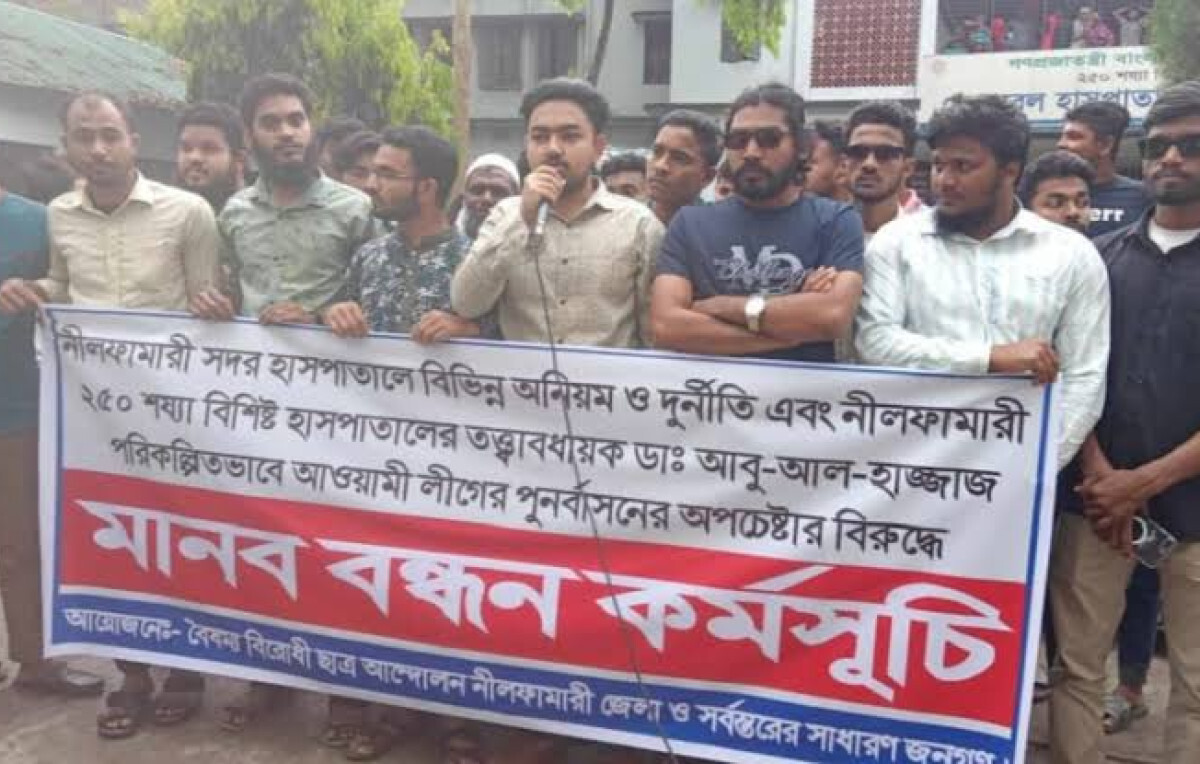
Serious allegations of corruption and administrative malpractice have cast a long shadow over Nilphamari General Hospital, prompting mounting calls from local residents and hospital staff for the immediate removal of its superintendent, Dr Abu Al Hajjaj. The controversy, which has reportedly been brewing for more than four years, has raised profound concerns about financial transparency, governance, and the overall quality of public healthcare delivery in the district.
According to multiple local sources, Dr Hajjaj is accused of prolonged financial irregularities and abuse of authority, particularly in relation to procurement and voucher management. It is alleged that he exercised near-total control over the hospital’s purchasing processes, sidelining established oversight mechanisms. Although hospital records indicate substantial annual purchases of medical supplies and equipment, staff claim that these items rarely appear in the hospital’s central stores, leading to chronic shortages that directly affect patient care.
Further compounding the issue are allegations that many payment vouchers lack the signatures of vendors, a basic requirement for public financial accountability. Such irregular documentation, critics argue, creates ample scope for the misappropriation of public funds and undermines confidence in the hospital’s financial management.
Local residents have also alleged that Dr Abu Hanif, a director within the Directorate General of Health Services, may have been directly or indirectly involved in allowing these practices to continue unchecked. Despite holding senior administrative responsibilities, both officials are accused of failing to uphold standards of transparency and accountability. Sources claim that through manipulated vouchers alone, Dr Hajjaj may have generated illicit earnings of approximately BDT 4 crore annually, while tender-related fraud over four years allegedly amounted to nearly BDT 20 crore.
Investigations by community members suggest a recurring pattern in which only around 20 per cent of procured goods were actually delivered and stored, while the remaining 80 per cent of funds were siphoned off in collusion with contractors. Such practices, if proven, would represent a grave breach of public trust.
| Category of Allegation | Estimated Amount (BDT) | Time Period |
|---|---|---|
| Annual illicit income via vouchers | ~4 crore per year | 4+ years |
| Tender manipulation | ~20 crore total | 4 years |
| Goods reportedly delivered | ~20% of purchases | Ongoing |
| Funds allegedly misappropriated | ~80% of purchases | Ongoing |
Beyond financial misconduct, additional allegations have surfaced regarding the suppression of personal scandals during a previous political administration, further fuelling public anger. Protesters argue that such behaviour reflects a culture of impunity that must be urgently addressed.
Affected patients, healthcare workers, and local residents have jointly appealed to the Anti-Corruption Commission and the Ministry of Health to initiate an immediate, impartial investigation and to take decisive legal action against all those involved. Analysts warn that failure to act swiftly could further erode public confidence and disrupt essential health services, with consequences extending beyond Nilphamari to the national healthcare system.
Observers stress that restoring transparency and accountability at Nilphamari General Hospital is not merely a local issue, but a test of the government’s broader commitment to ethical governance and people-centred public services.


Comments