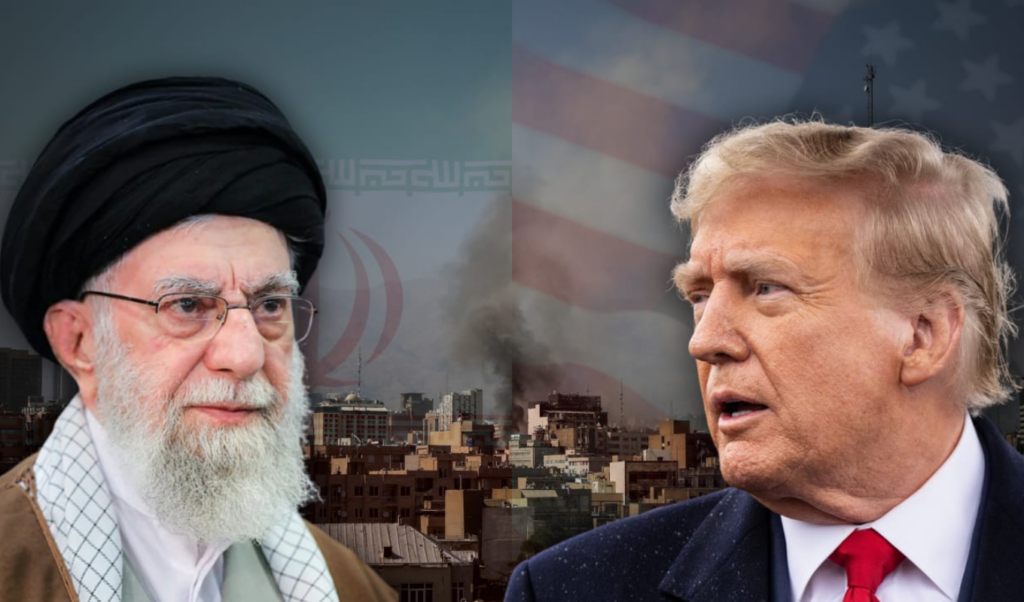
More than two decades after the 2003 United States-led invasion of Iraq, the U.S., now allied with Israel, has launched a direct military campaign against Iran. Entering its second week, the conflict has been marked by sustained missile strikes, drone deployments, and a series of inconsistent statements from U.S. President Donald Trump, raising questions about Washington’s ultimate objectives.
Scale of the U.S.-Israeli Offensive
Since the conflict began on 28 February, U.S. forces have reportedly targeted nearly 2,000 sites across Iran. Strikes have hit strategic and civilian locations alike, including:
Iran’s nuclear facilities
Oil refineries and water treatment plants
Government offices and infrastructure
Among the casualties is Iran’s Supreme Leader Ayatollah Ali Khamenei, along with several high-ranking officials.
In response, Iran has fired hundreds of missiles towards Israel and neighbouring Gulf countries, while also deploying thousands of drones. Tehran has stated that American military bases, fuel infrastructure, embassies, and civilian areas are legitimate targets in retaliation.
Reported Casualties (First Week of Conflict)
| Party | Fatalities | Notes |
|---|---|---|
| Iran | 1,200+ | Includes 160+ children in a school strike |
| United States | 7 | U.S. military personnel |
| Israel | Unspecified | Missile and drone attacks ongoing |
Despite these figures, analysts suggest that neither Trump nor his administration have provided a clear framework for concluding the war, leaving both domestic and international observers uncertain about the U.S. endgame.
Motive: Regime Change or Strategic Pressure?
The killing of Ayatollah Khamenei, who led Iran for 37 years, has heightened speculation about the U.S. objective. Trump’s administration has never publicly declared an intention to directly overthrow Iran’s government. However, experts contend that the broader goal may have been to weaken the ruling elite and destabilise Iran’s political structure.
Mustafa Haider Sayed, Executive Director of the Pakistan-China Institute, argues that the campaign aims to force the regime into immediate concessions and provoke civil unrest, potentially creating conditions for a rapid shift in Iran’s internal power balance.
Mixed Signals from Washington
Trump’s public statements regarding the campaign have often been contradictory, sometimes emphasising punitive strikes against military targets, while at other times hinting at broader political objectives. This inconsistency has left allies and adversaries alike questioning whether the U.S. strategy prioritises containment, regime change, or a combination of both.
As the conflict continues, the international community remains on high alert, monitoring missile exchanges and drone strikes, while assessing the unpredictable policy signals emanating from Washington. Analysts caution that without a clearly defined exit strategy, the conflict risks further escalation with far-reaching regional and global consequences.