Bangladesh is positioning itself within emerging global climate-linked financial systems, where carbon trading and green finance are becoming increasingly significant. Experts estimate that the country could potentially earn around 1 billion US dollars annually in foreign exchange if it effectively develops its carbon credit and green insurance sectors.
Carbon credit participation and performance
Carbon credits are internationally tradable certificates issued for the reduction of one tonne of carbon dioxide emissions. These credits are purchased by countries and companies to meet emission reduction obligations under global climate frameworks.
Bangladesh entered the carbon market in 2006 through the Infrastructure Development Company Limited. Since its entry, the country has sold approximately 2.53 million carbon credits, generating around 17 million US dollars in revenue. However, this figure is considered modest in relation to the scale of the global carbon market.
International projections indicate that the carbon credit market could expand to around 4.7 trillion US dollars by 2030. This suggests considerable room for Bangladesh to scale up participation, particularly through renewable energy and industrial efficiency projects.
Growth of sustainable industrial infrastructure
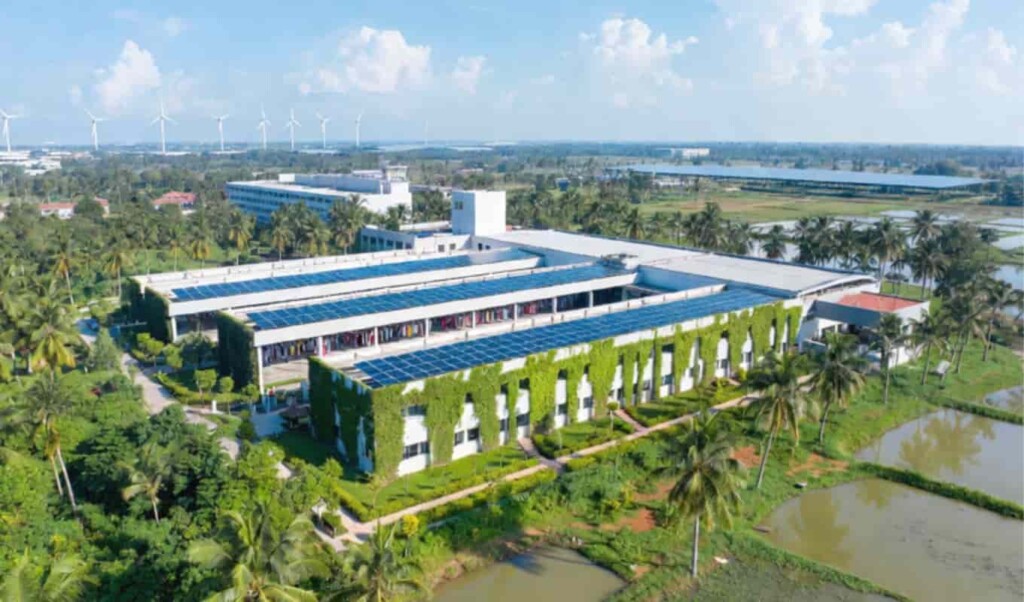
Bangladesh has made notable progress in environmentally certified industrial development, particularly in its ready-made garment sector. The country now hosts more than 280 Leadership in Energy and Environmental Design (LEED)-certified factories, many of which hold gold and platinum ratings.
A significant milestone is that 69 of the world’s top 100 green factories are located in Bangladesh. This reflects the country’s strong integration of energy-efficient technologies, resource optimisation, and environmentally compliant production systems within its industrial base.
Green insurance and renewable energy financing
Green insurance is emerging as a financial mechanism designed to reduce risks associated with renewable energy investments. Solar and wind energy projects are particularly exposed to operational disruptions, natural disasters, and financial uncertainty.
At present, Bangladesh has a renewable energy generation capacity of 1,315 megawatts, with approximately 77 per cent derived from solar energy. To meet its 2030 renewable energy targets, the country is expected to require annual investment of around 1 billion US dollars. Insurance frameworks tailored to green projects are therefore considered essential to support investor confidence and long-term financing stability.
European carbon regulation and trade implications
The Carbon Border Adjustment Mechanism (European Union) is scheduled to be fully implemented from 2026. Under this system, carbon-intensive imports into the European Union will face additional tariffs based on their emission intensity.
As nearly half of Bangladesh’s exports are directed towards European markets, this regulatory shift is expected to have significant implications for export competitiveness. It is likely to accelerate the need for low-carbon production practices within key export-oriented industries.
Structural constraints and institutional gaps
Despite strong potential, several challenges remain. Bangladesh has yet to establish a comprehensive national carbon registry. Policy frameworks governing carbon trading are still under development, and legal infrastructure remains incomplete.
In addition, the country has a limited number of internationally accredited carbon verification and auditing bodies. This constrains its ability to fully participate in global carbon markets.
Similarly, the development of green insurance is hindered by limited risk assessment data, making it difficult to design accurate premium structures for renewable energy projects.
Key indicators overview
| Sector | Indicator | Current status |
|---|---|---|
| Carbon credits traded | Total volume | 2.53 million |
| Carbon market revenue | Earnings | 17 million USD |
| LEED-certified factories | Industrial facilities | 280+ |
| Global top green factories in Bangladesh | Ranking share | 69 of top 100 |
| Renewable energy capacity | Installed capacity | 1,315 MW |
| Solar contribution | Share of renewables | 77% |
| Annual investment need (2030 target) | Estimated requirement | ~1 billion USD |
| Projected global carbon market | 2030 forecast | 4.7 trillion USD |
Future trajectory
Experts emphasise that coordinated policy reform, institutional strengthening, and enhanced international cooperation will be critical for Bangladesh to realise its full potential in carbon trading and green insurance. These sectors are increasingly viewed as integral components of the global transition towards sustainable and low-carbon economic systems, offering Bangladesh both environmental and financial opportunities.