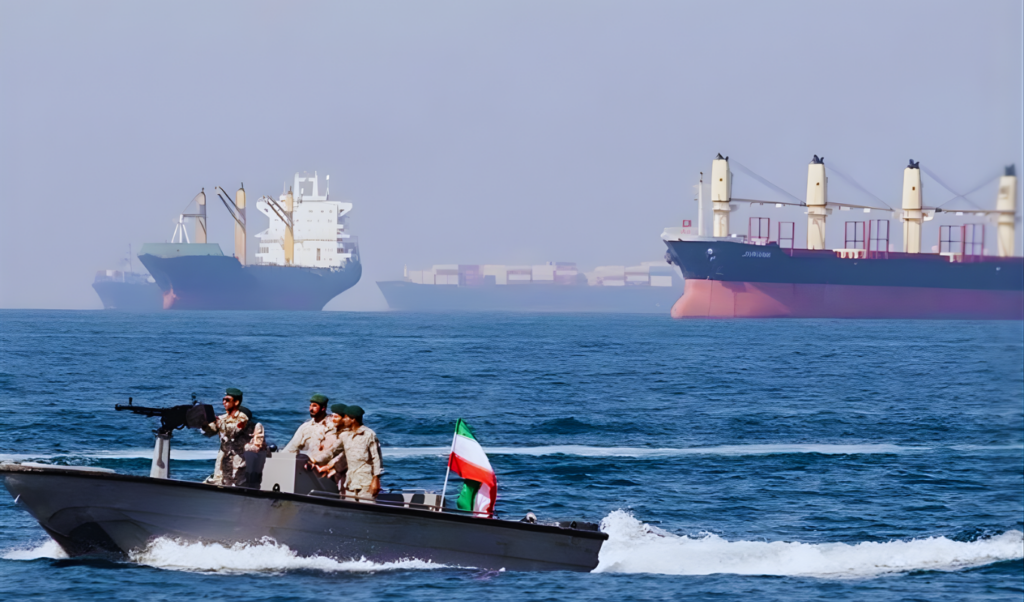
Tensions between the Islamic Republic of Iran and the United States have escalated significantly following renewed threats concerning the Strait of Hormuz. Although Iran recently reopened the passage to maritime traffic, transit remains severely restricted. Tehran has now issued a formal warning stating that the waterway will be fully closed again unless the United States terminates its current naval blockade.
Context of the Escalation
This declaration follows the commencement of a ten-day ceasefire between Israel and Lebanon. According to reports from CNN, the Islamic Revolutionary Guard Corps (IRGC) Navy has implemented stringent new conditions for vessels attempting to navigate the strait. Under these protocols, all maritime traffic must secure explicit prior authorisation from Iranian authorities before entering the passage.
The regional friction was further intensified by actions taken on Friday. The US Central Command (CENTCOM) reportedly intercepted and turned back twenty-one Iranian vessels, directing them to return to port. Concurrently, US President Donald Trump stated that the naval blockade would remain in effect until a formal agreement is signed between the two nations.
Legislative Warnings and Operational Restrictions
The Speaker of the Iranian Parliament, Mohammad Bagher Ghalibaf, issued a direct ultimatum to Washington, asserting that the failure to lift the blockade would result in the immediate reclosure of the strait. He clarified that, for the time being, transit is strictly limited to a single designated route and remains entirely contingent upon Iranian approval.
The timeline of the current military standoff is rooted in the events of late February, leading to the present state of high alert.
Timeline of Key Events in the Hormuz Crisis
| Date | Event | Outcome |
| 28 February | Joint US-Israeli strike on Iranian targets. | Iran intensifies military control over the Strait. |
| Last Sat/Sun | Peace negotiations held in Islamabad. | Dialogue fails to reach a diplomatic resolution. |
| Post-Talks | Washington imposes a strict naval blockade. | Severe restrictions on Iranian maritime commerce. |
| Last Friday | US CENTCOM intercepts Iranian fleet. | 21 Iranian ships forced to return to port. |
| Current | Lebanon-Israel 10-day ceasefire begins. | Iran issues ultimatum to reclose the Strait. |
Strategic Significance and Economic Stakes
The Strait of Hormuz serves as the world’s most critical oil transit chokepoint. Located between Oman and Iran, it connects the Persian Gulf with the Gulf of Oman and the Arabian Sea. Approximately one-fifth of the world’s total oil consumption passes through this narrow waterway daily.
The current geopolitical impasse stems from the failure of diplomatic efforts in Islamabad last weekend. Following the collapse of those talks, Washington opted for a strategy of “maximum pressure” through a naval blockade. Tehran’s response—asserting control over ship movements—is viewed as a direct counter-measure to the joint US-Israeli military operations conducted on 28 February.
The Speaker of the Iranian Parliament has maintained that the sovereignty of the waterway is a matter of national security. As the US maintains that a blockade is necessary until a deal is reached, and Iran demands an unconditional end to the maritime restrictions, the risk of a military confrontation in one of the world’s most vital shipping lanes remains substantial. Global markets continue to monitor the situation closely, as any full closure of the strait would have immediate and severe consequences for international energy security.