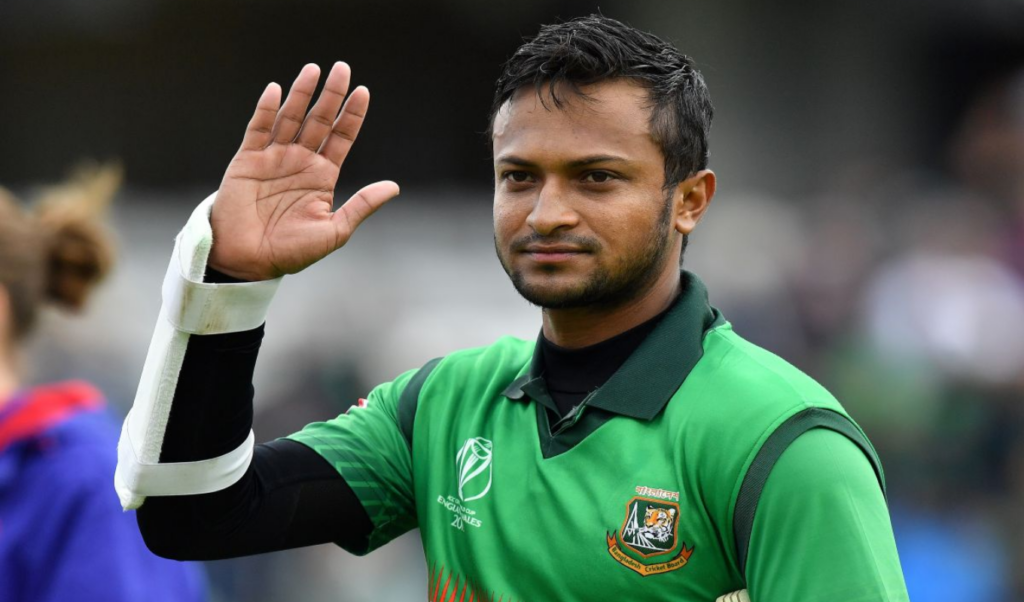
Shakib Al Hasan, the former captain of the Bangladesh national cricket team, has publicly addressed the controversial decision that led to the nation’s absence from the 2026 ICC Men’s T20 World Cup. In a recent statement, the veteran all-rounder described the refusal to participate as a significant “blunder” on the part of the then-interim government, highlighting the long-term detrimental effects on the country’s sporting heritage.
The Genesis of the Conflict
The withdrawal of the Bangladesh team from the global showpiece was not a sudden occurrence but the culmination of escalating tensions within the cricketing hierarchy and the political landscape. The primary catalyst for this friction reportedly stemmed from a dispute involving the premier left-arm pacer, Mustafizur Rahman.
A disagreement arose regarding his participation in the Indian Premier League (IPL), with certain administrative directives eventually leading to his exclusion or withdrawal from the tournament. This incident sparked considerable dissatisfaction within the cricketing fraternity and acted as a precursor to the government’s increasingly firm stance against participation in international events hosted under specific administrative climates.
Geopolitical Justifications and Diplomatic Fallout
At the time of the tournament, the interim government justified the decision to abstain from the T20 World Cup by citing concerns regarding national pride and security. Official rhetoric suggested that the move was necessary to safeguard the country’s interests amidst a complex web of “cricketing diplomacy” and geopolitical considerations.
However, industry analysts and cricketing experts have noted that the decision appeared to be rooted in a psychological and administrative stand-off involving the International Cricket Council (ICC) and the Board of Control for Cricket in India (BCCI). By prioritising these diplomatic disputes over sporting participation, the government triggered a wave of international scrutiny and domestic criticism. The move was widely viewed as an unprecedented step in a nation where cricket serves as a primary pillar of cultural identity.
Shakib Al Hasan’s Assessment
Reflecting on the missed opportunity, Shakib Al Hasan expressed his profound disappointment, aligning himself with the sentiments of millions of supporters. He emphasised that representing one’s country in a World Cup remains the pinnacle of any professional athlete’s career, particularly given that the T20 squad had been in a period of commendable competitive form.
“This is a massive loss,” Shakib remarked. “The entire nation cherishes seeing their team compete on the world stage. For Bangladesh not to be present at the World Cup is a significant missed opportunity. It was a monumental blunder by that government.”
His comments underscore the internal frustration felt by the playing XI, who were reportedly devastated by the instruction to withdraw. The absence of the “Tigers” left a void in the tournament and halted the momentum of a generation of players who had been preparing specifically for the 2026 edition.
Impact on the Sporting Landscape
The repercussions of this absence have been far-reaching. Beyond the immediate disappointment of the fans, the decision had tangible effects on Bangladesh’s standing in the international cricketing community. Missing a major ICC event results in significant losses in terms of commercial revenue, global exposure, and ranking points, which are vital for future qualification cycles.
Furthermore, the “blunder” referred to by Shakib has had a demoralising effect on the domestic structure. Young cricketers, who look toward World Cup participation as their primary motivation, were left disillusioned by the prioritisation of political posturing over athletic merit. Although the tournament has concluded, the sense of regret remains a central theme in Bangladeshi cricket, with many viewing the 2026 season as a “lost chapter” in the nation’s sporting history.
Shakib’s candid remarks serve as a definitive critique of how administrative and political interference can disrupt the trajectory of a national sport, leaving a legacy of missed potential and lingering resentment among stakeholders and supporters alike.