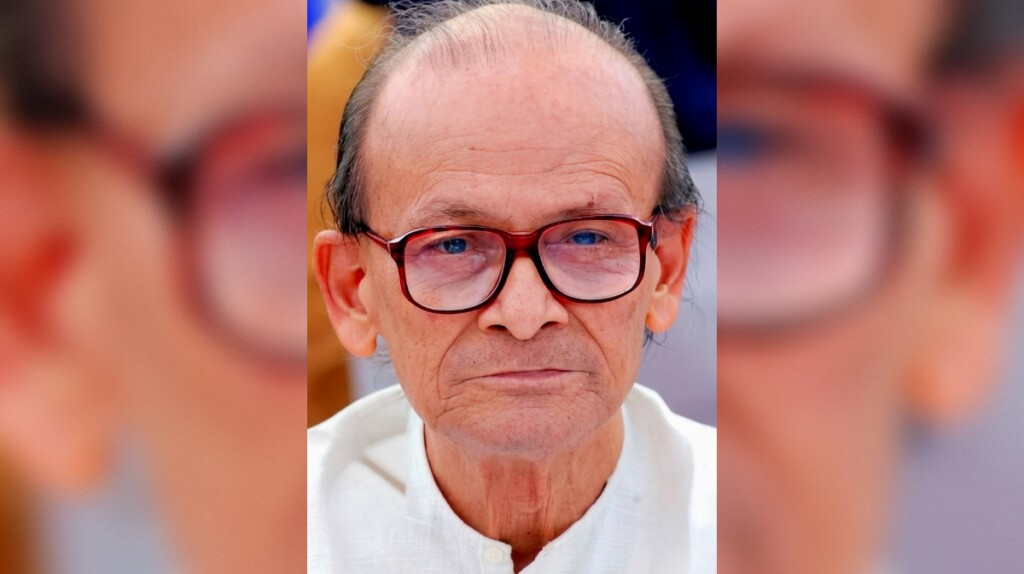
Dhundiraj Govind Phalke, who is eternally remembered as “Dadasaheb Phalke,” was far more than a filmmaker; he was a visionary pioneer who laid the foundation of the Indian film industry.
He was born on 30 April 1870 in Trimbak, Maharashtra, into a Marathi Brahmin family. From an early age, Phalke showed a deep fascination for art, printing, photography, and theatre. He studied at the Sir J. J. School of Art in Mumbai, where he developed a strong foundation in drawing and visual arts. Later, he gained practical experience in printing technology and photography, working in a printing press, which further sharpened his technical and artistic skills.
A turning point in his life came in 1911 when he watched a silent moving picture depicting the life of Christ. The experience left a profound impact on him and inspired him to imagine Indian stories and mythology brought to life through motion pictures. Determined to master this new medium, he travelled to Europe to study film-making techniques, cinematography, and production methods. Upon returning to India, he began his journey as an independent filmmaker, despite limited resources and significant social and financial challenges.
In 1913, he created “Raja Harishchandra,” the first full-length Indian silent feature film. This landmark production not only marked the beginning of Indian cinema but also introduced a new artistic medium for portraying India’s cultural heritage, mythology, and traditional values. His wife, Saraswati Phalke, and family played a crucial supporting role during the production process, often assisting in various capacities.
Over a prolific creative career spanning nearly 24 years, Phalke made 95 feature films and 26 short films. His notable works include “Mohini Bhasmasur,” “Satyavan Savitri,” “Lanka Dahan,” “Shri Krishna Janma,” “Kaliya Mardan,” “Setu Bandhan,” and “Gangavataran.” Each of these productions reflected his imaginative storytelling, technical innovation, and unwavering dedication to the craft of filmmaking.
In recognition of his monumental contribution to Indian cinema, the Government of India instituted the Dadasaheb Phalke Award in 1969. It remains the highest honour in Indian cinema, awarded annually to individuals for lifetime achievement and contribution to the film industry.
Dadasaheb Phalke passed away on 16 February 1944, but his legacy continues to illuminate the path of Indian cinema. His life stands as a powerful reminder that with vision, courage, and perseverance, even the most extraordinary dreams can be transformed into history.