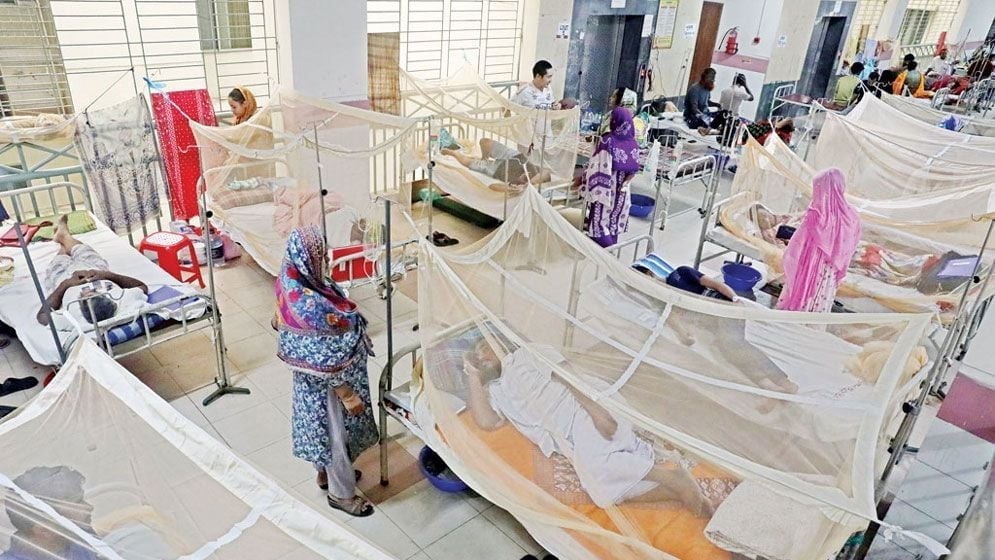
Bangladesh’s ongoing dengue crisis has claimed seven more lives in the past 24 hours, taking the national death toll from the mosquito-borne virus to 342 this year. According to the latest daily update released on Saturday by the Directorate General of Health Services (DGHS), a further 1,872 patients were admitted to hospitals across the country with dengue fever over the same period.
The recent surge underlines a worrisome trend for public health authorities, with October witnessing a rapid escalation in both fatalities and hospitalisations. In the first 16 days of October alone, 97 people succumbed to the disease. This follows a devastating September, which logged the highest monthly mortality figure of the year at 148 deaths. Earlier in the transmission cycle, the DGHS recorded 43 deaths in August, 36 in July, 13 in June, one in May, and two each in January and February.
Overall hospital admissions since January have now climbed to 110,312. On a positive note, healthcare facilities discharged 1,991 recovered patients over the last 24 hours, bringing the total number of recoveries nationwide to 104,491.
A regional analysis of hospital admissions between Friday morning and Saturday morning shows that the Dhaka region remains the epicenter of the outbreak, accounting for 865 of the new hospitalisations. The southern and central divisions also reported significant numbers: Chattogram recorded 260 new admissions, followed by Khulna with 233, Barishal with 190, and Rajshahi with 173. Elsewhere, Mymensingh admitted 67 new patients, while Rangpur registered 59.
Dengue fever, transmitted primarily by the Aedes aegypti mosquito, presents symptoms such as high fever, severe headache, muscle pain, and joint stiffness. Prolonged monsoon rains, stagnant water accumulation in urban centres, and fluctuating weather conditions continue to foster ideal breeding grounds for mosquitoes, severely testing the capacity of local hospitals and emergency care units across Bangladesh.