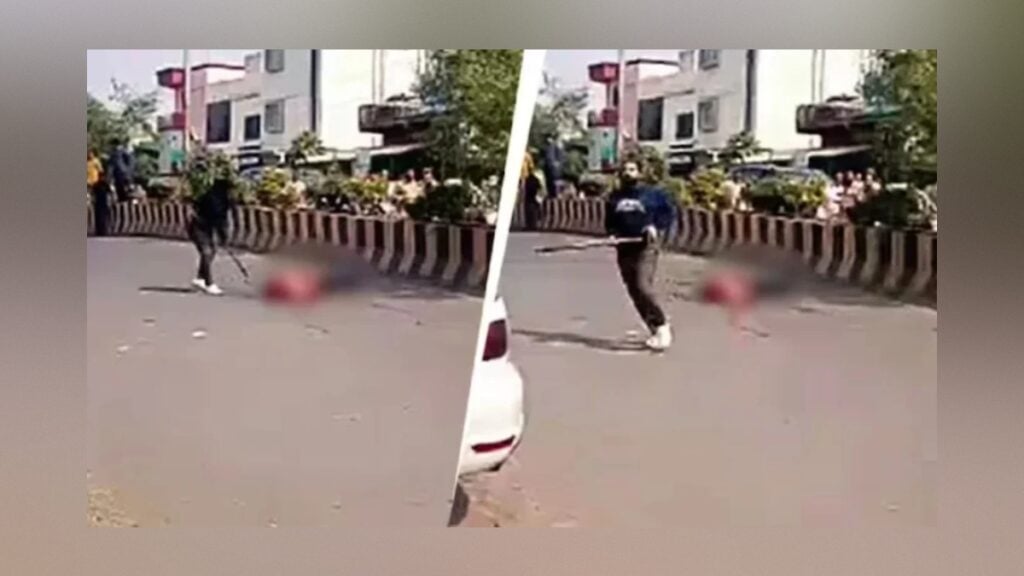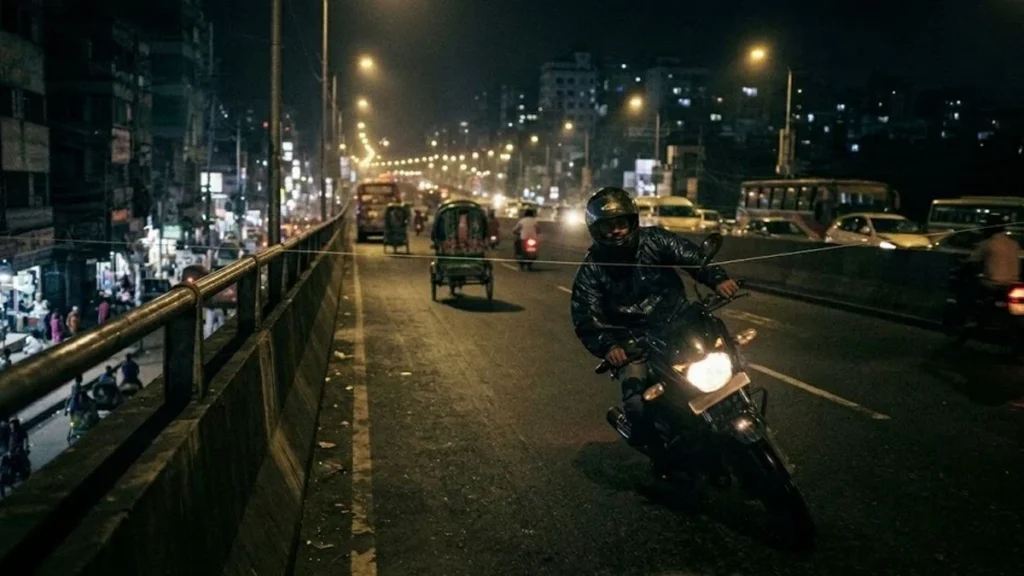
Under the cover of night, a terrifying new form of highway robbery is turning Dhaka’s elevated expressways and flyovers into deadly traps for motorcyclists. Dubbed the “nylon thread robbery,” criminals stretch high-tensile, razor-thin nylon lines across dark stretches of elevated roads, slicing into oncoming riders and causing catastrophic crashes before looting them at knifepoint.
As motorcycles travel at high speeds across poorly lit or unlit sections of these structures, riders suddenly strike these invisible barriers at neck, chest, or forehead level. The violent impact instantly unseats the motorist, throwing them and their vehicles onto the tarmac. Within seconds, gangs of five to seven armed assailants emerge from the shadows, threatening injured victims with machetes and local weapons to steal cash, smartphones, laptops, and even the motorcycles themselves.
Recent accounts shared across social media paint a grim picture of this lethal trend, particularly along the Dhaka-Chittagong Highway, Hanif Flyover, and Mohakhali Flyover. Victims describe how transparent nylon strings—sometimes wrapped with abrasive materials—are pulled taut between railing posts just as a rider approaches. One commuter, Saifur Rahman, recalled losing control on the Mohakhali Flyover late at night when a string slashed his neck. Before he could process what had occurred, four armed men rushed him, brandishing weapons and seizing his wallet and phone.
Another victim, 32-year-old IT professional Tanveer Ahmed, suffered severe head and arm injuries on the same flyover on 15 September when he collided with a wire at 2:30 am. Robbers immediately swarmed him, beating him before fleeing with two premium smartphones, a laptop, and 15,000 taka. Ride-share drivers are equally targeted; on 18 September, a driver named Mohammad Roni was ambushed on the Hanif Flyover after two men suddenly pulled a nylon cord taut across his path, causing him to crash and lose his motorcycle to armed muggers within minutes.
Several structural and operational vulnerabilities explain why flyovers have become prime hunting grounds for such syndicates:
-
Inadequate Street Lighting: Numerous stretches on key flyovers suffer from broken or unmaintained lighting, giving criminals pitch-black cover to set traps unnoticed.
-
Absence of CCTV Surveillance: Most elevated corridors lack functional closed-circuit camera systems, leaving blind spots that hamper law enforcement monitoring and evidence collection.
-
High Vehicle Speeds: Clear night roads encourage motorcyclists to travel at higher speeds, drastically reducing reaction times when encountering unexpected obstacles.
-
Strategic Escape Routes: Flyover ramps and adjoining alleyways allow muggers to scatter into dense residential areas within seconds of committing the crime.
Criminologists and urban experts emphasize that curbing this vicious crime requires urgent, multi-agency action. Criminology specialist Dr Touhidul Islam noted that the police force alone cannot solve the issue without structural interventions. He urged city corporations to ensure 100 per cent functional lighting on all elevated roads, install comprehensive CCTV coverage with real-time monitoring, and establish permanent or mobile police checkpoints at major entry and exit ramps.
Reacting to these horrific developments, Additional Commissioner (Crime & Operations) of the Dhaka Metropolitan Police, Osman Gani, admitted that law enforcement had not previously encountered this specific modus operandi. He assured that all precinct deputy commissioners have been alerted immediately to deploy mobile patrol teams and plain-clothes officers across vulnerable flyovers, promising that those setting these lethal traps will swiftly face justice.