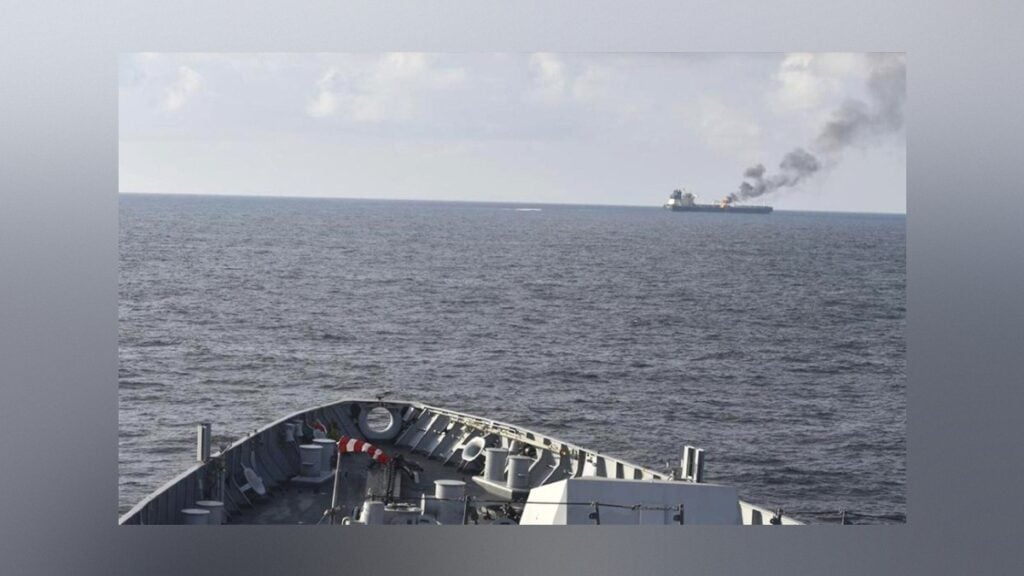
In a statement, the IRGC Navy said the two tankers had been attempting to navigate an unauthorised route through the strategically important waterway when they struck the mines. The resulting explosions caused fires to break out on both vessels and damaged their engine rooms, leaving them unable to continue sailing.
The statement did not identify the tankers, disclose their countries of registration or specify how much oil they were carrying. It also provided no details about possible casualties among the crew. Further information about the extent of the damage and the circumstances surrounding the incident was not immediately available.
The reported incident highlights the security risks facing commercial shipping in one of the world’s most important maritime corridors. The Strait of Hormuz connects the Persian Gulf with the Gulf of Oman and the Arabian Sea, providing a vital passage for oil and gas exports from major energy-producing countries in the Middle East.
Saudi Arabia, Iraq, Kuwait, the United Arab Emirates and Iran are among the countries whose energy shipments rely on routes through the wider region. A significant proportion of the oil transported through the strait is destined for Asian markets, making the waterway particularly important to countries dependent on imported energy.
Any disruption to shipping in the area can raise concerns about the reliability of global energy supplies, freight costs and oil prices. However, there was no immediate information indicating whether the latest incident had affected overall shipping movements or caused a measurable change in international oil prices.
Naval mines pose a serious threat to commercial vessels because they can detonate when ships come into contact with them or trigger their mechanisms. An explosion involving a large oil tanker can damage critical machinery, cause fires and create additional environmental risks if the vessel’s cargo is compromised.
The reported damage to the engine rooms suggests that both tankers lost their ability to move under their own power. Their subsequent recovery would depend on the extent of the damage, the availability of assistance and the prevailing security conditions in the area.
The IRGC Navy’s account also raises questions about the routes used by the vessels and the circumstances in which they encountered the mines. However, the statement did not provide independent evidence explaining how the incident occurred, who was responsible for placing the mines or whether the vessels had received prior warnings.
The Strait of Hormuz has long been a focal point of regional security concerns because of its importance to international trade and energy transport. Any incident involving commercial tankers can draw attention to the vulnerability of shipping routes and the potential consequences of a wider disruption.
Further verified information will be needed to establish the full extent of the damage, determine whether anyone was injured and assess the implications for maritime traffic. For now, the reported loss of propulsion aboard both super-tankers underscores the risks faced by vessels operating in a strategically sensitive waterway.