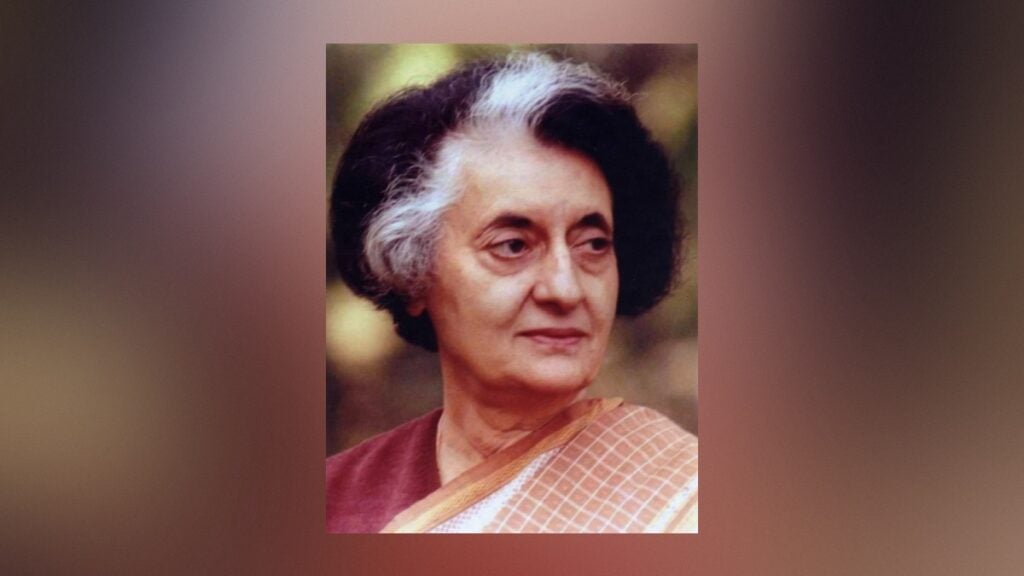
In 1971, when the Pakistani military launched a brutal campaign of genocide, torture and destruction across what was then East Pakistan, millions of people were forced to flee their homes in search of safety. As villages were devastated and civilians became victims of widespread atrocities, India’s Prime Minister, Indira Gandhi, took a firm stand in support of the people of Bangladesh.
Her contribution went far beyond offering shelter to refugees. India provided refuge to approximately 10 million people fleeing the violence, extended assistance to the Bangladeshi freedom fighters and launched an extensive diplomatic campaign to secure international support for the independence movement.
Through her leadership, diplomatic initiatives and the eventual military involvement of India, Gandhi played an important role in the events that led to Bangladesh’s emergence as an independent nation on 16 December 1971.
For the people of Bangladesh, she was not simply the leader of a neighbouring country. She was one of the most prominent foreign friends who stood beside a nation fighting for its freedom during one of the darkest periods in its history.
Birth and Family Background
Indira Priyadarshini Nehru was born on 19 November 1917 in Allahabad, in the Indian state of Uttar Pradesh, into a prominent family deeply involved in the country’s political and national movements.
Her father, Pandit Jawaharlal Nehru, was one of the leading figures in India’s independence struggle and became the country’s first Prime Minister after independence in 1947. Her mother, Kamala Nehru, was also actively involved in the freedom movement.
Growing up in an environment shaped by political activism, nationalism and patriotism, Indira became familiar with India’s struggle against British colonial rule from an early age. Her childhood was closely connected with the activities of prominent political leaders and freedom fighters who frequently visited her family home.
At the age of just 12, she organised a group of children known as the ‘Vanar Sena’, or Monkey Brigade. The group assisted the independence movement by undertaking various activities in support of the national struggle.
On 26 March 1942, Indira married Feroze Gandhi, overcoming various family and social obstacles. The couple had two sons, Rajiv Gandhi and Sanjay Gandhi. Rajiv Gandhi later followed in his mother’s footsteps and became Prime Minister of India.
Her family background and early exposure to political movements played a significant role in shaping her political outlook and leadership ambitions.
Education and Political Journey
Indira Gandhi’s educational journey was diverse, taking her to several institutions in India and abroad. She attended the École Nouvelle in Bex, Switzerland, the École Internationale in Geneva, and the Pupils’ Own School in Pune and Bombay. She also studied at Badminton School in Bristol, England.
For a period, she studied at Visva-Bharati University in Santiniketan, founded by Rabindranath Tagore. She subsequently travelled to England to pursue higher education at Somerville College, Oxford University, where she studied modern history.
However, illness prevented her from completing her studies at Oxford. Despite this, her international educational experiences exposed her to different cultures, political ideas and intellectual traditions, helping to broaden her outlook.
Her involvement in Indian politics gradually expanded. In 1959, she was elected president of the Indian National Congress, one of the country’s most influential political organisations.
Following the death of her father, Jawaharlal Nehru, in 1964, she joined the Cabinet of Prime Minister Lal Bahadur Shastri as Minister of Information and Broadcasting.
After Shastri’s sudden death in January 1966, Indira Gandhi was elected leader of the Congress parliamentary party. She assumed office as India’s third Prime Minister on 24 January 1966, becoming the country’s first woman to hold the position. She remains the only woman to have served as India’s Prime Minister.
Her political career spanned two separate periods in office: from 1966 to 1977 and again from 1980 until her assassination in 1984. Across these periods, she served as Prime Minister in four separate terms, including three consecutive terms during her first period in office.
Her decisive leadership, political determination and ability to navigate complex international relations made her one of the most prominent political figures of the 20th century.
Indira Gandhi’s Support for Bangladesh During the Liberation War
The year 1971 marked a defining chapter in the history of the Bengali nation. While the people of East Pakistan were demanding their political rights and independence, the Pakistani military launched a devastating crackdown on 25 March under the name of Operation Searchlight.
The operation targeted unarmed civilians, political activists, students, intellectuals and members of the Bengali security forces. Villages and towns were set ablaze, countless people were killed, and women were subjected to widespread sexual violence.
As the atrocities intensified, millions of people fled across the border into neighbouring India. The resulting refugee crisis became one of the largest humanitarian emergencies of the time.
It was during this devastating period that Indira Gandhi demonstrated considerable humanitarian and political leadership.
India opened its borders to approximately 10 million refugees from Bangladesh. Camps were established in several Indian states, including West Bengal, Tripura, Assam, Meghalaya and Bihar. The refugees required food, shelter, medical treatment, sanitation and security.
Providing these essential services placed an enormous financial and administrative burden on India. The sudden arrival of millions of displaced people also created serious social and logistical challenges for the host communities.
Despite these pressures, Gandhi’s government continued to provide assistance to the refugees. Her administration recognised that the crisis could not be treated merely as a border-management issue; it was also a humanitarian catastrophe arising from the violence in East Pakistan.
However, her response was not limited to humanitarian assistance. She understood that the international community’s reaction would be crucial to determining the future of Bangladesh.
Diplomatic Campaign to Secure International Support
Indira Gandhi launched an extensive diplomatic initiative to draw global attention to the atrocities committed by the Pakistani military and the plight of the displaced population.
She held discussions with world leaders, heads of government and influential political figures, explaining the humanitarian crisis and the growing instability in South Asia.
Her diplomatic efforts included visits to several major countries, including the United Kingdom, France, West Germany and the United States. During these visits, she sought to persuade international leaders to recognise the gravity of the situation and support a political resolution that reflected the aspirations of the people of Bangladesh.
The diplomatic environment was particularly challenging. The United States government under President Richard Nixon maintained close relations with Pakistan, while China also supported Islamabad’s position. Both countries’ political and strategic interests complicated India’s efforts to secure wider international backing for Bangladesh’s independence.
Against this backdrop, Gandhi sought to strengthen India’s diplomatic position and prevent the crisis from leaving the country isolated internationally.
A significant development came on 9 August 1971, when India and the Soviet Union signed a 20-year Treaty of Peace, Friendship and Cooperation. The agreement strengthened India’s strategic position at a time of growing regional tensions and potential military confrontation.
The treaty was particularly important given the complicated international environment surrounding the conflict. It provided India with greater diplomatic confidence as the situation in South Asia continued to deteriorate.
Assistance to the Liberation Forces
India also played a significant role in supporting the Bangladeshi freedom fighters.
The Indian government provided training, weapons, logistical assistance and other forms of military support to the Mukti Bahini, the organised resistance force fighting against Pakistani military rule.
Thousands of Bangladeshi freedom fighters received training and operational assistance in India. Their activities inside Bangladesh increasingly weakened Pakistani military control and helped establish the conditions for a broader military confrontation.
The cooperation between the Mukti Bahini and Indian forces eventually became a decisive factor in the final phase of the war.
On 3 December 1971, Pakistan launched air attacks on several Indian airbases, prompting India to enter the conflict openly. Indian forces subsequently joined the Bangladeshi liberation forces in a coordinated military campaign against the Pakistani army.
The joint offensive rapidly changed the course of the war.
On 16 December 1971, Pakistani forces surrendered in Dhaka at the then Racecourse Maidan, now known as Suhrawardy Udyan. The surrender marked the end of the nine-month Liberation War and the birth of an independent and sovereign Bangladesh.
Indira Gandhi’s political leadership, diplomatic efforts and the military assistance provided by India contributed significantly to the outcome of the conflict.
For Bangladesh, her role represented more than the support of a neighbouring government. It was an important example of international solidarity with a people struggling to escape oppression and establish their own independent state.
Bangladesh’s Highest State Honour
Bangladesh formally recognised Indira Gandhi’s contribution to the country’s independence decades after the Liberation War.
On 25 July 2011, she was posthumously awarded the ‘Bangladesh Swadhinata Sammanona’ (Bangladesh Independence Honour), the country’s highest state decoration.
The award was presented at a special ceremony at Bangabhaban, the official residence of the President of Bangladesh. President Zillur Rahman and Prime Minister Sheikh Hasina attended the event.
As Indira Gandhi had died in 1984, the honour was accepted on her behalf by her daughter-in-law, Sonia Gandhi, who was then president of the Indian National Congress.
The recognition was particularly significant because it was the first time Bangladesh had conferred its highest state honour on a foreign head of government.
The award reflected Bangladesh’s enduring gratitude for India’s assistance during the Liberation War and acknowledged Gandhi’s personal contribution to the country’s struggle for independence.
It also served as a formal expression of the friendship and solidarity that had developed between the two countries during the crisis of 1971.
The Iron Lady: Achievements, Controversies and Political Challenges
Indira Gandhi was widely regarded as a strong-willed and determined political leader. Her tenure witnessed several major developments that transformed India’s domestic and international standing.
The most significant was India’s victory in the 1971 war against Pakistan, which fundamentally altered the political and strategic landscape of South Asia.
In recognition of her leadership and contributions to the country, she was awarded the Bharat Ratna, India’s highest civilian honour, in 1972.
Under her leadership, India also conducted its first nuclear test in 1974, known as Operation Smiling Buddha. The test marked an important development in India’s scientific and strategic capabilities.
However, her political career was far from free of controversy.
One of the most contentious periods began in 1975, when Gandhi declared a state of Emergency in India. During this period, civil liberties were severely restricted, press freedom was curtailed and numerous opposition leaders were arrested.
The government exercised extensive powers, and political opposition faced significant limitations. The Emergency remains one of the most controversial episodes in the history of Indian democracy.
Her government faced strong criticism for undermining democratic institutions and restricting fundamental rights.
In the 1977 general election, the Congress party suffered a major defeat, bringing an end to Gandhi’s first extended period in office.
Despite the electoral setback, she gradually rebuilt her political position. In the 1980 general election, the Congress party returned to power with a decisive victory, allowing her to resume the office of Prime Minister.
Her return demonstrated her political resilience and ability to regain public support despite the controversies surrounding her earlier administration.
Operation Blue Star and Rising Tensions in Punjab
During the early 1980s, India faced a growing security crisis in Punjab, where separatist militancy and political violence were intensifying.
Armed groups demanding an independent Sikh homeland, known as Khalistan, became increasingly active. The situation developed into a major challenge for India’s national security and internal stability.
In June 1984, the Indian Army launched Operation Blue Star at the Golden Temple complex in Amritsar, one of the holiest sites in Sikhism. The operation was carried out under Gandhi’s direction to remove armed separatists who had taken shelter inside the complex.
Jarnail Singh Bhindranwale, a prominent figure in the separatist movement, and many of his followers were killed during the military operation.
However, the operation also resulted in the deaths of numerous civilians and caused extensive damage to the sacred religious complex.
The military action generated profound anger, grief and resentment among significant sections of the Sikh community. The use of military force inside one of Sikhism’s most sacred places had far-reaching political and social consequences.
The operation became one of the most controversial decisions of Gandhi’s premiership and contributed directly to the circumstances surrounding her assassination later that year.
31 October 1984: A Tragic End
On 31 October 1984, India was shaken by the assassination of its Prime Minister.
Indira Gandhi was at her official residence in New Delhi when two of her Sikh bodyguards, Beant Singh and Satwant Singh, opened fire on her.
She sustained multiple gunshot wounds and was rushed to the All India Institute of Medical Sciences in New Delhi. Despite medical efforts, she was declared dead later that day.
She was 66 years old.
The assassination was widely regarded as an act of retaliation for Operation Blue Star, which had taken place just months earlier.
Her death plunged India into a period of profound political uncertainty and national mourning. However, the tragedy was followed by horrific anti-Sikh violence in Delhi and other parts of the country.
Thousands of Sikhs were killed in the violence, while homes, businesses and religious establishments were attacked. The riots remain one of the darkest episodes in India’s modern history and continue to be a subject of public debate and demands for justice.
With Gandhi’s assassination, India lost one of its most influential political leaders, bringing an abrupt end to a career that had shaped the country’s domestic and foreign policies for nearly two decades.
Indira Gandhi’s Place in World Politics
Indira Gandhi was among the most influential female political leaders of the 20th century. Her leadership coincided with a period of significant political, economic and strategic transformation in India.
Under her premiership, India emerged victorious in the 1971 war against Pakistan, strengthening its position as a major regional power.
The country’s first nuclear test in 1974 further demonstrated its growing scientific and strategic capabilities.
Gandhi also played an important role in the Non-Aligned Movement, which sought to maintain political independence from the competing power blocs led by the United States and the Soviet Union during the Cold War.
Her foreign policy reflected India’s ambition to establish itself as an independent voice in international affairs rather than simply align with one of the major global powers.
Her leadership was admired by many for its decisiveness and political determination. At the same time, her approach to governance, particularly during the Emergency, attracted lasting criticism.
Her legacy therefore remains complex. She is remembered both for major political achievements and for decisions that raised serious questions about democracy, civil liberties and the exercise of state power.
Yet, in the context of Bangladesh’s Liberation War, her contribution occupies a distinctive place in history.
In 1971, she used India’s diplomatic influence, economic resources and military capabilities to support a population facing widespread violence and displacement. Her government helped provide millions of refugees with shelter while also supporting the struggle for independence.
That chapter remains central to how Bangladesh remembers her.
An Unforgettable Friend in Bangladesh’s History
Historical figures are rarely defined by a single aspect of their lives. Their legacies are shaped by achievements, failures, controversial decisions and the consequences of their actions.
Indira Gandhi’s life was no exception. Her political journey included remarkable accomplishments, difficult decisions, democratic controversies and a tragic end.
Nevertheless, whenever Bangladesh’s Liberation War is remembered, her name is likely to be mentioned with respect and gratitude.
In 1971, when millions of Bangladeshis were fleeing violence and seeking refuge across the Indian border, when freedom fighters were risking their lives for independence and when influential global powers remained reluctant to take a firm position against Pakistan’s military government, Gandhi stood alongside the people of Bangladesh.
Her government’s decision to shelter approximately 10 million refugees was an extraordinary humanitarian undertaking. Its diplomatic campaign helped bring international attention to the crisis, while India’s military and logistical assistance contributed to the final victory.
These contributions remain an inseparable part of the historical relationship between Bangladesh and India.
The achievement of independence on 16 December 1971 was primarily the result of the courage, sacrifice and determination of the people of Bangladesh. Millions of ordinary citizens, freedom fighters and members of the country’s political and military leadership contributed to that historic struggle.
At the same time, the support of international friends played an important role in the eventual outcome. Among them, Indira Gandhi holds a particularly significant position.
Her role during the Liberation War continues to be remembered as an example of political leadership exercised in response to a major humanitarian crisis.
As Bangladesh reflects on its history, honours the sacrifices of its freedom fighters and celebrates the victory of 1971, the contribution of this determined woman leader remains worthy of remembrance.
She was more than the Prime Minister of a neighbouring country. For Bangladesh, she was a trusted friend who stood beside its people during their most difficult hour.
A heartfelt tribute and respectful homage to Indira Priyadarshini Gandhi — a great friend of Bangladesh in 1971 and an unforgettable name in the history of its independence.
Her contribution will remain an enduring part of Bangladesh’s historical memory.